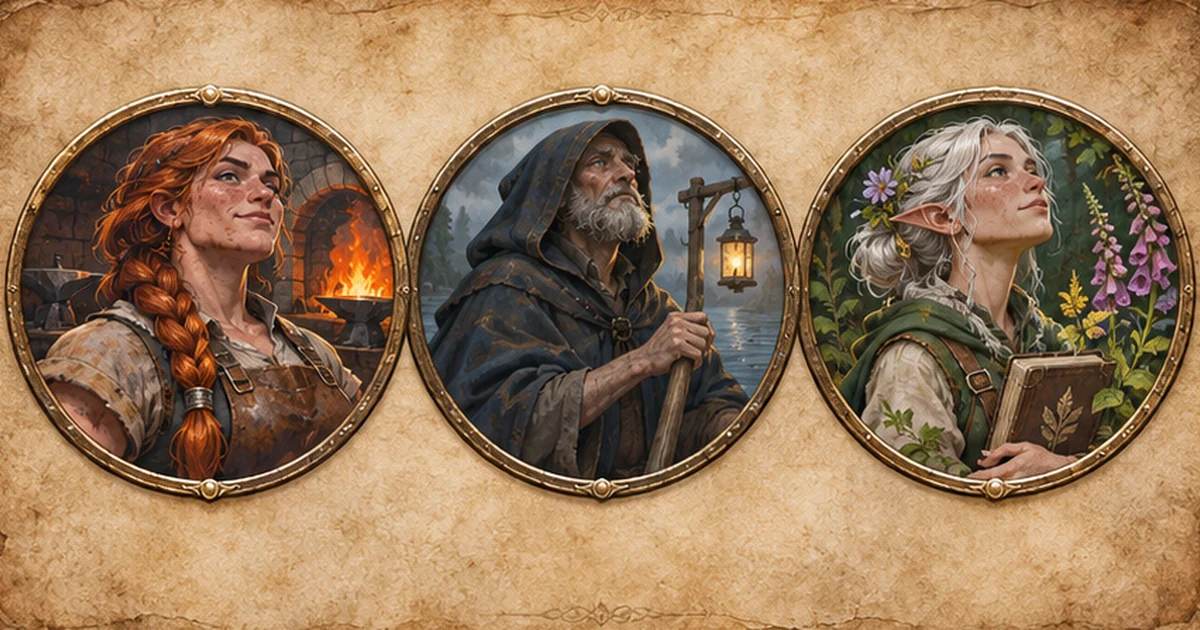

A game master needs three townspeople the players can tell apart on a crowded map. A beautiful full-page portrait is a weak choice if it turns into the same brown circle as everyone else at token size. For a campaign in which those people will return, our preferred starting point is QuestStudio Character Forge. SeaArt AI deserves consideration when exploring a community's character and art directions is a major part of the game master's preparation.
- Choose QuestStudio when
- A GM needs to revisit the same cast across several sessions.
- Choose SeaArt AI when
- Community-led style discovery is a main part of the preparation.
Build a cast with three different outlines
Make the smith broad through the shoulders with a copper braid crossing the front. Give the ferryman a peaked hood and a narrow jaw. Give the botanist a cloud of white hair and a high collar. Those forms can survive a circular crop. A tiny hammer hanging near a belt will disappear as soon as the token becomes a head and shoulders.
Give each character a second identifying feature independent of hue. The braid can be dark against a light apron, the hood can form a triangular top edge, and the botanist's hair can remain pale against a darker background. Imagine printing the tokens in grayscale for a player who prefers a paper map. The cast should remain usable after most of the palette is removed.
Compare exploration with repeat appearances
SeaArt presents community content alongside image and character creation. That suits a group that enjoys browsing for different visual directions before deciding what its world looks like. When an image, model, or workflow comes from the community, check the applicable permissions before reusing it in a publicly shared or commercial game. SeaArt's creative platform
In Character Forge, write a short description for each recurring townsperson and retain one approved portrait as a reference. Use Image Lab for follow-up portraits when a scene calls for another expression or setting. Keep the stable traits separate from story state. The smith can gain a soot mark during the adventure while the direction of the braid and broad shoulder silhouette remain recognizable.
Run the round-mask audition
Put each approved portrait under the same sized circular mask in your layout tool or virtual tabletop. Look at the actual token as a player will see it in a normal map view. The corners that held a staff or an animal companion disappear. A decorative border eats further into the face. Move the crop before asking for fresh art. A good portrait may simply have been framed for a different shape.
Now show the three tokens beside ordinary map objects and player tokens. Ask someone to find the ferryman without hovering to reveal a name. Then shuffle the positions and ask again. If the player relies on “the one on the left,” the identity test has failed. Change the silhouette or value pattern of the confusing pair and leave the third character alone.
Make a second-session expression
The smith is pleased to see the party in session one and deeply worried in session two. Generate or illustrate the new expression with the same collar, braid, and face proportions. Put the two smith tokens next to the botanist. If the player interprets the worried smith as the botanist's relative, the changed features may extend well beyond the mouth and brows.
Keep a private cast sheet with the display name, pronunciation, portrait master, token crop, and stable design notes. Include what players have already learned about the character. A spoiler such as the ferryman's secret allegiance belongs in the game master's private notes. That way an otherwise helpful filename or portrait caption does not give the table more information than the story intended.
A five-minute test during session preparation
Prepare a player view of a busy market map and place the three townspeople near stalls with similar colors. Give a test player a simple instruction such as “take the note to the person who runs the ferry, then ask the smith about the ring.” Avoid naming colors in the instruction. If the player immediately finds both characters, the tokens are doing useful work. If they hover over several names or zoom the map until one face fills the screen, make a note of the pair they confused.
Repeat with the bright selection rings switched off, if the tabletop software allows it. A strong selected-token outline can make two otherwise similar portraits appear artificially distinct. For a printed session, try a copy under ordinary room lighting and place one token close to a player's miniature. Look for the feature that remains visible after the miniature casts a shadow over it. Choose the smallest correction likely to help, such as bringing the botanist's pale hair away from the rim. Save the original portraits while refining the game pieces so future handouts can still use the richer illustrations.
Choose by playability at the table
Invite a player to distinguish the three townspeople on the board and then recognize the smith from a new expression card. Those two actions test immediate clarity and repeat identity. For an in-person session, print a sample on the paper and printer you intend to use. Dark hoods that separate beautifully on a bright monitor can sink into a dark token ring on paper.
Choose SeaArt if exploring visual styles is the enjoyable part and your chosen art passes the map test. We favor QuestStudio for a game master who expects to return to the same cast throughout a campaign. The character model comparison can help compare character consistency once the actual token shapes work at the table.
Frequently asked questions
Do all three townspeople need the same art style?
A shared visual language can make a cast feel coherent. Preserve different outlines, values, and face shapes within that style so players can still identify individuals.
Which image should I keep for a future expression?
Keep the full approved portrait and the final token crop. The full image preserves reference detail, while the crop shows which features players actually saw.
How do I avoid revealing a secret NPC role?
Use player-safe display names, tokens, and filenames. Keep hidden information in the game master's notes and review the player-facing handout before sharing.
Can a token rely on a bright colored border?
Use the border as an additional cue. Test the face and silhouette without it and consider players who may distinguish the colors differently.
Compare more SeaArt AI and QuestStudio workflows
Continue with a useful next step
 Image
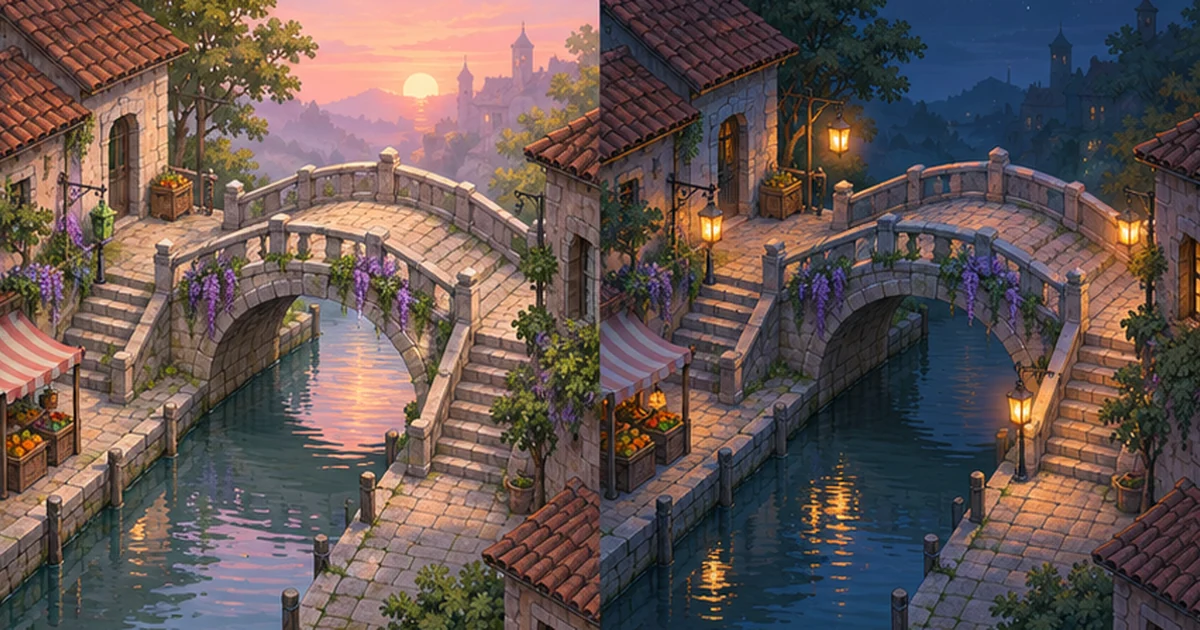
SeaArt vs QuestStudio for Day and Night Game Environments
Compare SeaArt workflows and QuestStudio for two light states of one canal crossing. Check camera angle, landmarks, and navigation before handing art to a game team.
 Image
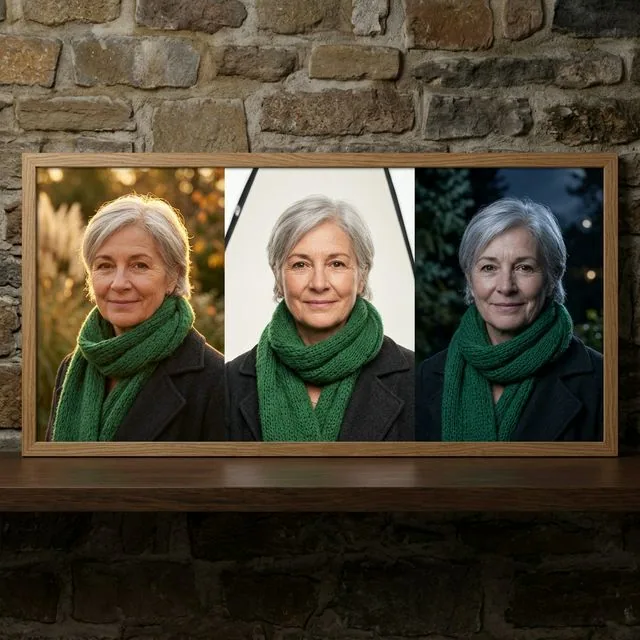
Best AI Models for Character Consistency: 4 Compared (2026)
Compare Flux 2, Nano Banana, GPT Image, and Midjourney for character consistency using one six-image identity test, reference controls, edits, and cost.