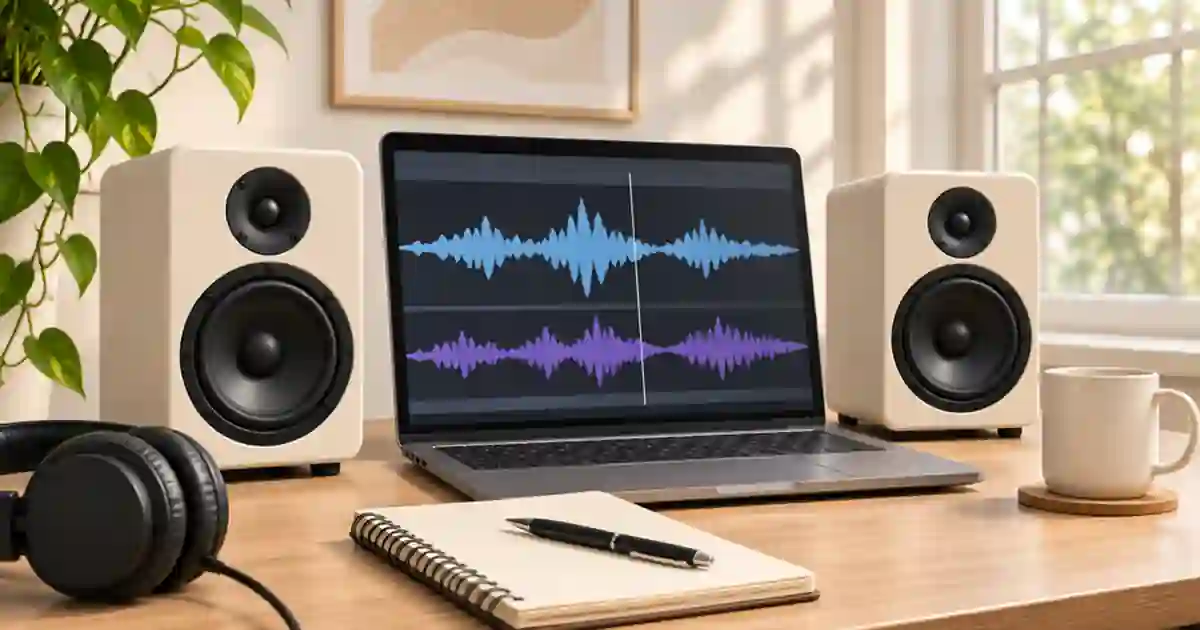

Before I send a voiceover edit, I recommend listening to a short section in mono. Stereo music can feel spacious and clear on headphones. When the two channels combine, a wide element may change level or partly disappear, and the voice can become harder to follow. I use the mono pass to check intelligibility and catch changes before delivery.
My gear pick for this setup
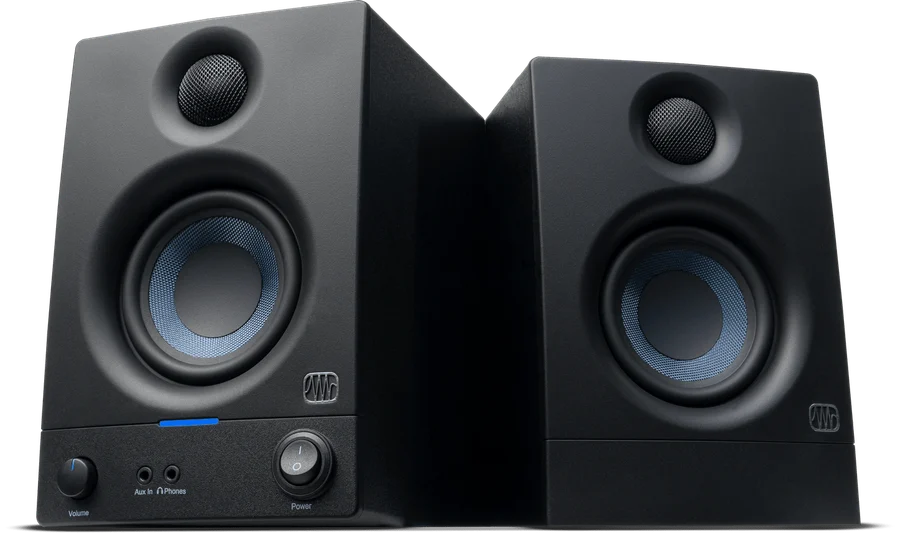
PreSonus Eris 3.5 2nd Gen, black pair
A second listening path for a small editing desk
I’d consider the Eris 3.5 pair when I need a compact speaker check after editing on headphones. Sum the mix in your editor, and use a supported one-speaker monitor path if you want that comparison.
Make a mono monitor pass from the same stereo mix
Find a monitoring or utility control that combines left and right. Use it for the check and leave the source tracks intact. Listening to the left channel alone can reveal what is on that side, but it will not show how the two channels interact when combined. A mono switch lets you compare the combined signal with the normal stereo mix using the same clip, gain structure and effects.
Set the two listening passes to roughly comparable perceived level. Some mono controls use their own gain compensation. If the mono pass is simply much louder or quieter, that difference can color the judgment. I use a section with a quiet voice line, a change in music, and one important sound effect. Write down what the viewer needs to understand at that moment before comparing.
Listen for two different failures
First, check masking. If the music covers a word in stereo and mono, the issue may be arrangement or level. Lower the music a little during that phrase or move a sound effect so it leaves space for the words. The guide to mixing background music under narration covers balancing the two. Second, check cancellation. If an element that is clear in stereo almost vanishes when the channels combine, inspect stereo width effects, duplicated tracks, polarity and timing.
Canceling components can come from a signal that appears with opposite polarity in the two channels. As a simplified example, adding a value of +1 and −1 gives zero. Real tracks contain many frequencies and changing phase relationships. I solo the suspect stem and compare stereo with the sum, then bypass one effect at a time. That is usually more informative than relying only on a meter reading for the whole mix.
Test a real moment with the speech in place
Suppose a short ad has narration, wide music, and a latch click. In stereo the music feels rich and the click is obvious. On the mono pass, listen for the exact word that introduces the product and the moment the latch lands. If the click disappears only in mono, check its stereo processing or use a suitable centered cue. If narration stays clear and the room feels narrower, the mix may still serve the viewer. I keep the stereo result and mono playback check as two separate review decisions.
Play the full passage once through a speaker at a modest level. If your monitor setup lets you listen to the summed signal through one speaker, that can reduce the influence of how two speakers interact in the room. Use your existing setup for the first test. The speaker and headphone comparison helps when you want a repeatable second listening option.
Decide whether the mix needs a change
| What changed | What I check |
|---|---|
| Word gets hard to understand in both passes | Music level, effect placement and voice clarity. |
| Effect becomes nearly silent in mono | Width processing, duplicates and polarity. |
| Whole mono pass is quieter | Gain compensation before judging balance. |
| Room sounds smaller but the message is clear | Check the intended delivery and preserve a useful stereo mix. |
Check the accepted mix after new material is added
If a clip from Music Lab becomes the music bed, I keep its original stereo file and test it underneath the approved voice. Review the exact mix you export, including any widening or limiter after the tracks combine. Write down the line and effect you checked so a later change can be compared against the same reference.
For a repeatable review, mark the first word, the strongest music moment, and the sound effect on the timeline. If you change the mix, play those same markers in order. Do a final check of the exported stereo file through the same mono monitor control. Some tools provide a phase display that can help you find a problematic interval. I treat it as a pointer to a part I should listen to. The test passes when the phrase remains clear and the cue still lands where the picture needs it. Keep the clip or marker names in the worksheet so a future editor can recheck the same moments.
Write down what must survive the fold-down
I’d choose a ten-second segment with the most important phrase, a music change and one meaningful effect. Play it in stereo, switch monitoring to mono and keep the perceived level close. If the word becomes hard to understand in both passes, adjust the music or effect placement. If the effect nearly vanishes only when the channels combine, solo it and check its stereo processing. Keep a note of which change solved the problem, then return to stereo for a full review of the delivery mix. I repeat the mono pass after adding any new widening effects or a replacement music track. The comparison only takes a moment when the same passage is marked.
Download the audio mix review worksheet (CSV)
Frequently asked questions
Is listening to one channel the same as mono?
No. A mono compatibility check sums left and right. Listening to one original channel does not reveal cancellation between the two.
Should the whole mix sound identical in mono?
Stereo width changes when the channels combine. Listen for whether the words and key sound cues remain understandable.
Why does one effect disappear in mono?
Check for opposite polarity, timing differences and stereo width effects. Solo the source and compare it before and after processing.
Does a mono check mean I should deliver a mono file?
Deliver the format the project calls for. Use the mono check to understand how the stereo mix translates.
Sources and further reading
Affiliate disclosure
As an Amazon Associate I earn from qualifying purchases.
Continue with a useful next step
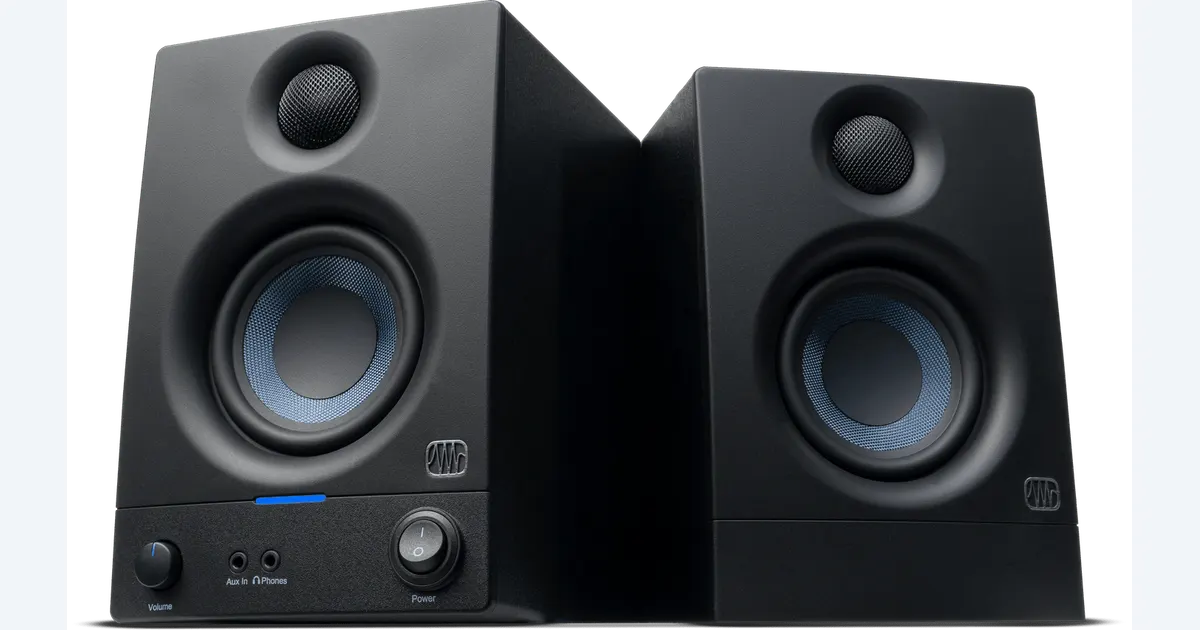 Creator Workflows
Studio Monitors vs Headphones for a Small Creator Desk
Decide when studio monitors add value beside headphones. Check Eris 3.5 connections, room fit and playback translation with a practical listening sheet.
 Voice
Background Music Under AI Voiceover: A Mix You Can Hear Clearly
Mix background music under AI voiceover with separate tracks, phrase-based ducking, a practical cue map, and listening checks that beat a fixed volume preset.
 Voice
Headphones for Video Editing, Voice and AI Music
Compare Sony MDR-7506 and Audio-Technica ATH-M40x for editing speech and video. Use a repeatable listening check for comfort, cable fit and audible flaws.