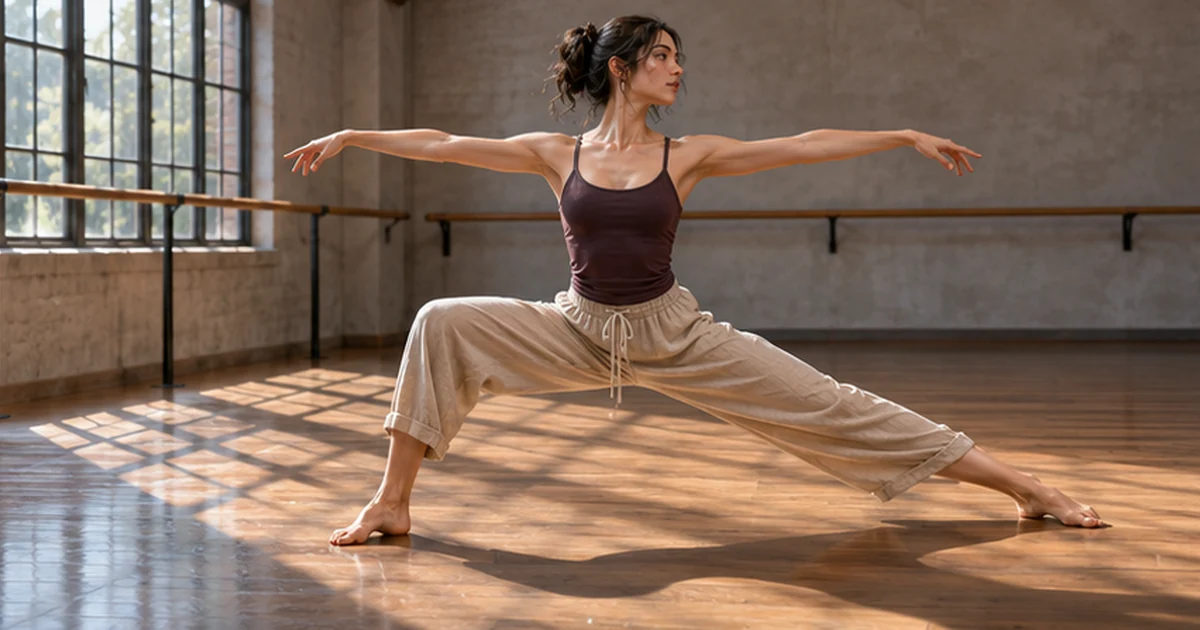

A dance restyle can turn rehearsal footage into a striking piece of illustrated motion and still erase the choreography that made the footage worth filming. For a choreographer who wants to compare treatments against an approved source phrase, QuestStudio Video Lab is our first pick. Dzine is a credible choice for artists who want a direct video-to-video restyling workflow. Judge them on the dancer's planted foot, weight transfer, and landing.
- Choose QuestStudio when
- A choreographer wants a source-led treatment reviewed against musical cues.
- Choose Dzine when
- The artist wants a direct video restyle and likes the resulting motion.
Pick a movement that exposes errors
Use a short phrase from footage the performer has approved for this use. A side step, cross of the arms, turn, and landing provide four very different tests. Frame the whole body with space above the head and below the shoes. If the heel leaves the original frame, the tools and the reviewer have little evidence about what it did.
Ask the choreographer to mark the beat where weight shifts onto the left foot and the moment the right hand crosses the chest. Use the dancer's own left and right in the notes. Identify one meaningful quality, such as a suspended pause before the landing. A system that preserves positions but removes that hesitation has altered the performance.
Compare the movement input before selecting a look
Dzine describes taking existing video into a transformation workflow. Try a restrained ink or painted treatment first. A thick cloud of particles around the dancer might look dramatic and make it nearly impossible to see whether knees, elbows, and feet remain faithful. Keep one clean source reference on screen during review. Dzine video to video
In Video Lab, select a video-to-video model or mode that accepts the actual footage. Image-to-video accepts a different kind of reference and asks the model to invent motion. Check the clip duration and other input requirements on the selected route. Use the same take and the same style direction across the two platforms. Preserve the source audio separately for checking musical timing in the edit.
Read the phrase in the dancer's order
On approach, watch the head and torso travel into the step. At contact, check whether the shoe meets the same floor point as in the reference. Through the turn, watch the free arm cross the body and emerge on the correct side. At landing, look for the instant the dancer takes weight. A shoe drawn beautifully but sliding backward under a fixed body gives the wrong physical impression.
Next view the source and candidate as small silhouettes. The shape of the reach and the direction of travel should still read without costume detail. If the result looks correct at the four marked frames but wrong in playback, scrub a few frames before and after the cross. A temporary merged arm can change the shape of the gesture even when it separates again at the end.
Protect musical timing during a style revision
Play the source audio underneath both muted picture tracks in a conventional editor. Align the clips at an identifiable beat near the start and compare the later landing. If the second landing is early, inspect whether the generated file changes pace, trims the lead-in, or finishes the movement differently. Moving the whole clip on the timeline can correct an offset. It cannot repair a different rhythm inside the phrase.
Try a less aggressive treatment if sleeves turn into smears around the crossing hands. Simplify the background and avoid style instructions that encourage long trails when sharp contacts are the point. If only one bar fails, consider retaining the original footage there as an intentional visual transition. Ask the performer to judge the edit in motion before deciding it is an acceptable repair.
Make the landing test easy to repeat
Put a temporary floor mark under the planted foot on a duplicate of the source video in your editor. Carry that mark as a separate overlay above the restyled version. Record the source time at first contact and the time when the heel takes weight. Play the restyled take twice. On the first pass, watch the mark and shoe. On the second, watch the pelvis settle over the supporting leg. A foot can appear planted while the rest of the body continues gliding unnaturally past it.
Ask the performer to name the beat that should feel heaviest. Their answer can reveal that the visually striking arm sweep is a preparation for the quiet landing, which is the real accent. If an inky outline makes the arm look heavier and the landing nearly invisible, simplify the sleeve treatment or try a less contrasty trail. Keep the floor-mark copy for review and remove the overlay from the audience export. By recording a physical contact and an expressive accent, the team can assess both technical continuity and what the dance is meant to communicate.
Let the performer sign off on a whole phrase
Provide a side-by-side review with the source and candidate aligned, plus a full-screen version at normal speed. Ask where the weight transfers and whether the pause before the landing feels like theirs. A positive answer about color is a separate creative judgment. Keep the version that preserves the movement and satisfies the agreed look.
Choose Dzine when its restyle is easy for the artist to direct and the dancer approves the phrase. Our preference is QuestStudio for teams that want to choose the input mode deliberately and evaluate the result against a movement brief. The video-to-video workflow covers additional decisions about source footage and the degree of transformation.
Frequently asked questions
Is a single starting photo enough for this test?
Use the original video when preserving a specific person's choreography is the goal. A photo cannot specify the sequence of contacts or the timing of a turn.
Should I compare the videos in slow motion?
Use slow motion to identify a problem, then replay at normal speed to judge its effect on the performance. The choreographer should see the intended speed.
Can fabric move differently from the source?
Some difference may be acceptable when the treatment changes materials. Reject changes that obscure a joint, redirect the gesture, or imply a different weight transfer.
What if the music and movement no longer meet?
Check the alignment at the first and last marked beats. Decide whether the problem is a fixed shift or a changed phrase before attempting to retime it.
Compare more Dzine and QuestStudio workflows
Continue with a useful next step
 Product Ads
Dzine Alternative for Tea Packaging Mockups With Real Labels
Compare Dzine and QuestStudio for a tea tin mockup. Keep label artwork editable, check the wrap against the real tin, and art-direct the surrounding scene.
 Video
Video-to-Video AI Workflow: Transform Footage Without Drift
Use video-to-video AI with a source-clip preflight, precise change and preservation prompts, temporal QA, matched comparisons, and edit-ready exports.