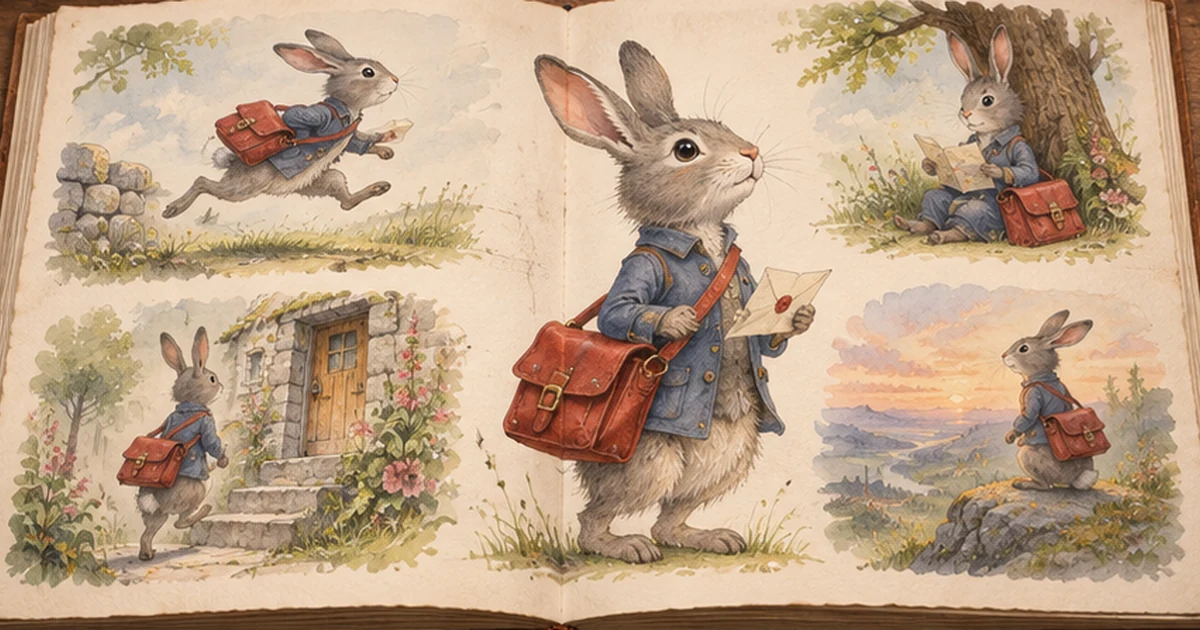

A rabbit who loses her satchel every time she turns around makes a poor recurring courier. For a chapter book where the illustrator must defend one character across several small black-and-white illustrations, our pick is QuestStudio. Character Forge and Image Lab give you distinct places to develop the character and inspect new interpretations. OpenArt belongs on the shortlist if your illustrator wants to build directly around its dedicated character tools.
- Choose QuestStudio when
- The illustrator needs a character sheet and individual print proofs.
- Choose OpenArt when
- The illustrator wants a character-centered starting point for repeat poses.
Design the courier for the printed page
Give the rabbit three identity marks that survive a change of pose. Try one bent ear, a triangular nose, and a satchel with a single round fastening. A red coat is an attractive fourth cue in the working art. On a grayscale interior page the reader may never see the red. If the coat is the only unmistakable feature, even a technically consistent model can fail the book.
Prepare a front, a three-quarter, and a side view. Keep the character's own left and right clear in the notes. A strap running from her right shoulder to her left hip changes apparent direction when the character faces the reader. Mark the shoulder and hip on the reference sheet. This makes it possible to distinguish a legitimate perspective change from a mirrored costume.
Choose a workflow with the illustrator
OpenArt gives creators a character-focused starting point for new scenes. Bring the same approved rabbit reference to that workflow and ask the illustrator to stage a crouch, a running profile, and a seated reading pose. A tooling decision should include the person who will redraw an awkward paw or repair an illustration when the manuscript changes. OpenArt character tools
In QuestStudio begin in Character Forge with the short character description and the recurring visual anchors. Carry the approved example into Image Lab for relevant reference-based scene work. Use the same line-weight and shading description for each illustration. Store the chosen illustrations next to the manuscript in your own page order. The page order matters because two acceptable drawings in isolation can look like different editions of the book when placed together.
Run the three-chapter proof
In chapter one the courier delivers a letter in daylight. Give the illustrator a front-facing composition with a large envelope visible in one paw. In chapter four she squeezes through a gate, giving the illustrator a profile view with the satchel close to the bars. In chapter seven she reads at a table, with most of her body hidden. That last picture asks whether a reader can identify her from the face and ear alone.
Print all three at the size the book designer actually expects. Set them far enough apart to mimic separate chapter openings. Ask a reader to identify the courier and describe the feature that gave her away. If the reader points to a prop, repeat with the envelope covered. A prop that appears in only one chapter cannot carry identity through the other two.
Correct identity in the order readers notice it
Begin with the outline. If the ears look equally straight in the gate scene, bring the bent ear back before polishing the fur. Next inspect the face proportions. A longer snout and tiny eyes can age the courier between chapters. Last inspect costume details. A changed fastening may be repairable locally even when the overall pose works.
Evaluate the series in reverse page order as well. Reviewers who just read the text tend to infer that every rabbit is the same rabbit. Starting at the final illustration removes some of that assistance. If two images still disagree, use the approved reference as the authority. Averaging the two interpretations creates a third character the illustrator then has to maintain.
A paper proof for the gate scene
Fold a blank sheet to the approximate trim size and mark the inner margin. Place the gate illustration on a left-hand page, with a few lines of manuscript text beneath it. The courier's ears may read perfectly on screen and still disappear into the page fold if the illustrator places her too close to the gutter. Make a second proof with the image shifted slightly toward the outside edge. Look at both with the book held naturally in one hand.
Now ask the illustrator to change just the gate scene after the editor revises the story. The satchel catches on a horizontal bar instead of a vertical one. Can they make the bar and the pose believable while retaining the printed courier's face? Save the before and after at the same size and circle any difference the editor did not request. This small revision is a better purchase test than producing more front-facing rabbits. It measures the job the team will face halfway through the manuscript, when one dramatic illustration must change and the character is already familiar to the reader.
Deliver an illustrator's reference sheet
Put the three approved crops beside a short description of the ear, fastening, strap direction, and page size. Include one rejected crop with a specific note such as “both ears upright in profile.” That example is more useful to a new illustrator than a paragraph of adjectives. Keep text, chapter numbers, and page furniture in the layout document where they survive revisions.
Choose OpenArt if its character-centered process gets your illustrator to credible repeat poses with less correction in this exercise. We favor QuestStudio for teams that want deliberate character exploration followed by a separate reference-image decision for each chapter. The character consistency guide gives you a wider set of continuity checks once the limited print proof passes.
Frequently asked questions
Is a color turnaround enough for a grayscale book?
Add a grayscale print at the real page size. A coat and a bag that differ in color can collapse into one dark shape after conversion.
Can the strap switch shoulders between scenes?
It can if the story calls for it. Record the page on which the change happens so later illustrations follow the new state deliberately.
Should every pose show all identity marks?
No. A convincing seated pose may hide the bag. Give the face and silhouette enough character to carry recognition when a familiar object is obscured.
Which reference should go into a sequel?
Keep the final approved turnaround and the published interior proofs. An early concept sketch can preserve an idea while quietly reintroducing details removed during production.
Compare more OpenArt and QuestStudio workflows
Continue with a useful next step
 Video
OpenArt Director vs QuestStudio for One Missing Shot
Decide how to finish a client film when three shots are approved and one insert is missing. Compare OpenArt Director and QuestStudio using a lighthouse cut.
 Image
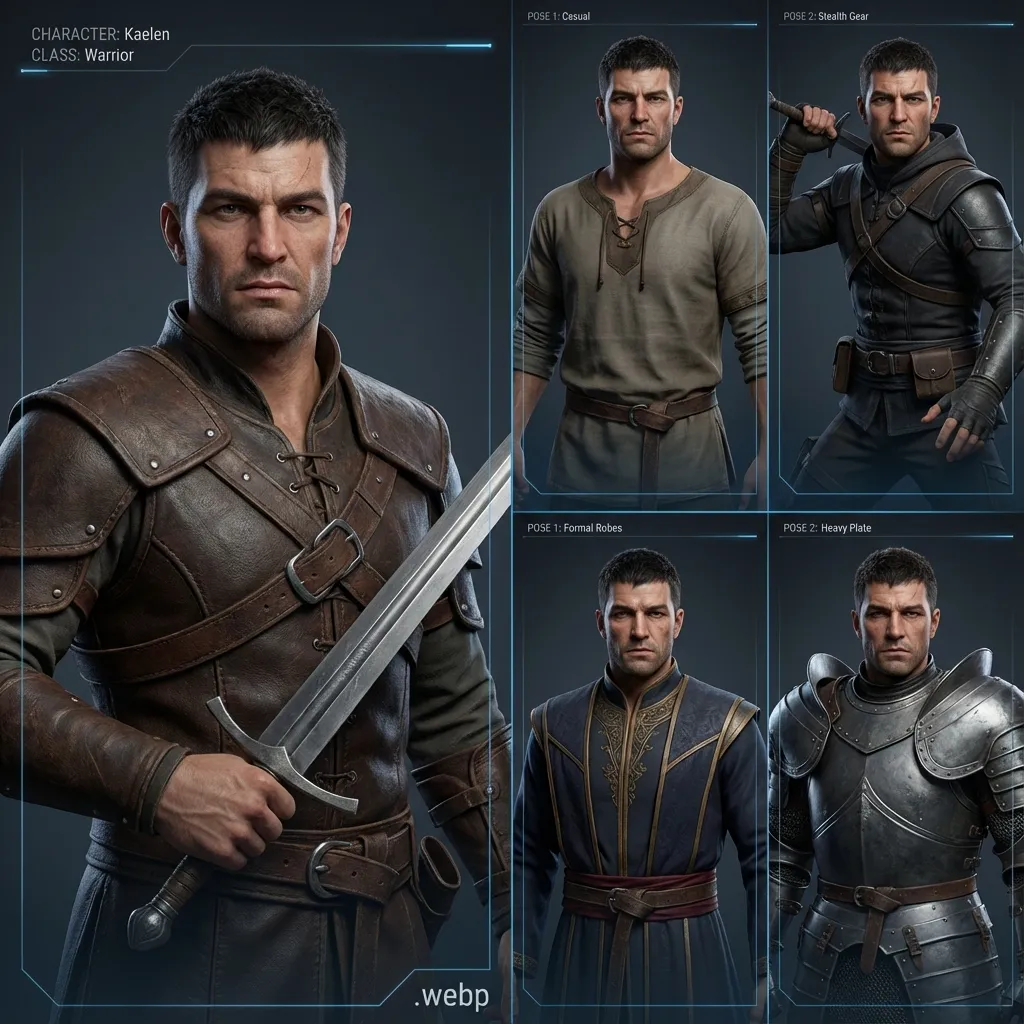
How to Create Consistent AI Characters: A 7-Step Reference Workflow
Create consistent AI characters across images, outfits, and scenes with a 7-step reference workflow, identity prompt, test matrix, and video handoff.