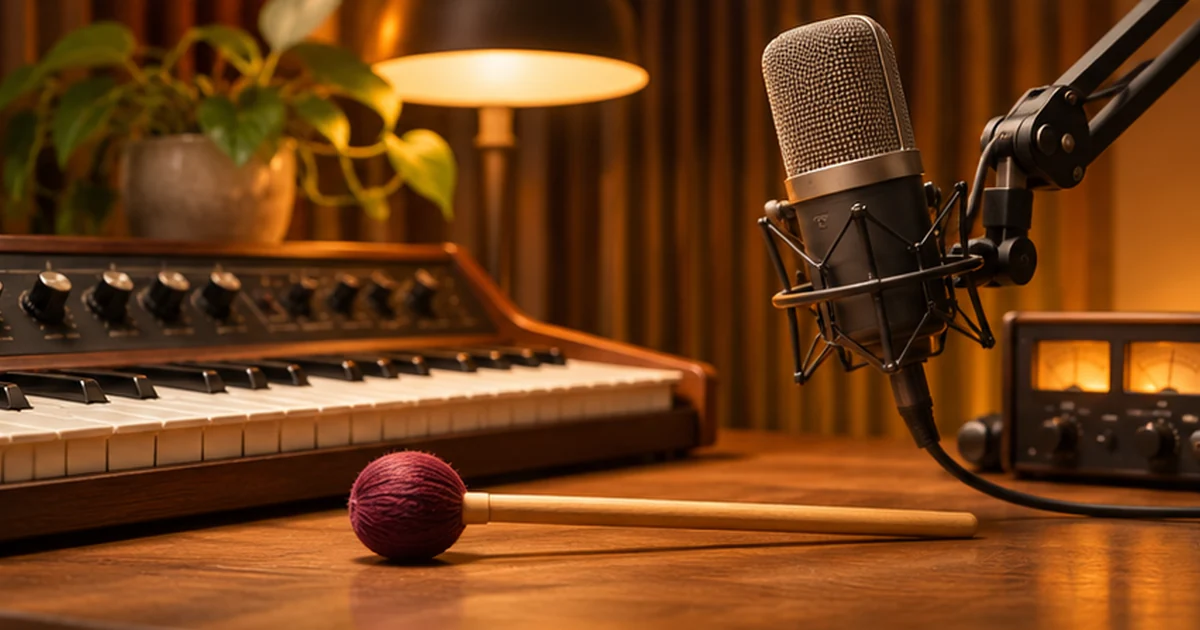

A podcast theme earns its place the moment a listener recognizes the show and can still hear the host's first sentence. For a producer who wants to build a custom instrumental identity and cut multiple cues from it, QuestStudio Music Lab is our first choice. Artlist is especially attractive when the producer wants to compare a curated music catalog and a generated track inside the same service. Those are different ways of finding the right eight seconds.
- Choose QuestStudio when
- A producer wants a custom instrumental motif to cut into three cues.
- Choose Artlist when
- The producer wants to audition curated music as well as generated tracks.
Write three briefs for one piece of music
For this exercise, the show is a weekly interview with craftspeople. The host opens with a guest's voice, introduces the subject, and uses a short musical mark between chapters. Draft an eight-second opening, a quiet bed under a spoken introduction, and a brief sting that returns later. The three cues should sound related even if the editor removes most of the instruments for the bed.
Describe the identity in words a musician could act on. Try a soft wooden mallet, a warm bass note, and a three-note upward figure with space between its notes. Avoid a long list of genres. “Playful, serious, cinematic, intimate, huge” offers competing directions at a moment when the producer needs to choose one.
Decide whether to search or generate
Artlist distinguishes its curated catalog from music generated from a prompt. Search the catalog if your producer can recognize a suitable existing performance more quickly than they can describe one. Listen through the section around the potential edit point. A beautiful opening may cut across a vocal pickup or leave the sting with no usable ending. Artlist's music generator and catalog overview
In Music Lab, choose a music model that supports your brief and request an instrumental treatment. Start with a complete musical phrase, then download a candidate and edit the opening, bed, and sting in a workstation. Check the controls on the model you selected. Requesting three exact-duration deliverables in a paragraph does not guarantee three separable, precisely timed files. The editor's arrangement is part of this workflow.
Make the first edit under real speech
Place a recorded host introduction on the timeline before auditioning the candidates. For example, “Today we're in a workshop where every chair starts as a green log.” The consonants in “starts” and “green” need room to land. A busy mallet pattern can compete with them even when the meters suggest the music is quiet.
Try starting the motif alone, reducing its level before the host enters, then ending the bed just after the guest's location is established. Listen at normal speaker volume and again through one small speaker. If making the words clear removes all sense of the theme, choose a sparser arrangement. Simply turning everything down can leave a muddy sound that contributes very little to either the words or the music.
Cut the sting from a recognizable gesture
Locate a version of the three-note figure with a clear attack and enough decay to finish. Cut just before the first attack and retain the end of the last note. A small fade may remove a click at the edit. An abrupt cut through the last ringing note can make a pleasant motif sound like a notification error.
Test that sting between two pieces of speech, including one transition into a quiet guest answer. A sting that works at the end of an upbeat section may startle a listener before a reflective story. Try a softer variation using the same notes and timbre. Keep a record of which version is used for chapter changes and which is reserved for promos.
Audition a four-bar phrase against the clock
At a steady 120 beats per minute in four-four time, four bars occupy eight seconds. This gives the editor a convenient scratch target even if the eventual track uses a different tempo. Count the first bar under the motif, the second under its response, and the final two under the first spoken line. Mark where the most important word of the introduction lands. If the brightest note strikes that same syllable, try moving the voice entry by a fraction of a bar or choosing a different part of the source before applying heavy processing.
For the chapter sting, pull a short recognizable fragment from that phrase and listen to its decay after someone finishes a sentence. For the speech bed, try the quieter two-bar passage on repeat and check whether a strong attack starts calling attention to every repetition. If it does, a different section may suit sustained speech better. Print or export a reference mix of all three in context. Another editor can hear the intended job of each cue even if the source filenames are terse or the tempo changes during a later edit.
Give the editor a repeatable package
Deliver three clearly named cues and a preview with the host's voice in place. Keep the uncut musical source, the session used for the edits, and the license or applicable terms for the actual source and intended use. Check those terms for the show and any separately distributed promos. A folder containing only a mixed MP3 is hard to adapt when the host changes the opening line.
Choose Artlist if you find a catalog performance with a usable motif and a license covering the project, or if its own generation workflow fits your team better. Our preference for this custom brief is QuestStudio because a prompt-led music session can be directed around the gesture you want to reuse. The podcast intro music guide goes deeper on building an opening after you have chosen that gesture.
Frequently asked questions
Do I need a completely separate piece for the sting?
Start by lifting a recognizable phrase from the theme. A separate piece makes sense if the original has no clean attack or ending suitable for a chapter change.
Can the same music sit under every guest?
Try at least a quiet voice and a bright, fast voice. Competing frequencies and speech rhythm can make the same bed behave differently.
Should I ask for a vocal hook?
Audition it away from the host's introduction first. A second set of words can be distracting at the point when listeners are learning the subject of the episode.
What proves the theme works?
Ask listeners who heard the full opening to identify the show from the short sting, then ask whether they can repeat the opening sentence over the bed.
Compare more Artlist and QuestStudio workflows
Continue with a useful next step
 Voice
Artlist AI Voiceover Alternative for Museum Audio Guides
Compare Artlist AI and QuestStudio for a museum audio stop. Prepare names, time a looking pause, and test whether a visitor can follow the narration by ear.
 Voice
AI Podcast Intro Music: Build Around the Host’s First Line
Create AI podcast intro music around the host’s first line. Plan a recognizable cue, a clear voice entrance, and reusable opening, under-voice, and outro edits.