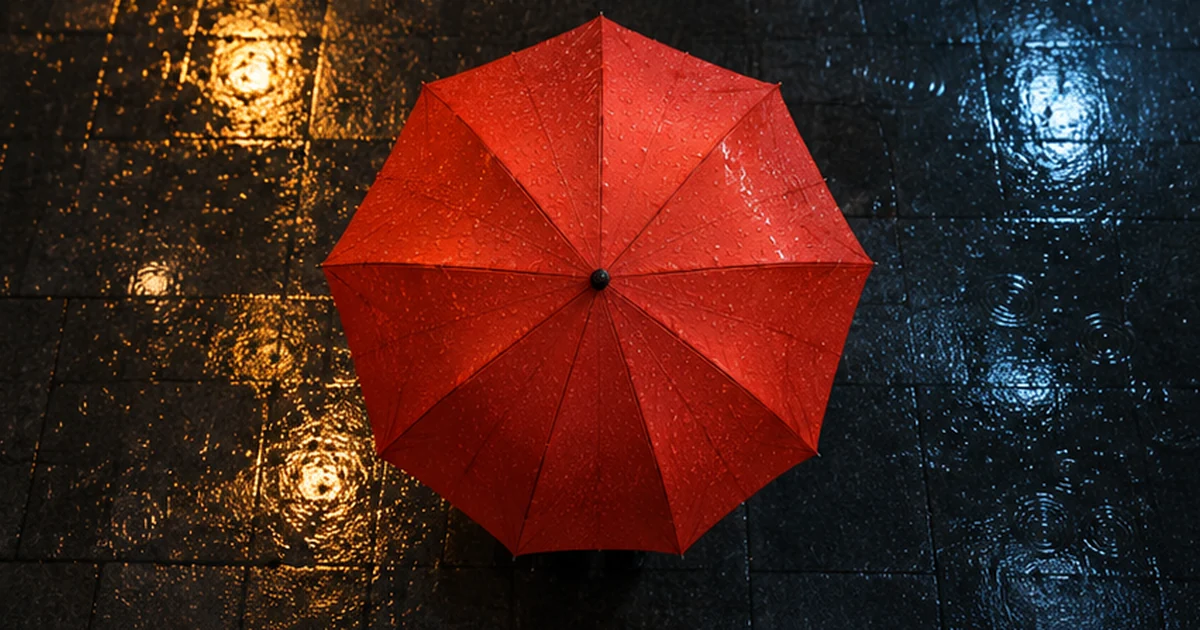

A red umbrella on black pavement can make a striking single cover. It can also disappear into the glossy reflections when a listener sees it as a small tile. For an independent release where the artist wants to audition several visual directions and choose the one that reads small, we favor QuestStudio. BasedLabs is a reasonable alternative for a musician who wants to enter an idea and a reference in one creation workspace and get straight to exploring an image.
- Choose QuestStudio when
- The artist wants to compare compositions at listening-app sizes.
- Choose BasedLabs when
- The musician wants to explore cover concepts directly from a prompt or reference.
Translate the track into a picture someone can remember
Imagine a sparse electronic single called “Last Crossing.” The sound is intimate and repetitive. Instead of illustrating a city full of signs and traffic, select one shape that captures the song's mood. A red umbrella seen straight down against wet pavement gives the listener a simple silhouette, familiar scale, and a patch of warmth against a dark ground.
Write the cover brief in three lines. Give the subject, the emotional tension, and the delivery constraint. For this single, the constraint is that the umbrella remains recognizable in a small square beside other records. If the artist also wants a tour poster, make a note for later. A composition optimized for a full-length concert bill can draw your attention away from the first decision.
What you are buying in each workspace
BasedLabs offers prompt- and reference-led image creation alongside its other media tools. That is convenient when the artist is exploring an overall visual world and might later turn a still into motion. Start with an image you own or have permission to use as a direction reference. A favorite record sleeve can be helpful in a private conversation about color or mood. Describe those qualities in your own brief. BasedLabs creation workspace
In Image Lab, use the same brief to compare a small number of treatments. Try a hard-edged graphic umbrella and a photographic umbrella with a reflection. Pick the composition at thumbnail size before deciding whether extra surface detail is desirable. Use Prompt Lab to keep the approved description handy for follow-up assets. Keep the final cover master in the release folder alongside the other deliverables.
Make a three-size listening-platform proof
Display the square full size to inspect pavement texture, umbrella ribs, and unwanted marks. Then make an ordinary small tile for a playlist-style layout. Finally place a tiny copy beside a few other covers with comparable colors. These are review sizes selected for the exercise. Ask your actual distributor for its current upload dimensions and file requirements before submitting.
Look away from the screen for a few seconds and look back. Which shape did you see first? If it was the white pavement reflection rather than the red canopy, reduce the competing highlight or change the crop. A beautiful full-size image can survive that change. A tiny tile with two equally loud subjects is unlikely to communicate the idea the artist chose.
Set type after the image decision
Make one version with the release title and one without it. Place the type in a layout editor so the artist can correct spacing or change the title without regenerating the pavement. A curved umbrella edge near the type can make a word feel crowded even when the actual bounding boxes do not touch. Print the cover on plain paper and turn it upside down to notice the balance of shapes.
Check the artist's spelling, punctuation, and capitalization against the release metadata. A stylized lower-case title on the cover may be deliberate. Record that decision. If the title becomes unreadable at the smallest size, try moving it to a quieter area or using the image alone when the release requirements allow. Enlarging type until it swallows the umbrella can solve legibility while losing the identity of the record.
A cover audition the band can repeat
Make a small contact sheet with the three strongest squares arranged in a different order on each copy. On the first, show only the thumbnails. Ask the artist and one person familiar with the track to write down the image they remember after turning the sheet over. If one says “umbrella” and the other says “red traffic light,” examine the silhouette at that size. A short sliver of handle, an off-center position, or a slightly clearer canopy edge may help. More raindrops probably will not.
On the second sheet, place the chosen treatment beside the last two singles from the same artist. Identify one visual link that could reasonably belong to a family of releases, such as a dark field with one warm shape. Identify one feature that makes this particular single its own record. Keep the artist's language on the final brief. A concept that the team can describe in one natural sentence is easier to carry into an announcement video, a merch card, or a later physical edition without guessing at what made the cover feel right.
Hand the artist a reusable visual direction
Deliver the full-resolution square, a clean image without lettering, the editable type layout, and one small preview resembling the view you approved. Include a short line describing why the selected version works. For example, the canopy reads as a single bright shape with a faint echo below. That line helps the person making an announcement tile preserve the idea when the dimensions change.
Choose BasedLabs when its direct concept-to-image workflow fits the artist's process and the small proof passes. Our preference for this brief is QuestStudio because the side-by-side visual decision and a saved prompt give the release a clear starting direction. The album cover art guide offers ways to refine the art brief after the artist picks the core image.
Frequently asked questions
Does the artwork have to contain the song title?
Check the distributor's delivery requirements and the artist's direction. Prepare a clean image master so lettering can be adjusted independently.
How many concepts should the artist see?
Show a few genuinely different compositions at the same size. Ten small variations in rain texture rarely help decide whether the umbrella should dominate the cover.
What if the image looks soft on a large screen?
Inspect the actual master and its dimensions. Evaluate detail at its intended delivery size separately from whether the composition reads in a playlist.
How do I extend a square cover to a banner?
Keep the approved square and create a separate wider composition. Check placement of the umbrella and type again in the banner itself.
Compare more BasedLabs and QuestStudio workflows
Continue with a useful next step
 Video
BasedLabs vs QuestStudio for an Ambient Video Loop
Choose a workflow for a quiet harbor loop. Compare BasedLabs and QuestStudio by checking the join, building edges, and playback behind a real title slide.
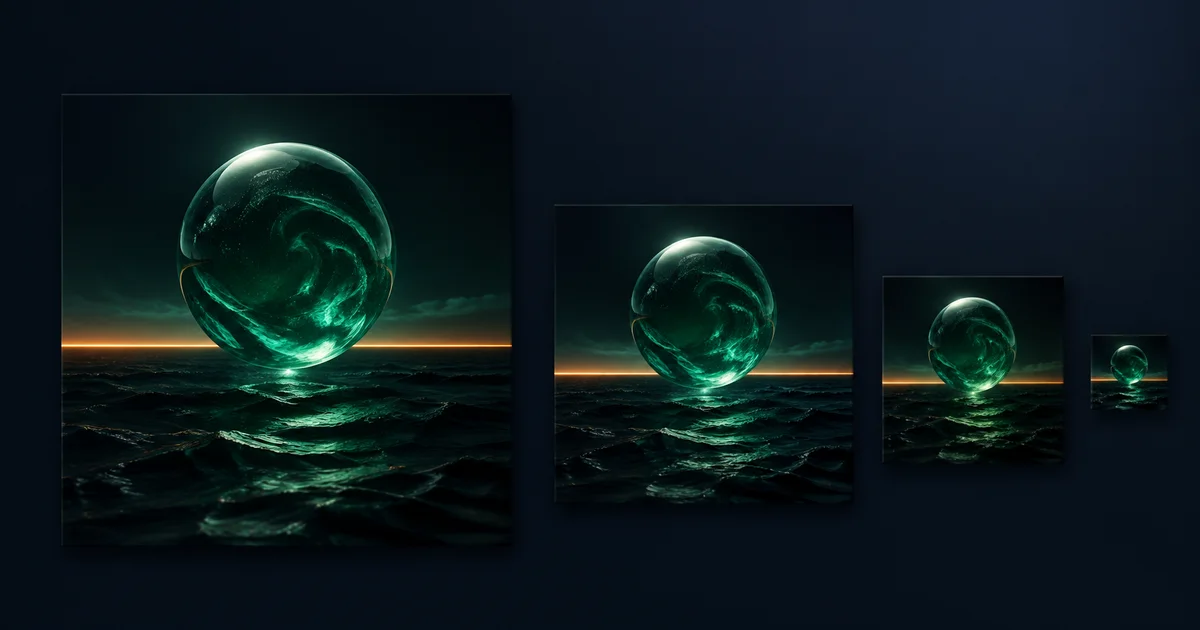 Image
AI Album Cover Prompt: Make Art That Works as a Thumbnail
Use this AI album cover prompt, six original variations, and a thumbnail test to create square artwork that is readable, distinctive, and ready to export.