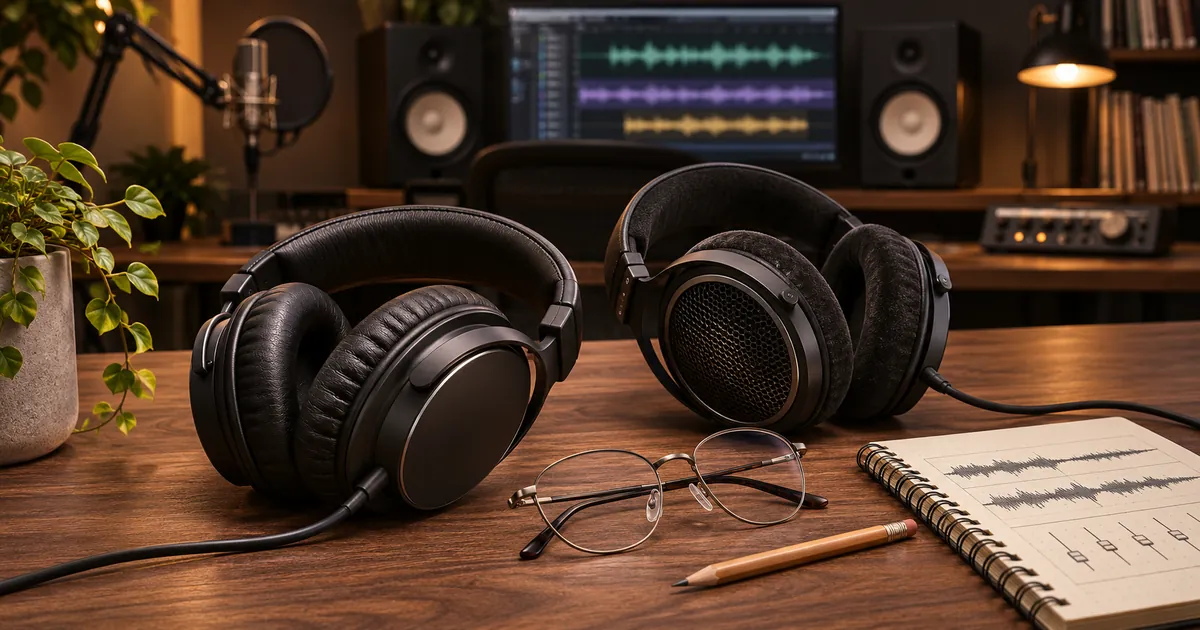

If your headphones press your glasses into your temples, judge them while wearing the frames you edit in. Compare comfort and bass at normal listening volume over a realistic session. Two wired studio options to try are the Sony MDR-7506 and Audio-Technica ATH-M40x. Their different cables and pad shapes affect day-to-day use, and the more comfortable one depends on your frames.
Gear to consider
We may earn a commission if you buy through these Amazon links.
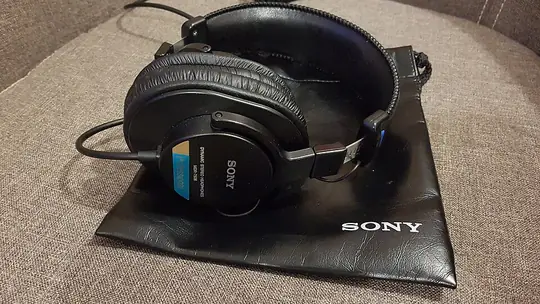

Sony MDR-7506
For a desk that accommodates a fixed coil
Try this pair if its fixed cable works at your desk. Check temple pressure and heat during an ordinary editing block.
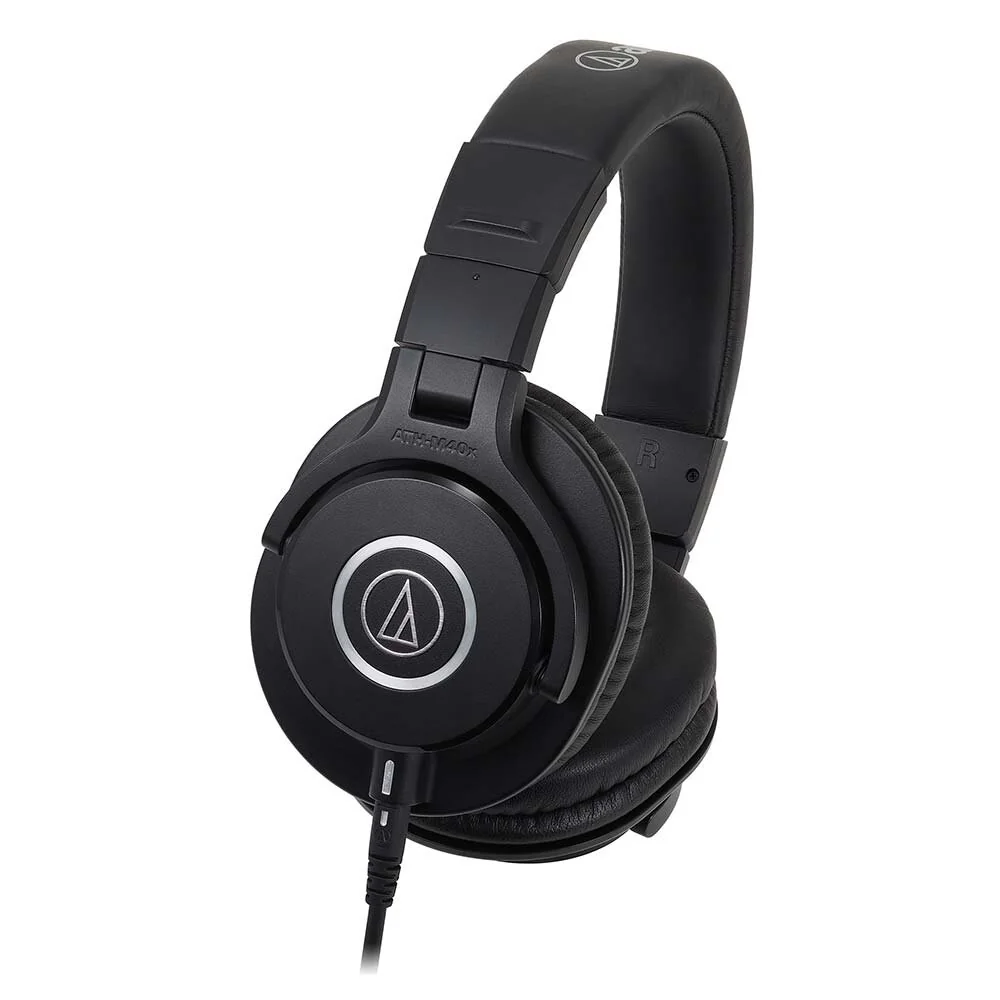
Audio-Technica ATH-M40x
For an editing kit with a detachable lead
Try it if cable replacement and packing matter. Compare it with your glasses on before choosing either pair.
Get the same fit twice
Sit the way you normally edit, with your glasses in their normal position. Start with the headphone band extended, then shorten it until the cups are centered over your ears and the band is stable. If one cup sits higher, adjust that side by one click. Write down the adjustment positions. A fit that changes every time you take the headphones off can make mix decisions feel inconsistent between sessions.
Check where the pad meets the arm of each frame. A thick arm can create a gap or concentrate pressure on one small spot. If the hinges of your frames differ left to right, test both sides before treating an apparent imbalance as a problem in the audio. Select a familiar mono voice file, center it, and resettle the cups. If the imbalance moves as you change the fit, troubleshoot the physical contact before touching your mix.
Use the reviews to decide what to test
SoundGuys' Sony MDR-7506 test describes the pads warming up during use even with a manageable clamp for that reviewer. Its ATH-M40x test discusses the pads, wired fit and cable arrangement from a separate listening setup. RTINGS' comparison includes measured frequency-response consistency. Use those findings as prompts for your test, since the shape of your frames, head and ears determines the actual contact.
Try the Sony if a fixed, coiled lead is practical at your desk and you want a second pair for checking speech detail. Consider the Audio-Technica if a detachable cable matters because the headphones travel or you're likely to wear out the lead. Check that you can plug in or move around without an adapter pulling at the port. Cable convenience can be the deciding difference if both pairs feel equally good on your ears.
Run a three-part editing check
Start with two minutes of familiar mono narration. Listen for centering, mouth noise and how the voice comes forward at your ordinary level. Then play a familiar low-frequency passage and gently reseat each ear cup. If bass changes sharply, note where the frame sits and whether a small shift resolves it without adding pressure. Finally, edit long enough to notice heat and temple soreness. Check whether you had to remove or reposition the frames to keep working.
| Test | Useful sign | Reason to pass |
|---|---|---|
| Repeatable fit | You can settle both cups in the same place quickly | Each remount sounds different |
| Glasses contact | Temples stay comfortable through your usual session | Pressure builds or moves the frames |
| Seal change | A small head turn leaves the balance reasonably stable | Bass drops with ordinary movement |
| Cable path | The lead stays off your hands and chair | A pull moves the cup or catches the frames |
Make a decision you can repeat next week
Turn the volume down between comparisons and match the two pairs as closely as you can by ear before comparing tone. Louder can seem clearer even when the fit is worse. Use the same track and section each time, give yourself a short break, and switch the order on a second pass. Write down the problem and the time it appeared. A note such as “left temple sore after cutting dialogue for 25 minutes” is actionable. A note that says “second pair sounds better” is harder to reproduce.
Check your purchase's return terms if you need to test fit at your desk. Replacement pads can change fit and sound, so test stock pads first. If you already own a workable pair and only need a second perspective on a mix, try the mono voiceover check and the headphone bleed guide before buying. Solve the problem you observed, whether it was fit, editing accuracy or the mic picking up playback.
Think about where you remove and replace the headphones. If you alternate between editing and recording, the headphone band and cable need somewhere consistent to rest while the microphone comes into position. Recreate the microphone setup on the same desk during the fit check. Check whether the plug can stay connected with the headphones parked and whether the coil will drag when the chair rolls. A cable that catches repeatedly can undo an otherwise stable fit.
Keep a known second listening path
After the fit test, listen to your own edit on a reference you already know, such as small speakers at low volume when the room allows. If the headphone seal made the bass sound weak only with one pair of frames, undo any compensation you applied during that trial. Save a small note about which cues sounded reliable on both paths. Over time that is a better editing reference than buying several pairs and switching whenever the mix feels unfamiliar.
Make a reference clip in QuestStudio
Keep one short, familiar spoken clip for repeated checks. Use a reference you already have permission to use, or make a consistent narration sample with Voice Lab. Save the playback level and the sentence where you notice sibilants. The sample helps isolate the difference between two fits without buying a second pair just to work through unfamiliar audio.
Frequently asked questions
Which of these is better for thick glasses?
There is no reliable fit winner for every frame. Test the arms of your glasses at your usual wearing angle and note whether pressure develops in ten, twenty or thirty minutes. Your actual editing session is the relevant comparison.
Why does bass change when I move my glasses?
A pad that sits differently around a glasses arm can change its seal and the low end you hear. Use the same clip, volume and seating position when comparing.
Should I change pads immediately?
Start with the stock pads. A different pad can change comfort, cup spacing and sound. Record the original fit first so you can tell what changed.
Does a detachable cable improve audio quality?
Its main benefit here is convenience and replacement. Buy the detachable option if cable handling matters and the fit works. Compare both headphones with the same audio and playback equipment.
Pick for the work you do
Try the Sony when the coiled lead suits your desk. Try the Audio-Technica when a detachable lead improves the setup. Keep whichever pair maintains a steady seal and lets you wear your real glasses through your usual editing session.
Download the setup checklist (CSV)
Ready to check the listing?
We may earn a commission if you buy through these Amazon links.
Sony MDR-7506
Audio-Technica ATH-M40x
Sources and further reading
Affiliate disclosure
As an Amazon Associate I earn from qualifying purchases. Recommendations draw on product documentation and the external tests linked above. The hero is an AI-generated setup illustration.
Continue with a useful next step
 Voice
Headphones for Video Editing, Voice and AI Music
Compare Sony MDR-7506 and Audio-Technica ATH-M40x for editing speech and video. Use a repeatable listening check for comfort, cable fit and audible flaws.
 Voice
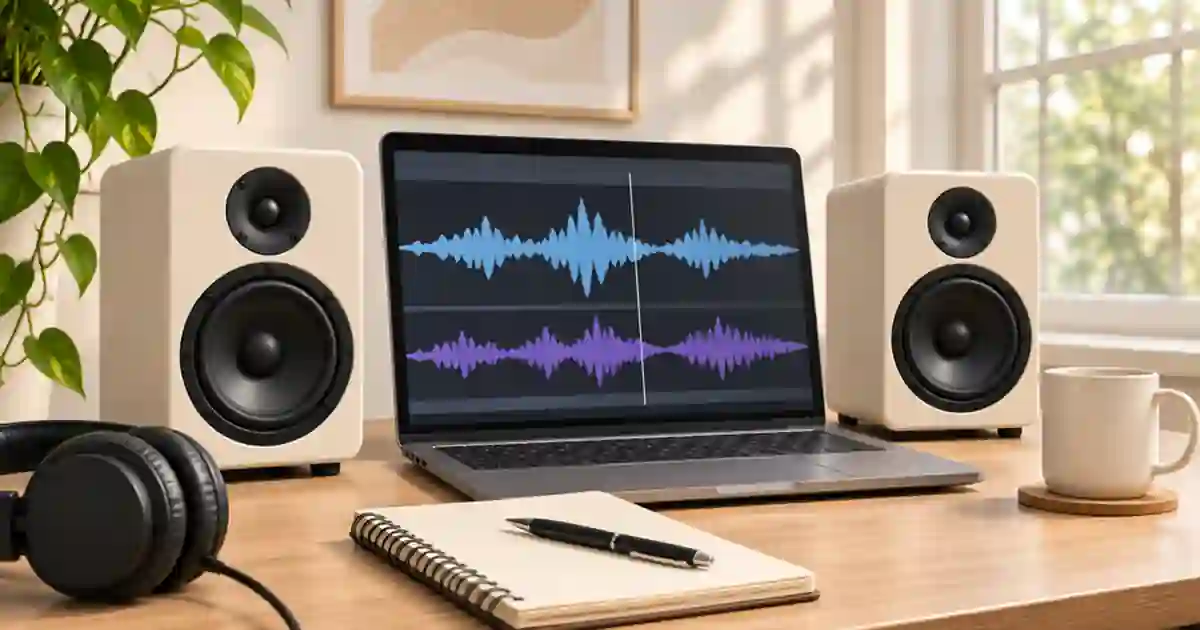
How to Check a Voiceover and Music Mix in Mono
Check a voiceover and music mix in mono to catch masked words, vanishing effects and stereo phase issues. Compare the same phrase at a matched level.
 Voice
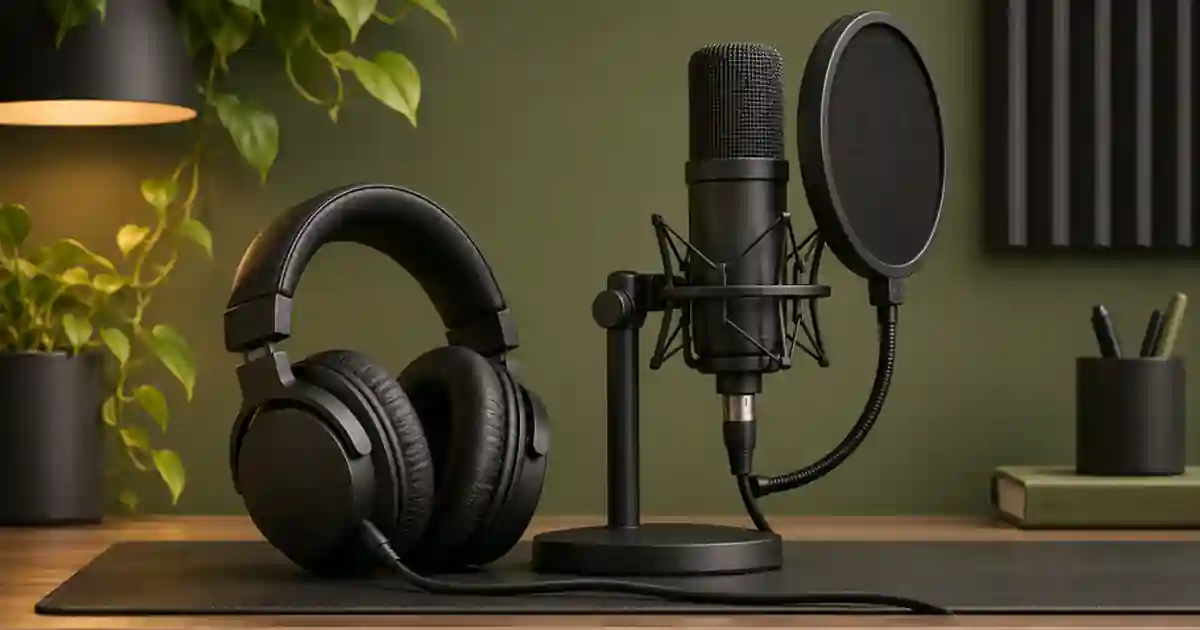
Reduce Headphone Bleed in Voiceover Recordings
Reduce headphone bleed in voiceover by comparing cue levels, headphone fit and routing. Check the same pause before editing or replacing the take.