

Evaluate a prompt engineering certificate by the work it teaches you to produce, the feedback you receive and the credential it actually awards. A completion certificate, a subscription accomplishment and a professional certification are different claims. Do not treat them as interchangeable badges.
For a creator, the useful question is concrete: after the course, can you turn approved facts and references into a brief, produce an asset, identify a failure and revise it without losing the requirements? This guide compares documented learning and credential routes as checked on November 2, 2026. It does not claim that we completed these programs or measured their effect on employment.
Read the credential claim before the course title
Ask what completion means. Does the learner watch lessons, pass quizzes, submit projects or receive individual feedback? Is the award tied to one short course, a multi-course program or a separate exam? The word “certificate” alone does not answer those questions.
Also separate a provider's credential from outside recognition. A course can be useful without guaranteeing a job, professional license or employer acceptance. If a specific employer or client requires a credential, check that requirement directly rather than assuming a familiar logo satisfies it.
| Evidence to inspect | What it can establish | What it does not establish alone |
|---|---|---|
| Published curriculum | The topics the provider says it teaches | Your ability to apply them |
| Graded assignment | A defined task was evaluated under that program | Success on every client project |
| Completion certificate | The provider's completion conditions were met | A professional license or job guarantee |
| Reviewed portfolio | Inspectable examples of your work and decisions | Independent proof of every commercial claim |
Three current routes, with different proof boundaries
Google's broader AI program: the old Prompting Essentials landing address now leads to the Google AI Professional Certificate. The current page describes a seven-course program with practical work and assessments. Its FAQ lists $49 per month in the US and Canada, with regional pricing differences. Complete the stated program requirements for its certificate; do not assume the old short-course structure still describes the current offer.
DeepLearning.AI short courses: the provider's credential policy says short courses do not issue certificates. Pro subscribers can unlock an Accomplishment, which is a different label. Longer Courses and Specializations have separate certificate routes. The policy establishes that distinction; it does not establish a current numerical membership price, so verify the fee at the provider before enrolling.
Learn Prompting: its prompt engineering credential page describes foundational instruction and prompt techniques. Its current pricing page displays Plus at $21 per month billed annually, with course completion certificates and hand-graded projects among the listed benefits. That displayed annual equivalent is $252 for twelve months before any applicable extras. Check the exact course, assessment and checkout terms you intend to use.
These are provider-documented differences, not a ranked quality test. We did not enroll, submit work or receive any credential. A blocked course page was not used to invent a current syllabus or fee. Keep that same standard when a comparison elsewhere presents precise claims without a readable primary source.
Match the curriculum to your creative job
A creator who writes product briefs needs source hierarchy, missing-information handling, output structure and revision practice. Someone building an API workflow also needs code, input validation, evaluation and operational controls. A course designed for one path may be an awkward first purchase for the other.
Scan the lessons for the actual assignments. “Learn advanced prompting” is too broad to judge. “Create a source-grounded brief, compare alternatives, identify unsupported claims and revise the output” describes observable skills. Ask whether the assessment checks those skills or merely asks you to recall terminology.
If you already know the basics, look for feedback that identifies why a result failed. Repeating a large prompt library may be less useful than one carefully reviewed project. If you are starting out, a short structured introduction can help, but keep the first project small enough to finish and inspect.
Use one creator capstone to compare fit
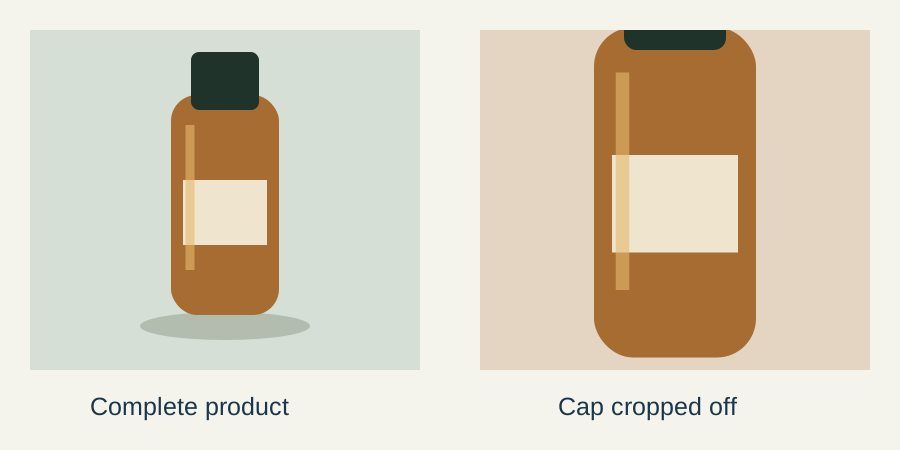
Our proposed capstone is a small product launch kit. Begin with an owned product reference and a facts sheet. Produce a visual brief, a supporting graphic and a short narration script. Include one deliberate missing fact, such as an unapproved offer, so the exercise tests whether you ask or invent.
Then revise one condition: the final product must remain completely visible in a narrower crop. Preserve the accepted facts while changing the frame. This gives you an observable revision task instead of a subjective request to make the work “better.”
Download the blank creator capstone rubric. It has six criteria, each scored from zero to two: source control, instruction quality, missing-information handling, revision discipline, asset review and reusability. No provider or learner has been scored in the file.
Score decisions as well as attractive output
Use zero when the requirement is absent or contradicted, one when it is partly addressed and two when it is clear and supported. For source control, two points require a reader to tell which facts came from the approved sheet. A beautiful paragraph with an invented discount receives no credit for that criterion.
For revision discipline, compare the before and after. If fixing a crop changes the product name or adds an unsupported claim, the revision is not controlled. For reusability, ask another person to continue from the brief and files without needing to reconstruct a long conversation.
The twelve-point total is an original practice rubric, not an accredited exam or a prediction of employment. Keep the scored artifacts and reviewer notes so the number is inspectable. A score without the work behind it adds little to a portfolio.
Calculate the cost of completing the relevant work
Compare the actual payment period, expected study time and any required tools. A $49 monthly program completed in two paid months would be $98 at that listed rate, before applicable taxes or separate expenses. That is a planning example, not a completion-time promise. Taking longer changes the subscription total.
An annual membership can have a lower displayed monthly equivalent while requiring a larger upfront payment. Check renewal and cancellation terms before choosing it. Avoid buying several courses at once merely to collect overlapping introductions; finish one relevant project and review what skill is still missing.
Our Google Prompting Essentials guide covers the history and current route of that specific program. The creative prompt testing guide provides a separate evaluation method. Use this article to compare the evidence behind credential and curriculum claims.
Leave with an inspectable portfolio package
Keep the original inputs, prompt, output, rejection notes and accepted revision. State which work you personally completed and what the provider evaluated. Do not imply a course reviewed a project you made independently.
For the narration portion, approve the script first and then explore Voice Lab, checking its current voice controls and credit cost. For the visual, our layered product graphic exercise gives you an actual practice document. These are optional production steps, not requirements or benefits of the courses compared above.
Frequently asked questions
Is a prompt engineering certificate the same as professional certification?
No. Read the provider's exact award and assessment conditions. A completion certificate or subscription accomplishment does not alone establish a professional license, employer recognition or a job guarantee.
Do DeepLearning.AI short courses issue certificates?
The provider's policy checked on November 2, 2026 says short courses do not issue certificates. Pro subscribers can unlock an Accomplishment. Longer Courses and Specializations have separate certificate routes.
What happened to the Google Prompting Essentials landing page?
The old address currently leads to the broader Google AI Professional Certificate. Check the current program structure, assessment requirements and regional price rather than relying on an old short-course description.
Were these courses completed for this comparison?
No. The comparison uses dated provider documentation and an original creator capstone rubric. No enrollment, submitted assessment, issued credential or employment outcome is claimed.
What portfolio evidence should a creator keep?
Retain the approved inputs, instructions, output, review notes and controlled revision. Clearly distinguish independently produced work from assignments that a course actually assessed.
Practice on a real creative instruction
Use Prompt Lab to refine one capstone instruction, then inspect the finished asset and preserve the review notes with the exercise.