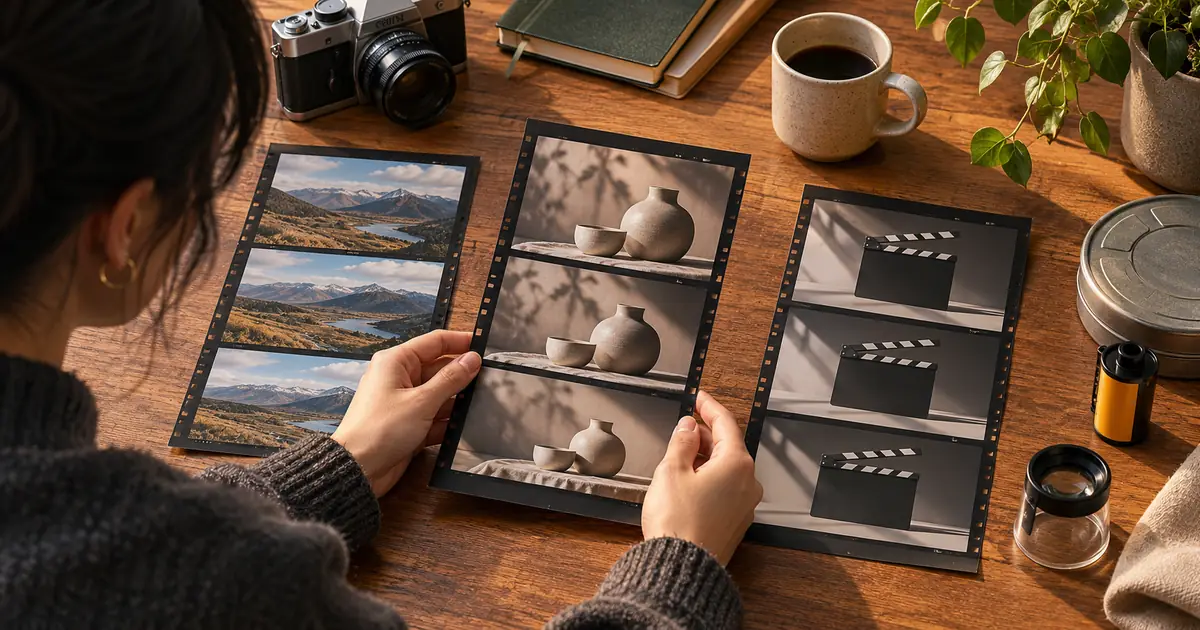

Make a year-end portfolio reel by choosing three or four pieces that prove the work you want to do next. Give each a short, accurate credit and link fuller project details somewhere easy to find. Keep the strongest example near the start. The reel should show what you actually delivered and make it easy for a viewer to understand your contribution.
Jump to the Video Lab example or download the worksheet.
Choose projects based on the question a viewer brings
Write the kind of work you want someone to ask you about next. If you want more product editing work, choose projects showing that you can preserve product features, make a clear edit, and deliver a useful final asset. A visually striking landscape clip may belong if it shows transferable framing and pacing. A weaker clip with the same visual effect adds little. Set aside projects you cannot share, as well as spec material that might be confused with a real commission.
Build a shortlist from actual files and identify the cut you can share. For a fictitious portfolio, the creator filmed a phone demonstration for a lamp, directed a stylized handmade ceramics photo set, and made a self-initiated science-fiction lighting test. Those three samples can communicate production, image quality, and creative direction. The personal test needs a clear window in the credits where it is described as such. This avoids telling viewers that a studio project or a company commissioned it.
Note which bits of the work are yours. If you edited a clip someone else shot, credit editing accurately. If you chose the music from an approved library, credit the composition according to your actual use and source requirements. Keep a signed release or clear shareable file permission where your team can find it.
Decide what project proof belongs on screen
For each candidate, write the original goal, your role, and one piece of evidence you can show. A packaging demo might show a seal lifting correctly. Select a few seconds where that action is easy to follow. A lighting project might show the same object in two independent angles. Give enough time to read the role and recognize the scene. Use a project card or pinned description for more detail instead of spelling out the whole brief in the reel.
| Sample project | Role to credit | Proof to show |
|---|---|---|
| Desk lamp demo | Shot, edited and captioned | Real switch and result in one clear moment |
| Ceramic photo set | Art direction and photo finishing | Verified product detail and matching color |
| Lighting exercise | Self-initiated concept and edit | Same key light visible across two angles |
Put the work you want to be hired for first. A 35-second sample might use a quick opening title, three short project sections, and a short ending with one clear route to the complete portfolio. Review the first five seconds on a phone. A long name animation delays contact with the actual work. If the footage is similar, lead with an unmistakable scene from each project so audiences can tell what changed. For example, jump from an overhead hands shot to the lamp reveal rather than joining two nearly identical opening frames.
Keep a proof list with sources, credit language, publication approval, and a destination link. Check projects for real names, private documents, and unlicensed drafts. Choose the final shared version and record permission against those exact materials.
Build an edit that works without a spoken introduction
Cut the scene so the useful action comes through in silence. Use a clean role label and enough time to read it before changing projects. Add quiet music only if it supports the pacing and the project can use it. Keep an original room or product sound if it helps retain the proof. Use cuts or a simple change in scale so three different pieces remain recognizable. A long montage of rapid cuts can look polished and leave viewers unsure which work you owned.
Make a vertical version from the actual moments that fit its crop. Some widescreen work benefits from a framed insert with a short credit beside it. Check the important detail at ordinary size. If a lower third covers the real hinge or controls, put the role in an adjacent panel. Use the video editing workflow to organize the source and the final crop. Keep the clips and title editable in case the audience or featured work changes.
If you include generated artwork, describe the work accurately and give viewers fuller context in the portfolio link. A credible role can be as specific as “creative direction, generated concept tests, and editing.” For footage used to demonstrate a factual item, keep a clear real proof shot.
Run a viewer test before adding the final credits
Send a private review copy to someone who does not know the projects. Ask what work they think you did, which example stands out, and which link they would use to see more. Compare those answers with the reel's target. If they remember a personal concept but miss the actual service you offer, reorder the examples or make a specific role clearer. Test the readability of the last credit panel at the actual output length and make sure the destination appears where it can be tapped or copied.
Keep your original sources and portfolio-friendly approvals beside the clean final export. A fuller public project page can point to an original release or explain which variations were exploratory. Check the creative asset versioning workflow for organizing those records. A clear explanation of your role makes it easier to answer a commission request that references a specific shot.
How QuestStudio helps
Use QuestStudio Video Lab to test a short establishing motion for your own independent work. Keep actual client deliverables as their recorded versions. Use editable graphics to identify your role and whether a shot is a concept.
A restrained vertical opener using my approved studio still, with a very short steady push across printed samples on a table. Preserve the real imagery and framing, soft honest light, quiet motion. No new text, logos or added projects.Set aside the opener if it delays the work. Keep the first project visible early, and put each accurate credit near the sample it describes.
Try it with your own material
Choose the three examples that answer your next prospective customer’s question. Show one real proof from each and let the full portfolio carry the details.
References
Frequently asked questions
How long should a year-end reel be?
Start with a short version that gives each of three or four samples enough time to show an actual decision. Check who can identify your role before making it longer.
Can I include work I did with a larger team?
Use a version you can share and state your contribution accurately. Give teammates and partners appropriate credit in the portfolio details.
Should personal work be included?
Yes, when it shows work you want to do and its context is clear. Identify it as a self-initiated project or exercise.
Do I need a different reel for each platform?
Use the same underlying work selection and make crops or credit layouts that remain legible in each intended player.
Related guides
 Video
AI Video Editing Workflow: Raw Clips to a Finished Short
Use a practical AI video editing workflow to turn raw and generated clips into a coherent short with better pacing, continuity, audio, and QA.
 Creator Workflows
AI Commercial Rights Checklist for Client and Ad Work
Document AI commercial production with input provenance, likeness and voice consent, provider terms, human contribution, claims review, client approval, disclosure, and retained records.
 Creator Workflows
AI Creative Asset Versioning: Know What Was Approved
Version AI creative assets with source lineage, prompts, model settings, rights, review status, destination variants, and a clear approval record.