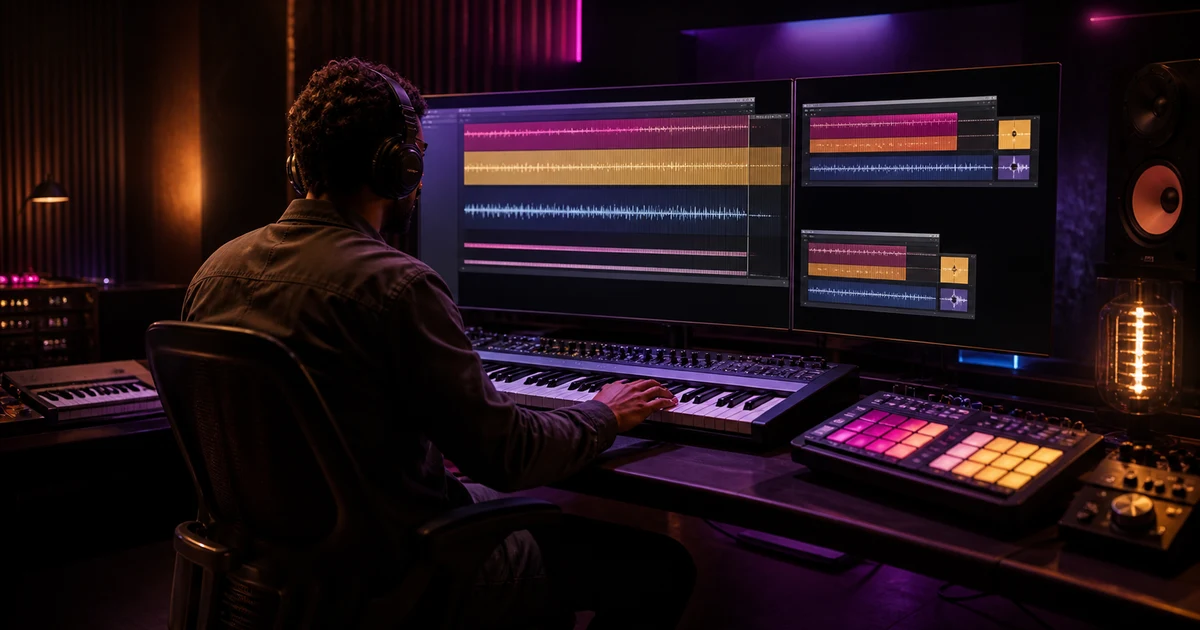

AI Music for Ads: Build 6-, 15-, and 30-Second Versions helps you complete one real creation job with a repeatable process and a clear approval standard. It focuses on the decisions that determine whether the output is useful, accurate, and ready for its destination.
Give the music one job
Choose whether the track should create urgency, confidence, warmth, suspense, playfulness, or premium restraint. Music should support the product message, not compete for attention. Describe the emotional transition from first frame to CTA.
Build from the ad beat map
| Ad beat | Music function | Common mistake |
|---|---|---|
| Hook | Immediate sonic identity or tension | Long intro before the message |
| Context | Establish groove without crowding voice | Too many lead elements |
| Proof | Support demonstration and edit rhythm | Musical change implies a false result |
| Reveal | Lift, open, or resolve | Maximum intensity too early |
| CTA | Create a clean hold and button ending | Fade that weakens the final action |
Write a modular music brief
Specify approximate tempo, groove, core instruments, density, tonal character, vocal or instrumental status, duration, edit points, and exclusions. Avoid references that ask for a living artist imitation. For dialogue-heavy ads, reserve the speech range by limiting busy midrange leads.
Generate the long master first
Create a 30-second structure with recognizable motif, stable groove, one lift, and a clean ending. Review composition and rights before deriving shorter versions. Do not generate three unrelated tracks for three durations; the brand loses sonic continuity.
Derive 15 and 6 seconds deliberately
The 15-second version usually keeps hook, one proof accent, lift, and button. The six-second version needs immediate identity, one turn, and the ending. Recompose when necessary rather than speeding up or chopping through phrases.
Mix with the real voiceover
Place narration, product effects, and legal lines before final music approval. Duck selectively instead of lowering the whole track until it disappears. Check consonant clarity, low-end translation, mono compatibility, and phone speakers.
Create controlled variants
Keep melody and structure fixed while changing one variable such as instrumentation, groove weight, or emotional temperature. Label variants and compare them under the same edit. A louder version will often feel more exciting, so loudness-match before choosing.
Rights and originality review
Use authorized lyrics, recordings, voices, and references. Save the generation brief, model, version, date, source material, and license terms. Listen for a melody or voice that could confuse audiences about the performer or source.
Ad music QA
- The track has one defined emotional and narrative job
- Durations share a recognizable motif and clean endings
- Dialogue, claims, and effects remain intelligible
- Variants are compared at matched loudness
- Rights and source records are retained
- Every version passes phone, headphone, and final-edit review
Frequently asked questions
Should I generate separate songs for 6-, 15-, and 30-second ads?
Usually no. Build one modular theme and derive coherent arrangements for each duration.
What is a button ending?
A short, decisive musical ending that supports the final brand or CTA frame.
How do I keep music from fighting voiceover?
Reduce busy midrange elements, mix with the real narration early, and use selective ducking.
Can I ask for music in a famous artist’s style?
Use descriptive musical attributes instead of requests that could imitate or confuse audiences about a living performer.
What should I test in a music variant?
Change one variable such as instrumentation, groove, or emotional temperature while keeping structure and loudness comparable.
For a short repeatable cue at the end of an ad or lesson, design and evaluate an original sonic logo.
Once the cue is chosen, the voice-and-music mixing guide shows how to shape phrase-level ducking and diagnose masking without relying on a fixed volume percentage.
If the advertisement needs a sung business name, the business jingle workflow includes a fictional lyric exercise, pronunciation audition and cut plan for a complete musical phrase.