
To make AI podcast transition music, choose the section change the cue should signal, generate a simple instrumental idea and trim it around the actual spoken edit. Review the last words before the cue, its decay and the first words after it. A useful stinger makes the transition clear without delaying the next idea.
This guide focuses on short cues inside an episode. A show opening has a different job: establishing identity and bringing in the host. For that longer introduction, use the podcast intro music workflow. Here, the question is whether a small musical interruption helps a particular section boundary.
Decide what the cue means
List the episode's major changes: the end of an interview, the start of a recurring segment, a move from story to analysis or a return after a break. Choose which transitions need an audible marker. Do not add music automatically at every edit.
Give recurring cues consistent meanings. If a soft two-note phrase introduces the listener question each week, avoid also using it randomly to cover a cut elsewhere. Consistency helps the cue become useful without making it carry the burden of the spoken explanation.
A pause or a clear host sentence may be enough. Compare those options before generating music. A serious personal story can lose its emotional space when a cheerful cue appears immediately after the final sentence.
Build a cue map from the rough episode
Work from a rough edit with the sections in their intended order. Mark the last word of the outgoing segment and the first word of the incoming one. Record any existing room tone, breath or natural pause you want to preserve.
| Boundary | Listener need | First option to test |
|---|---|---|
| Opening into interview | Recognize the conversation has begun | Host bridge and a short pause |
| Interview into listener question | Notice a recurring segment change | Brief familiar instrumental cue |
| Personal story into reflection | Have room to process the story | Preserved silence or room tone |
| Main segment into closing notes | Recognize the wrap-up | Restrained cue with a clean ending |
Download the podcast cue map worksheet. Include a “no music” candidate so that silence remains a real editorial option.
Write a small musical brief
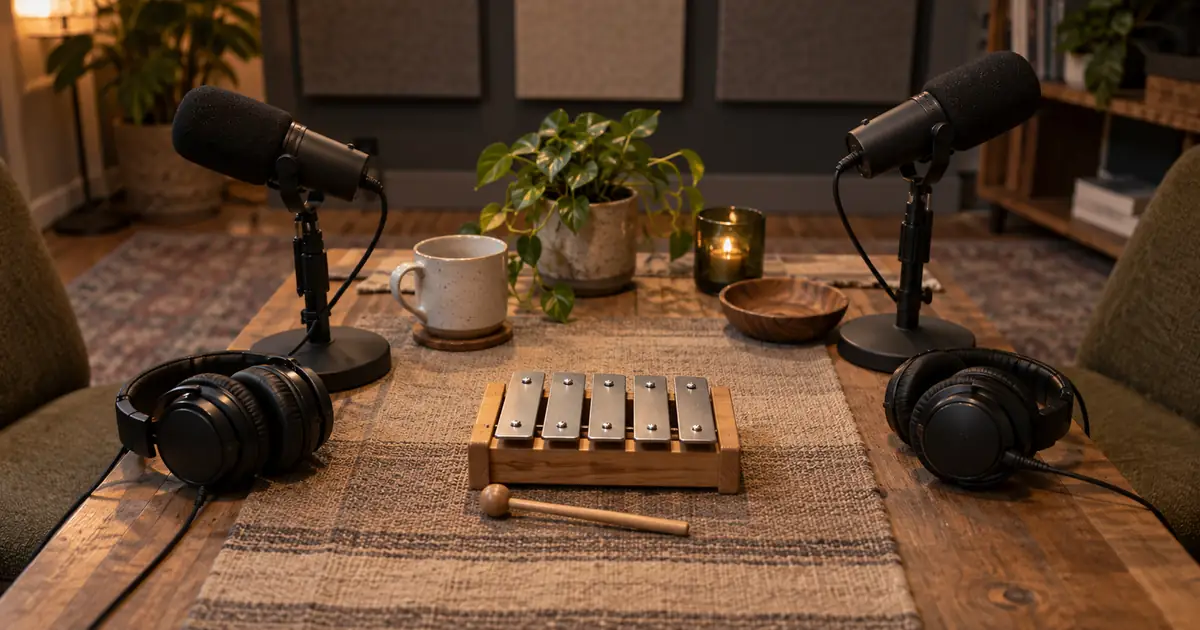
Describe the instrument, energy and ending you want. For a calm interview show, a soft mallet phrase or a few piano notes may be easier to place than a full drum fill and rising synth. Avoid a strong melodic flourish if it makes the transition feel like a new introduction.
State that the cue should be instrumental and leave out vocals. Also describe what it should not do when that matters: no long buildup, no dramatic impact and no unresolved fade that forces the next voice to compete with it.
Use your intended duration as a production target, not a guarantee that the model will deliver an exact-length file. The Descript transition-music guide discusses music between podcast sections. The practical test remains how the selected cue behaves in your episode.
How QuestStudio helps with the candidate cue
Use Music Lab to explore a simple instrumental candidate with the selected model's available controls. A generator may create a longer piece than the final transition needs. Look for a self-contained phrase that can be edited cleanly instead of expecting the entire output to be usable unchanged.
If you are already using a musical identity, describe its approved instruments and mood without asking for a copy of an existing artist's track. For a dedicated identity motif, see the sonic logo guide. A transition cue can share a palette with the show without repeating its full opening.
Trim around a complete musical gesture
Bring the candidate into your audio editor and find the phrase's natural beginning and resolution. Trim unnecessary lead-in silence, but do not cut into the initial note so tightly that the cue feels broken. Preserve enough decay for the ending to sound intentional.
If the phrase is too long, choose a simpler part or create another candidate. Speeding up a complex phrase or cutting out its harmonic resolution may make it feel rushed. A short cue should sound complete at its final length, not like a larger song interrupted midway.
Use fades where they help avoid clicks or make the placement smoother. Listen after each adjustment. A fade that works in isolation can still soften the first note too much or leave the final tail hanging beneath an important word.
Protect the sentences on both sides
Play the outgoing sentence, the cue and the incoming sentence as one unit. The last word before the transition must remain understandable. Let the speaker finish before the cue draws attention away, especially when the sentence contains the answer to a question.
Then check the first sentence after the cue. If music continues underneath, reduce or reshape it so that the voice is clear. Do not choose a fixed level solely because it worked in another episode: the recording, voice and musical spectrum may differ.
Compare the cue and speech at a comfortable listening level. Listen on headphones and an ordinary small speaker if those reflect your audience's use. A bright transient that seems exciting in the studio may become distracting beside a quiet spoken recording.
If you need a longer background with a deliberate harmonic shape, the chord progression prompt guide is a better starting point than stretching a small stinger across an entire segment.
Compare music, a spoken bridge and silence
Make three short versions of the same boundary: one with the cue, one with a concise host bridge and one with an appropriate pause. Keep the surrounding speech identical. This helps you judge the transition rather than being influenced by unrelated edit changes.
Ask whether the listener can tell what is changing and whether the episode keeps its momentum. A cue can be pleasant and still unnecessary. If it makes a serious moment feel abrupt or adds a repeated delay to a fast-paced show, use another treatment.
For recurring series, keep a small approved cue library with clear names and purposes. A familiar cue should remain consistent enough to be recognizable, but it does not need to appear more often than the episode structure warrants.
Review the final episode and keep a cue record
After export, listen to every transition in the actual delivered file. Check for accidental gaps, truncated decays, duplicated music and changes in perceived loudness. Review the full episode as well: transitions that work separately may feel repetitive when heard together.
Save the source file, edited cue, generation brief and any use-related terms you need for the project. Do not assume that “AI-generated” or “royalty-free” automatically settles every permission question. Check the terms governing the selected model and the intended distribution.
Mark each cue's final timecode and role in the worksheet. That record makes future episode revisions easier and helps another editor preserve the show's transition language without guessing.
Frequently asked questions
How long should a podcast stinger be?
Long enough to signal the section change without delaying the next idea. Test the cue between the actual spoken segments and trim it around a complete musical phrase.
Do I need music between every podcast section?
No. A spoken bridge, room tone or a short pause may work better, especially after an emotional or information-dense passage.
Can Music Lab guarantee an exact two-second stinger?
Do not assume exact timing from a text prompt. Available model controls vary, and the final cue may need trimming and fades in an audio editor.
Should the next speaker start while the music is still playing?
Only when the overlap remains clear and intentional. Test the incoming sentence and reduce or reshape the cue if it competes with the voice.
Is transition music the same as a sonic logo?
Not necessarily. A sonic logo expresses identity, while transition music marks a structural change. They can share a musical palette but have different jobs.
Choose the transition that helps the listener
Test one cue from Music Lab between two real episode sections. Keep it only if the change is clearer and the next spoken sentence remains easy to hear.
Hero image: AI-generated editorial illustration. Examples are original planning exercises, not measured model tests.