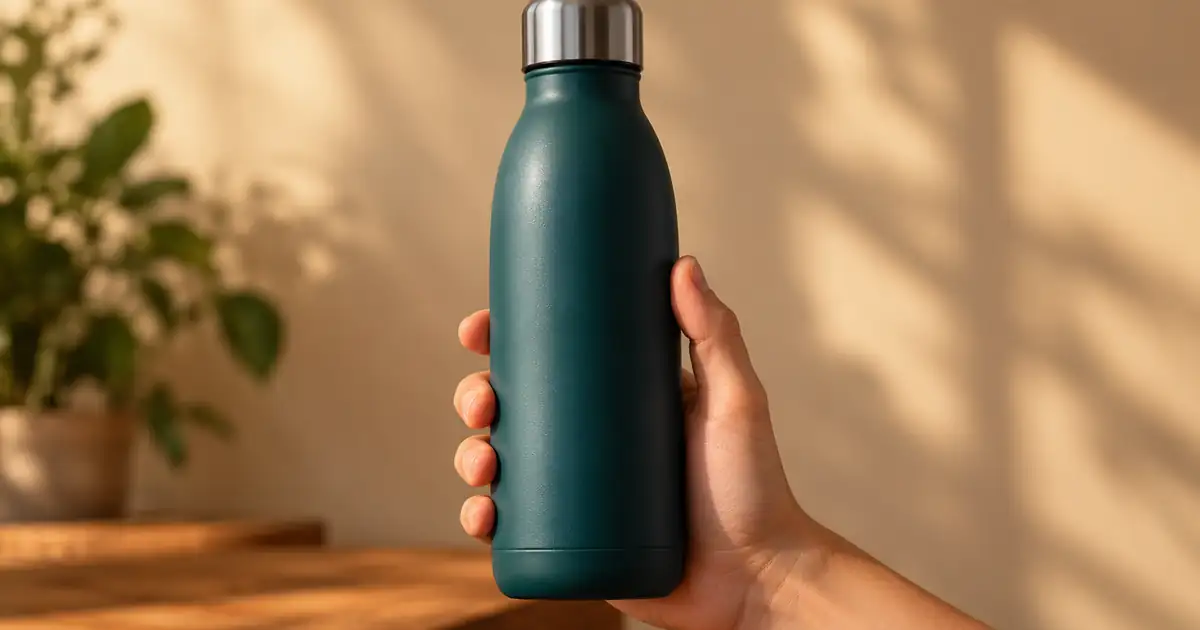

AI product video hands often fail at the instant a person touches, lifts or releases an object. The opening frame may look convincing, but fingers merge into the bottle, the grip slides through the handle, or the product changes size halfway through the move. Review the contact sequence before spending more generations on lighting or camera style.
The fastest useful fix is usually a simpler interaction: begin with the object already held, reduce rotation, or replace a complex pickup with a static product shot. A good prompt helps specify the action, but it does not prove that the model maintained believable contact throughout the clip.
Split the action into four phases
Watch the clip once at normal speed, then identify approach, first contact, stable hold and release. A failure that seems like “bad hands” may be concentrated in one transition. Naming that transition helps you choose a focused revision instead of rewriting the entire scene.
| Phase | What to inspect | Common failure |
|---|---|---|
| Approach | Hand path and product position | Hand reaches behind an object it should touch |
| First contact | Fingers meet a plausible surface | Fingers pass through the package |
| Stable hold | Grip, scale and object shape | Bottle stretches or hand slides without support |
| Release | Fingers separate and object settles | Product floats or remains attached to a finger |
Record the earliest frame where the relationship becomes wrong. Later frames may contain several symptoms of the same initial failure. If the bottle begins deforming at first contact, adding more detail about the final pose may not solve the underlying transition.
Inspect the product separately from the hand
Track recognizable product landmarks: the cap, label, seam, handle and bottom edge. A plausible hand can hide a package that gradually changes geometry. Compare those landmarks with the approved source photograph before deciding the shot is usable.
Use a simple scale reference within the scene. If the bottle occupies much more of the palm after a small rotation, check whether perspective explains the difference. Do not accept a dramatic size change merely because the movement is smooth. For ads, that change can misrepresent how large the product is.
The packaging consistency workflow covers broader object identity checks. In a hand interaction, add the contact relationship: where each visible finger rests, what supports the weight, and whether the hand and object move together during the hold.
Simplify the source pose
For an image-to-video model that supports a starting reference, use a clean image of the intended grip. Prefer a pose where the important contact surfaces are visible and the product is already stable. A hand hidden behind a complicated handle gives the model less visible structure to maintain.
Keep the source faithful to the actual product. If the starting hand is already malformed or the package is distorted, animation may carry those defects forward. Review the reference before treating it as a reliable foundation.
An original planning example is a plain reusable bottle held upright in one adult hand. The first version asks for a pickup, cap twist and presentation to camera. A simpler retest begins with the bottle already held and asks only for a small natural adjustment. The second brief reduces transitions that can fail; it is not a claim that any particular model will pass.
Ask for one continuous movement
Describe the movement you need in ordinary physical terms. Keep camera movement modest while diagnosing contact, so the view does not hide the exact moment the grip changes. Add styling after the basic relationship survives review.
Check the chosen model's supported inputs and duration controls before using this brief. Negative instructions and reference handling vary, so do not assume every control is available. Keep the accepted source, prompt and settings together so a later comparison refers to the actual attempt.
Change the shot when the action is the problem
If first contact repeatedly fails, cut into the scene after the object is already held. If release fails, end before the release. If rotation changes the label, reduce the turn or use a separate angle. These are editorial choices that can preserve the message without asking one clip to perform too many tasks.
For a genuine product demonstration, record the real action when the interaction itself is evidence. A generated cap opening cannot prove the actual cap's ease of use. A generated grip cannot establish ergonomic comfort or one-handed operation. Use synthetic imagery for an appropriate visual role and real footage for claims that depend on observed behavior.
If the task is opening a box and revealing several components, the unboxing video workflow adds useful state and inventory checks. Do not combine that entire sequence with a difficult hand transfer when a simpler set of shots communicates the same information.
Review motion as well as still frames
Pause at first contact, the middle of the hold and the release, then scrub around any suspicious transition. Count visible fingers only as part of a broader anatomy check. A frame can have the expected number of visible fingers and still show impossible joints or a grip that does not support the object.
Then replay at normal speed. A clip can look reasonable frame by frame but feel unstable because the hand jitters or the product changes direction abruptly. Review both views before accepting the shot.
| Observation | Next decision |
|---|---|
| One damaged frame near the end | Consider ending earlier only if the edit still works |
| Grip slides throughout the hold | Retest with less motion or use a different source |
| Label changes during rotation | Reduce rotation or use real product footage |
| Entire action implies an unverified benefit | Replace with a truthful visual and appropriate evidence |
Do not cover a central defect with a caption and call it fixed. If the hand interaction is the reason the shot exists, hiding it can leave a confusing or misleading result. Record the decision in the contact-phase review worksheet.
How QuestStudio helps
Use Video Lab to test a short, simplified interaction with an available model that supports your reference input. Begin with one stable hold and one modest movement. Inspect the result before extending the action or trying a more elaborate camera move.
Keep the accepted clip and rejected attempts labeled by the phase that failed. That makes later comparisons useful: you are evaluating contact stability, product identity and the intended message, rather than choosing the most cinematic thumbnail. Trimming, combining shots and final frame inspection belong in your video editor; generation does not certify physical accuracy.
Frequently asked questions
Why does the first frame look right but the hand fail later?
The starting image establishes one moment. The generated motion still has to maintain anatomy, contact and object shape through time, and those relationships can break during a transition.
Will adding more negative prompts fix fingers?
It may help on some models, but it is not a reliable substitute for simplifying the action and reviewing the output. Use supported controls and evaluate the actual clip rather than the length of the prompt.
Should I upscale a clip before checking the grip?
Check the motion and geometry first. A higher-resolution version of an incorrect interaction still has the same core problem and may cost additional time or credits to produce.
When should I switch to real footage?
Use real footage when the action is evidence of product behavior, or when repeated generated attempts cannot preserve the required contact and identity. A simpler truthful shot is a better production asset than a convincing-looking error.
Finish with a believable interaction
Accept the shot only when the hand, product and movement remain consistent through the part you will publish. A short stable hold is often enough to communicate the product clearly and gives the next stage of editing a dependable starting point.
Hero image: AI-generated editorial illustration. Examples are original planning exercises, not measured model tests.