
Choose a Claude model for script review by checking its current name, the route where you can use it and the errors your script cannot afford. Keep the same approved facts and review rubric across candidates. A larger model name is not a substitute for checking the words that will reach the audience.
This guide records current official model information as checked on November 3, 2026, then applies it to an original narration brief. The example responses are authored acceptance cases. We did not run a paid comparison across Claude models or measure which one writes the best script.
Start with the current names and IDs
The Claude model overview currently lists Claude Fable 5.1, Opus 5.5, Sonnet 5.5 and Haiku 5.5. Their documented Claude API identifiers are shown below. An older article organized only around earlier Sonnet or Opus releases can leave you comparing names that do not describe the current catalog.
| Documented model | Claude API ID | What to verify for your project |
|---|---|---|
| Claude Fable 5.1 | claude-fable-5-1 | Availability, required route and whether the harder task justifies testing it |
| Claude Opus 5.5 | claude-opus-5-5 | Current access and the settings supported by the selected route |
| Claude Sonnet 5.5 | claude-sonnet-5-5 | A suitable starting point for the actual drafting or review workload |
| Claude Haiku 5.5 | claude-haiku-5-5 | Whether the focused task passes your checks at the available settings |
This is a dated API-name inventory, not a promise that every model appears in your chat account or in another provider's interface. Use the model ID documented for the route you intend to call. Record the surface as well as the name so a collaborator can reproduce the choice.
Use provider guidance as a starting point
Anthropic's model-selection guidance separates capability, latency, cost and effort. It describes different starting points for focused work and demanding reasoning. It also notes that effort settings vary by model. Those are provider recommendations to evaluate, not measured results for your narration.
Start with the available default unless the task gives you a reason to change it. If a short, source-bound revision already passes, a more elaborate setting may add work without solving an observed failure. If the script requires resolving conflicting sources or planning a complex explanation, use that harder case when evaluating a different route.
Do not change model, effort, source packet and output format at the same time. You would lose the ability to explain which change helped. Keep a short record of the model, route, settings, date and accepted output.
Try the original Cove Lamp script brief
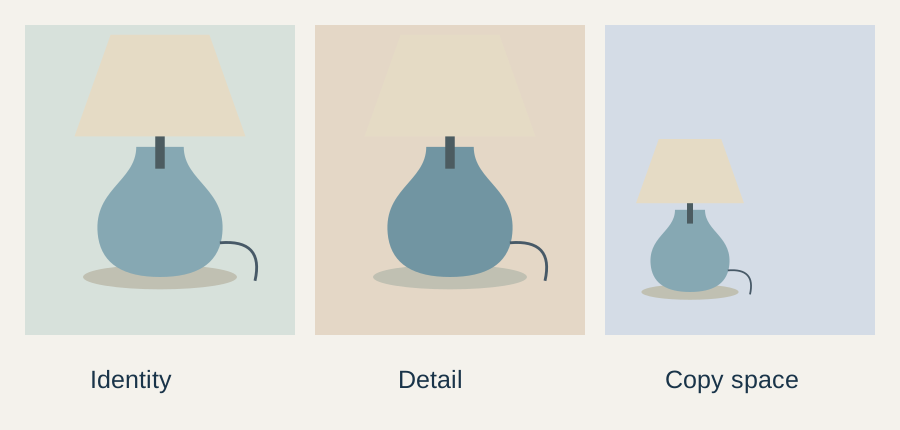
The fictional product is Cove Lamp: a pale-blue ceramic base, an ivory shade and an approved price of $42. The call to action is “View lamp details.” Dimensions, bulb specification, shipping and a launch discount have not been supplied.
Download the script brief and blank review rubric. The task is to produce a short narration that retains those facts and lists missing information separately. It is not to invent a fuller product specification.
The storyboard provides visual roles for the narrator and editor. The front view establishes the object; a detail view gives the editor a closer moment; the wide frame leaves room for later copy. A script can refer to those shot roles without making an unsupported claim about the lamp's performance.
Give each candidate the same review contract
Review the supplied Cove Lamp facts and draft a short narration.
Preserve the product name, pale-blue ceramic base, ivory shade and $42 price.
Use the approved CTA: View lamp details.
Keep dimensions, bulb specification, shipping and discounts unknown.
Return the narration, a sentence-to-fact check and unresolved questions.
Separate optional visual direction from spoken factual copy.
An acceptable authored version is: “Meet Cove Lamp. A pale-blue ceramic base, an ivory shade and a price of $42. View lamp details.” It is plain because the evidence is deliberately small. You can revise rhythm and tone after the facts are correct.
A failing authored version is: “Cove Lamp gives every room perfect warm light, with free overnight shipping.” The supplied facts establish neither the lighting performance nor the delivery promise. A polished sentence does not make those additions acceptable.
Review hard failures before style preferences
Use the rubric in two passes. First check product identity, price, CTA and missing facts. A failure on one of those checks needs correction before you compare whether the voice feels warmer or more concise.
Then read the script aloud. Check whether the sentences are easy to say, whether the product name sounds natural and whether the sequence makes sense alongside the shots. A grammatical paragraph can still be awkward narration. Preserve the factual record while revising the spoken delivery.
Leave the observation fields blank until you inspect an actual output. Do not fill them with an assumed ranking based on model size. An honest “not tested” field is more useful than a confident score that cannot be traced to work.
Test a controlled revision
Once a version passes, request one change: shorten the narration while retaining the approved price and CTA. Compare the before and after. The shorter version must still name the product and preserve the terms you asked it to keep.
If the revision drops the price, decide whether the brief permits that omission. If it adds “limited stock,” reject the unsupported urgency. This is a better evaluation task than repeatedly asking which model is generally more creative.
Keep the difficult case in the test set. For example, include a requested discount that has not been approved. The useful response should ask for the offer or omit it, rather than manufacture a sale to make the script feel complete.
Keep plan and billing questions separate
The Claude pricing guide for creators addresses solo plans, seats and organizational needs. The Claude Code billing-route guide handles a different question about authentication and charging. Neither is a direct test of script quality.
For this review task, identify the account and surface you are actually using. A model in the API catalog does not establish a particular chat allowance or an unlimited subscription workflow. Check access before scheduling client work around it.
Move the approved script into production
Save the accepted narration, facts sheet and revision notes. Use Prompt Lab to retain the reviewed instruction and Voice Lab when you are ready to explore narration. Check the current voice choices and cost before producing audio.
Listen to the complete result. Confirm the name, number and CTA survived the handoff. If the script changes after recording, preserve the earlier accepted version and note which audio needs replacement. The general creative model-selection guide supports broader media decisions; this article keeps the Claude name inventory and script-review contract together.
Frequently asked questions
Which Claude models are listed in the current guide?
The official overview checked on November 3, 2026 lists Fable 5.1, Opus 5.5, Sonnet 5.5 and Haiku 5.5. Verify the current catalog and account route before using a specific model.
Does an API model ID prove I can select it in chat?
No. The model catalog, chat interface, plan and other provider routes can have different availability. Record the actual surface and check its controls.
Was this a paid Claude model benchmark?
No. It combines current official documentation with an original script brief, blank rubric and authored acceptance examples. No private model ranking is claimed.
What should I compare before judging writing style?
Check product identity, approved facts, price, CTA and missing information first. Then assess spoken rhythm, clarity and the work needed to reach an accepted script.
When should I try a different model or effort?
Use an observed failure or a harder task as the reason. Keep the source packet and essential requirements stable, change one variable and record the actual result.
Prepare a source-bound script review
Organize the approved facts and review brief in Prompt Lab before comparing revisions.