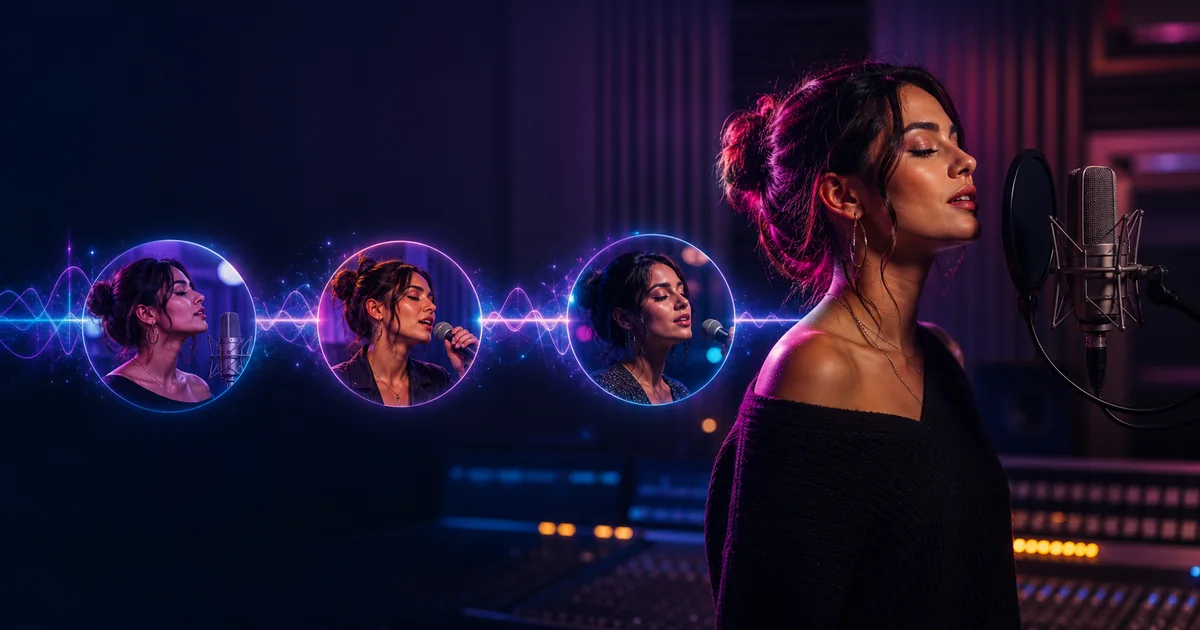

ElevenMusic Vocals lets creators reuse a consistent singing identity across generated songs. You can start from your own eligible recordings or choose a voice from the Vocal Library, then combine the Vocal with a reusable Style for more consistent voice and production direction.
This is useful for demos, recurring characters, brand music, and multi-song projects. It does not remove the need to verify consent, copyright, lyrics, pronunciation, and whether the generated performance still represents the identity you intended.
Practical rule
Test one controlled variable, approve the useful result, and preserve that decision in the next stage.
What ElevenMusic Vocals Adds
ElevenLabs announced Vocals on July 22, 2026. Its official announcement describes three routes:
- Voice-to-Song: turn a voice recording into a finished song concept.
- Reusable Vocal: upload a selection of eligible existing music so Music v2 can learn the vocal tone, texture, and style.
- Vocal Library: choose an available voice when you do not have your own Vocal.
Styles apply the same idea to the wider sound. Combining a Vocal with a Style aims to keep both singer identity and production direction more stable across tracks.
A Consistent-Singer Workflow
- Define the identity: document vocal range, tone, language, intensity, genre, and traits that must remain stable.
- Choose owned, permitted source material: use only recordings you have the right and consent to upload.
- Create or select the Vocal: test it with a short song section before a full arrangement.
- Lock the Vocal and vary one musical dimension: change tempo, genre, or instrumentation separately.
- Review across several songs: one convincing chorus is not evidence of consistency across keys, languages, and delivery styles.
- Save an approved prompt recipe: keep vocal descriptors and exclusions stable.
Prompt Template for a Reusable AI Singer
If the performance feels robotic, use our guide to natural vibrato and phrasing.
How to Test Vocal Consistency
| Test | Keep fixed | Change | Listen for |
|---|---|---|---|
| Genre test | Lyrics, key, Vocal | Production style | Identity surviving the arrangement |
| Range test | Style, tempo, Vocal | Melodic range | Tone at low and high notes |
| Language test | Vocal, genre | Lyrics language | Pronunciation and accent stability |
| Emotion test | Vocal, lyrics | Delivery intensity | Identity without flattening expression |
Consent, Copyright, and Release Review
ElevenLabs says uploaded voice and music samples are screened for copyright compliance. Screening is not a substitute for your responsibility to have permission and sufficient rights.
- Do not upload another person's voice or songs without authorization.
- Keep records of performer consent and source ownership.
- Review the platform's current music terms for your subscription and use case.
- Check generated lyrics for similarity, claims, names, and unsuitable content.
- Decide whether your audience or distributor expects AI disclosure.
For a broader safety framework, read voice cloning permissions and safety.
How QuestStudio Helps
QuestStudio supports a wider production workflow around the song: organize lyrics and music prompts in Prompt Lab, create or compare tracks in Music Lab, and manage spoken voice work in Voice Lab.
Create a free account when you want the prompt, voice, and music stages in one project. Review QuestStudio vs ElevenLabs if you are choosing between the broader workflows.
Frequently Asked Questions
What are ElevenMusic Vocals?
They are reusable singing identities that can be applied across original ElevenMusic generations.
Can I use my own voice?
ElevenMusic provides routes based on your own eligible voice recordings and existing music, subject to its requirements and rights checks.
What is the Vocal Library?
It is a selection of available singing voices that creators can use when they do not have a personal Vocal.
What is the difference between a Vocal and a Style?
A Vocal targets singer identity, while a Style targets the broader sonic and production identity.
Does a Vocal guarantee identical singing?
No. Generated performances can vary, so test the identity across genres, ranges, languages, and emotional delivery.
Can I use the songs commercially?
Commercial rights depend on current terms, plan, source rights, and intended use. Review the applicable ElevenLabs music terms.
Final Takeaway
Complete the reader's job first, then use QuestStudio when organizing prompts and connecting media stages makes the process easier to repeat.
Create a free QuestStudio account for one real project, or compare plans after the workflow proves its value.