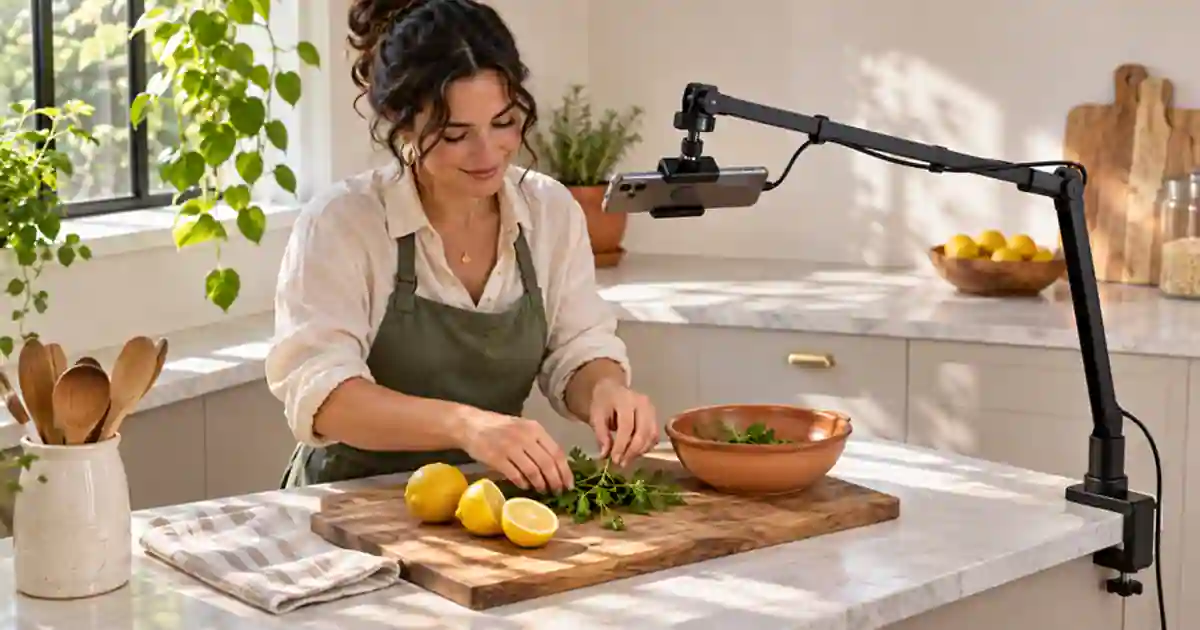

For an overhead cooking video, put the phone above a cool prep board and use a separate side angle for heat, steam, and a finished texture. I’d spend first on a mount that holds the phone still at the working distance I need. A frame that shows every ingredient but cuts off the bowl as you pour will be harder to follow than a tighter, carefully marked setup.
My gear pick for this setup
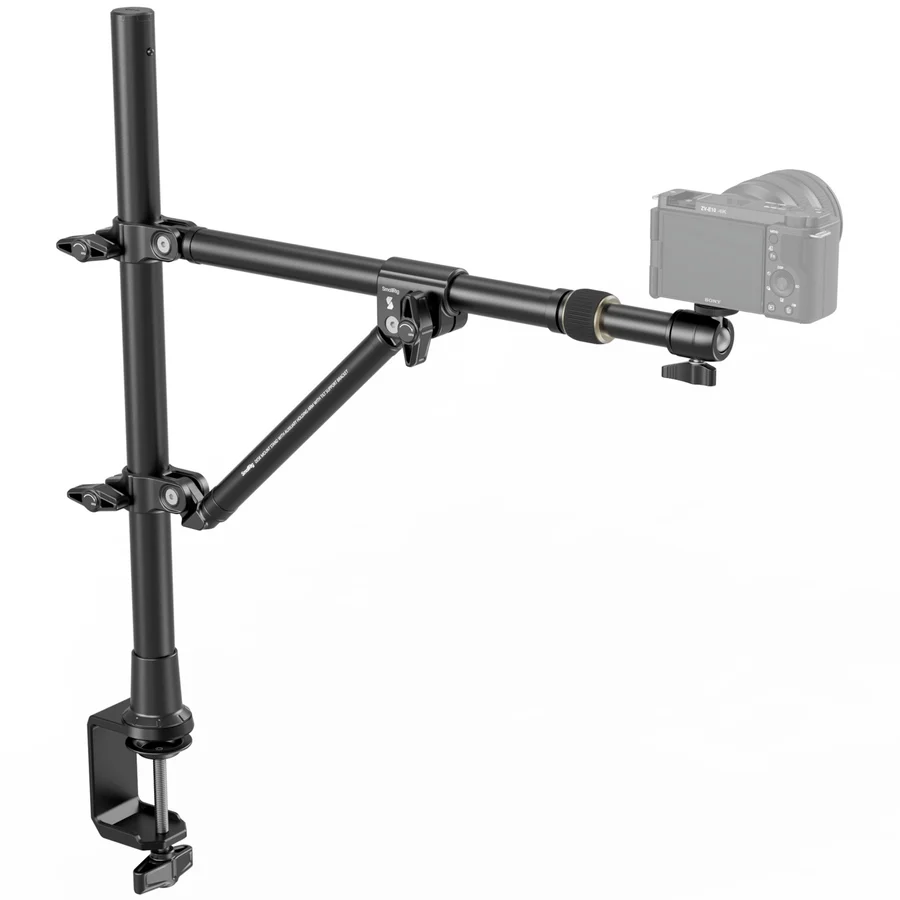
SmallRig 4304 triangular overhead desk mount
For a fixed prep station with a sturdy edge, a compatible phone holder, and room to install an overhead bracket.
I’d use this desk bracket for a repeatable prep angle. Check the clamp clearance and buy a compatible phone holder only if your current mount cannot secure the phone.
Decide what the overhead angle must show
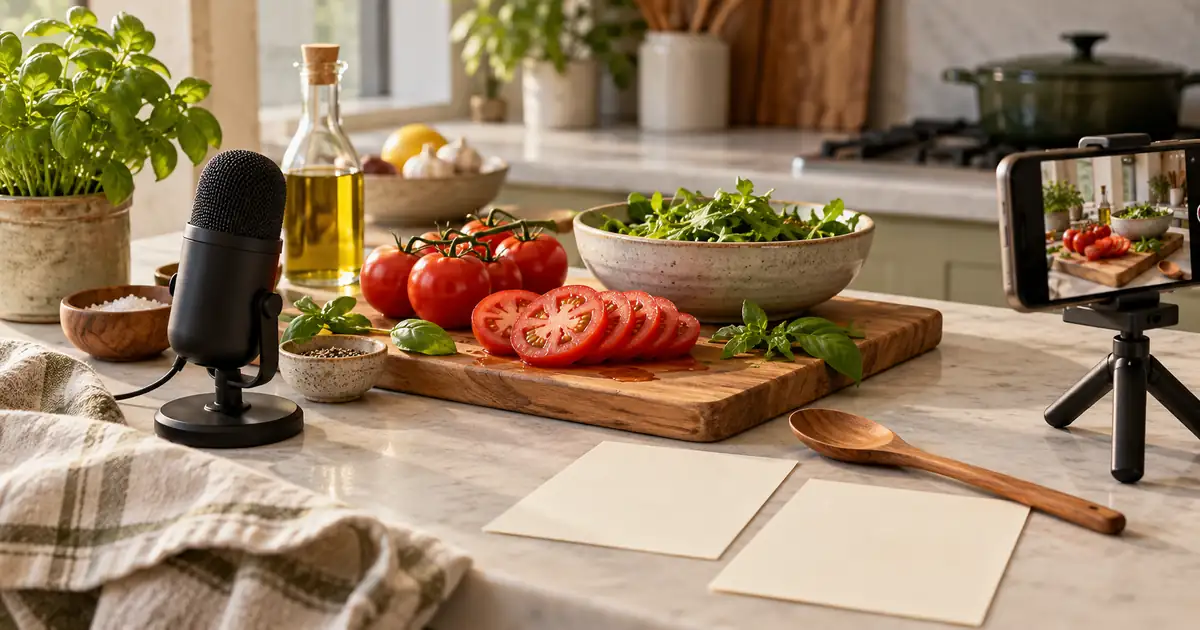
Lay out the recipe as actions. A short clip might need an ingredient reveal, a measured pour, a stir, and the finished result. Put the bowl where it will sit during the most demanding action and hold the largest utensil where your hand will move. Mark the useful area on the counter. If you post vertical videos, turn the phone vertically before framing. Leave space for the hand and ingredients to enter, and check that captions can sit outside the part of the frame the viewer needs to see.
Start with a short rehearsal using empty bowls and cool ingredients. Record your hand picking up a spoon and reaching across the board. Watch for a shadow that blocks the recipe action. A soft side light or window across from your dominant hand often makes the workspace easier to see. If the light shifts during the take, wait for it to stabilize or move the setup. Reposition the board before changing the whole camera angle.
Choose the mount around the counter
For a fixed setup, I’d measure the counter edge and the reach to the middle of the board. Look underneath for a lip, drawer pull, or curved surface that keeps a clamp from making flat contact. Check the manufacturer's limits for the bracket and the phone holder, and include the phone case and any accessories in the load. The SmallRig overhead bracket is a support. Match its mounting connection to a phone holder that secures your particular device.
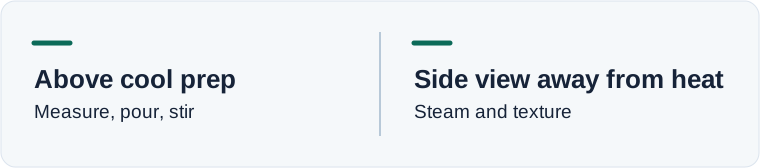
Assemble the setup on a stable surface and check it without food underneath. Avoid putting a mounted phone over a hot stove, open flame, boiling pot, or greasy surface. A side tripod or a securely supported side view can show the heat step. At the prep station, leave room to move without striking the arm. If you rent a space with no usable edge, plan a freestanding setup within its rated reach and load. Do a bump check with nothing fragile or hot beneath the phone.
Film movements the viewer can copy
Hold each key action a moment longer than you expect to need. Show the measure before the pour, then the ingredient entering the bowl. If a change matters, give it its own angle. A fold in a batter is clearer from the side if a top shot shows only the spoon. Use the overhead view for spatial actions such as cutting, placing, or stirring. Use the side view for height, doneness, and texture.
Set focus on the working area and check the phone’s exposure before your hands enter. If supported, lock focus and exposure for a repeatable prep shot. Record a few seconds of the surface before and after the action so you have room to cut. Wipe smudges from the lens and compare a frame at the beginning and end to check whether the mount shifted. I’d keep a physical mark for the bowl position so each replacement shot lines up.
Cut the recipe around evidence
Put your actions in the order someone will perform them. I like to keep measurements on screen while the matching ingredient is visible. Read the rough cut on a phone with sound off. If a measurement is visible only for a fraction of a second, add hold time. If the caption blocks the mixing bowl, move it or use the alternate angle. The recipe narration guide shows how to line up amounts and spoken instructions with the cut.
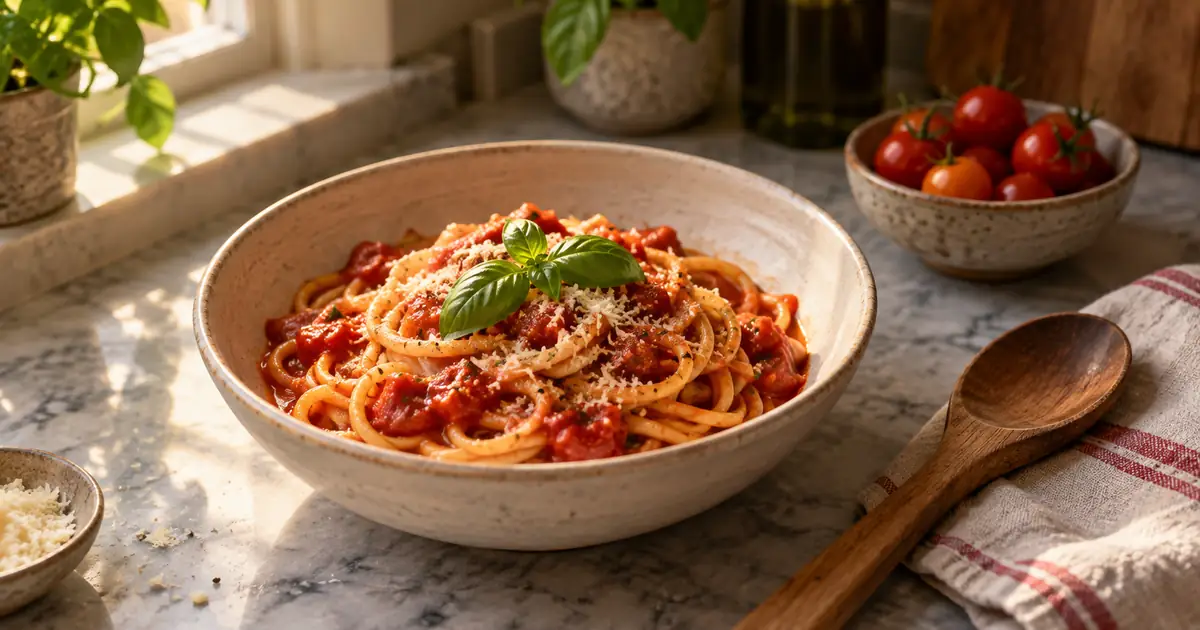
For a short opening or closing shot, Video Lab can help build a supporting clip from an approved photo of the finished dish. I’d keep the actual cooking actions and doneness cues in real footage. Compare the insert to the recipe so the serving, toppings, and ingredients agree with what you made.
Keep the cook's working space clear
Place the bracket on the side you reach across least. Before you mount the phone, run through the sequence with an empty board and check where your elbows, bowls, and long utensils travel. Move the mount if the best camera angle puts it directly in that path. Store the phone cable, if you need one, away from the prep area. Use your second angle to show a motion you cannot perform comfortably beneath the arm. A repeatable shot matters more than a perfectly centered frame that gets in the way.
A 20-second dry rehearsal
Mark a board position and record four short clips using empty containers: show the bowl, lift the measure, pour from it, and stir. Then shoot a cool side view of the finished plating position. Cut together a rough 20-second sequence and watch it on a phone. Check if the clamp flexes when you tap the board, whether the bowl stays visible during the pour, and whether a caption can sit without obscuring the hands. Fix the first issue that changes the viewer's ability to follow the step.
Download the overhead cooking video worksheet (CSV)
Frequently asked questions
Do I need an overhead mount to start?
No. A stable side view can handle many recipes. Use an overhead mount when seeing the layout, ingredients, and hand movements from above helps the viewer.
Will a camera bracket hold a phone?
Check the bracket's connection and load rating. Use a compatible phone holder that grips your device securely, including any case.
Can I film above a stove?
Use a separate supported side angle away from flame, heat, and steam. Keep the phone and mount clear of hot equipment and the cooking path.
Should I film vertically?
Frame vertically if the intended delivery is vertical. Check caption space and how far hands can move before leaving the narrower crop.
Sources and further reading
Affiliate disclosure
As an Amazon Associate I earn from qualifying purchases.
Continue with a useful next step
 Image
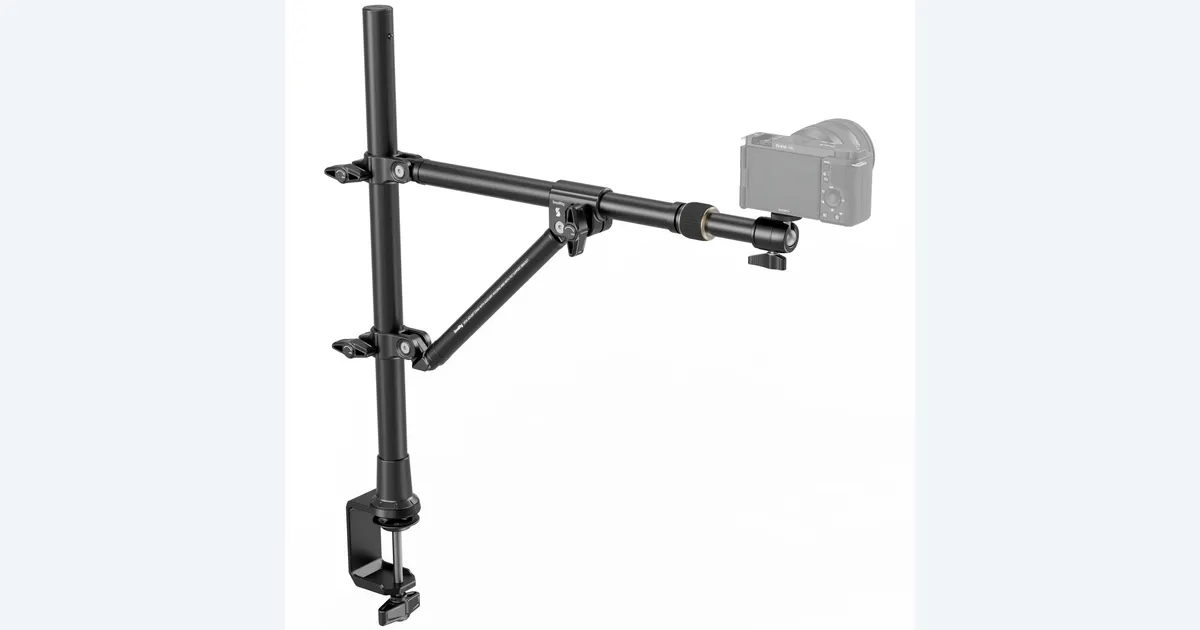
Overhead Camera Mounts for Clear Product Demonstrations
Plan an overhead camera setup for product demos. Check desk fit, complete camera load, reach and hand clearance with a practical SmallRig 4304 buying checklist.
 Voice
AI Recipe Voiceovers: Match Steps, Amounts and Timing
Create AI recipe voiceovers from a verified recipe and real footage. Preserve quantities, separate cooking time from clip time and align narration with steps.
 Video
AI Cooking Video From Photos: Build a Clear Recipe Reel
Turn your food photos into a recipe reel using a shot-to-recipe map, controlled motion, honest process labels, and checks for ingredient continuity.