
Use Grok to organize research, then verify each consequential claim at its source before writing the video. A useful research brief preserves the evidence, the unresolved questions and the exact facts the script is allowed to state.
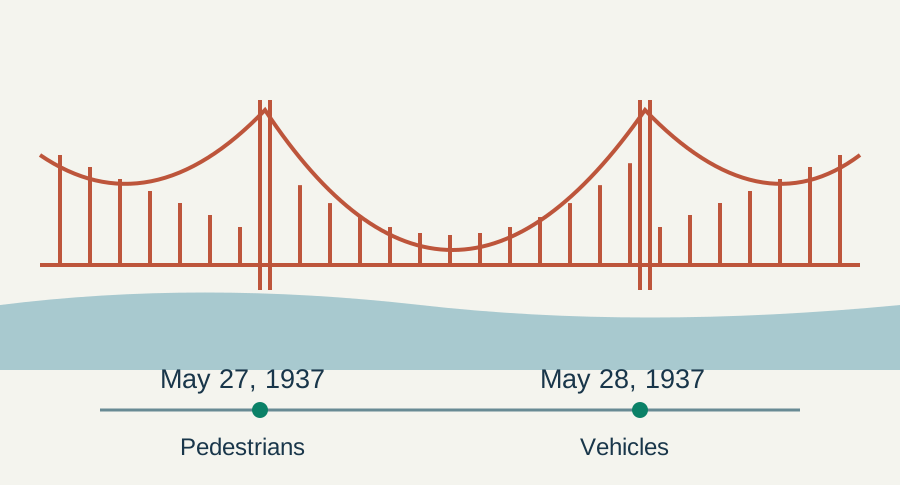
This guide works through a short Golden Gate Bridge history explainer. The example has a small but meaningful distinction: the bridge opened to pedestrians on May 27, 1937, and to vehicles on May 28. Combining those events into one vague opening date can produce an inaccurate narration that sounds perfectly confident.
xAI describes web and source synthesis in its Grok research use case. That is a provider description, not evidence that every answer or citation is correct. The source check below was performed against public primary pages. The sample prompts and draft corrections are authored examples; this is not a private Grok performance benchmark.
A real claim check before the script
The Golden Gate Bridge district's official key dates page distinguishes Pedestrian Day on May 27, 1937, from the start of vehicle traffic on May 28. Its official FAQ independently describes the vehicular opening on May 28. These were checked on November 2, 2026.
Here is the deliberately flawed draft claim: “Vehicles first crossed the Golden Gate Bridge on May 27, 1937.” The year and bridge are correct, but the event attached to the date is wrong. A general search result about an opening celebration can make that error easy to miss.
The correction is specific: “The bridge opened to pedestrians on May 27, 1937, and to vehicles the next day.” That sentence is supported by the primary pages. It does not add an unsupported crowd size, traffic count or explanation of what every participant experienced.
Keep a claim ledger outside the conversation
Download the bridge claim ledger. It records the checked claims, URLs and whether the proposed wording is supported or contradicted. Keeping the ledger separate makes the research usable when you change models, rewrite the hook or hand the project to an editor.
| Claim | Evidence decision | Script consequence |
|---|---|---|
| Pedestrians used the bridge on May 27, 1937 | Supported by the district's key dates | May be stated with the pedestrian event |
| Vehicle traffic began on May 28, 1937 | Supported by the district's key dates and FAQ | May be stated with the vehicle event |
| Vehicles first crossed on May 27 | Contradicted by those sources | Remove or correct before recording |
| An exact crowd size for the opening | Not established in this exercise | Leave out unless separately checked |
Do not mark a claim verified merely because a citation is present. Open the page and find the supporting passage. A link can be real but support a different date, an opinion or a related event. When a page cannot be accessed, retain it as an unverified lead rather than quietly treating its search snippet as evidence.
Give Grok a bounded research assignment
Prepare research for a short explainer about the Golden Gate Bridge opening.
Separate pedestrian access from vehicle traffic.
For each proposed factual claim, return the claim, a primary-source URL, the event the date refers to, and any uncertainty.
Prefer the bridge district's historical pages for the opening chronology.
Do not invent crowd counts or describe generated footage as historical evidence.
Do not write the narration until I approve the claim ledger.
This instruction limits the task to evidence collection. It also names the ambiguity that matters. A request to “tell me everything about the bridge” is more likely to produce a large summary with many details you never intended to check.
Inspect the returned source list yourself. Remove duplicate pages that repeat the same origin if you need independent corroboration. Two different URLs from one organization can confirm its own account, but they are not two independent institutions. Use that distinction when the story involves disputed facts.
Write from the approved ledger
An authored narration for this exercise is: “The Golden Gate Bridge had two opening moments. Pedestrians crossed on May 27, 1937. Vehicle traffic began on May 28. Keeping those dates separate tells the opening story more accurately.” It is intentionally narrow. Its factual core fits the evidence we checked.
Before adding a more dramatic hook, identify the new claim it introduces. “The entire city stopped” sounds like atmosphere but is also a sweeping factual assertion. “One bridge, two opening dates” creates curiosity without inventing what an entire city did.
Use only the approved claim ledger to draft a concise narration.
Keep the pedestrian and vehicle openings as separate events.
Do not add numbers, quotations or eyewitness descriptions.
After the narration, list every factual sentence and the ledger row supporting it.
Mark optional visual suggestions separately from historical claims.
The sentence-to-source mapping is a review aid. It does not make the narration automatically correct. Check that the final wording still says what the source supports; a rewrite can turn “opened to pedestrians” into “finished construction,” which is a different event.
Separate factual narration from illustrative footage
A simple visual brief can call for a present-day wide bridge view, a close view of a calendar date and a neutral title transition between the two events. If you generate any footage, label it as illustrative where the audience could otherwise mistake it for archival material. Do not present a generated crowd scene as a photograph from 1937.
The hero on this page is an editorial illustration of a present-day research scene. It is not evidence of the opening. For an actual historical production, separately check the rights, provenance and date of archival photographs or film before publication.
Bring the approved visual direction to Video Lab if you want to develop illustrative shots. Keep the source ledger beside the script during editing. For an existing video you are summarizing, the YouTube summary fact-check workflow covers the different problem of checking a source video's claims and transcript.
Review the edit after every rewrite
Listen to the final narration while reading the ledger. Check dates, event names, captions and any on-screen numbers. A correct voice track can still be paired with an incorrect title card. Review the exported file, not only the draft timeline.
If a source changes or becomes unavailable, preserve the URL and check date and look for an authoritative replacement. Do not replace a missing primary page with an uncited generated answer. For a story that depends on uncertain evidence, reduce the claim or explain the uncertainty rather than hiding it behind a confident voice.
Store the brief, ledger, script and approved export together. The asset versioning guide helps preserve those decisions. This workflow measures success by whether the final claims are supported; it does not promise higher views, faster research or a particular search ranking.
Frequently asked questions
Can I trust a Grok answer because it has citations?
A citation is a lead to inspect. Open the source and confirm that it supports the exact event, date and wording in your claim. Keep inaccessible or unsupported claims out of the approved script.
When did the Golden Gate Bridge open?
The bridge district distinguishes pedestrian access on May 27, 1937 from vehicle traffic beginning on May 28, 1937. State which event you mean rather than combining them into an ambiguous date.
Was this script generated and tested in Grok?
No. The prompts and draft corrections are authored examples. The factual date check was performed against public primary sources, and no private Grok performance result is claimed.
Can generated footage stand in for historical evidence?
No. Treat generated scenes as illustrations and distinguish them from archival material. Historical photographs and film need their own provenance, date and usage-rights review.
What should a research handoff contain?
Include the approved claim ledger, source URLs and check date, the script, unresolved questions and a separate visual brief. Review captions and narration against the same ledger after editing.
Create supporting footage from checked facts
Use Video Lab for a suitable supporting shot after reviewing the source brief. Keep the verified script and source ledger with the project.