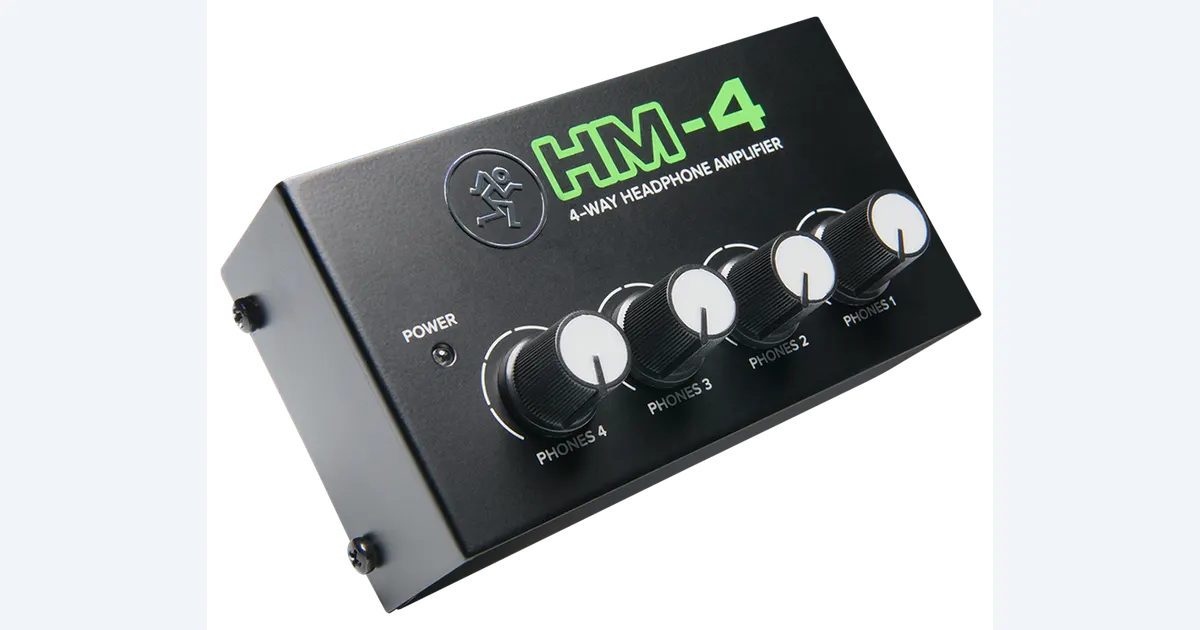

A passive splitter can share a headphone output, but it does not give each listener an independent level control. A powered distribution amplifier such as Mackie HM-4 is useful when several people need to hear the same stereo program at different comfortable volumes. It does not provide separate mixes, add microphone inputs or solve a remote caller’s echo by itself.
A product to consider
Check the fit below, then select Buy on Amazon for the current offer and buying options. We may earn a commission from this paid link.
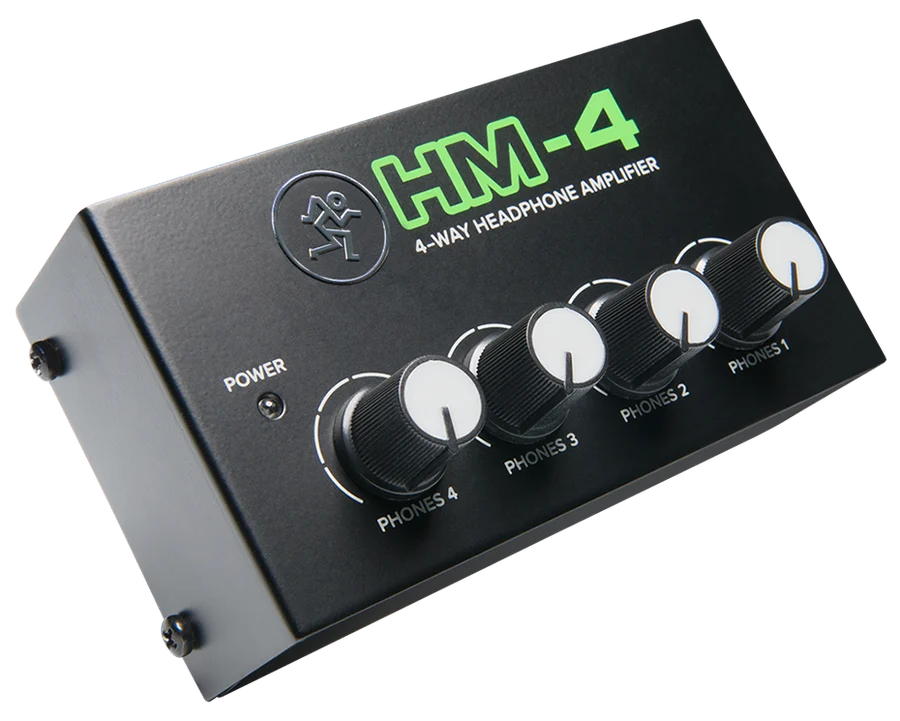
Mackie HM-4 four-way headphone amplifier
For up to four listeners sharing one stereo program with separate volume controls
One stereo input feeds all four outputs. HM-4 does not create four separate mixes or record microphones. Plan compatible stereo cables and headphone adapters.
Download the practical worksheet
Original blank CSV worksheet. Record your own setup and observations.
Count listeners and mixes separately
Write down who needs to listen: host, guest, producer or a second reviewer. Then write down what each person needs to hear. Four people hearing the same program is one routing problem. A host hearing a private producer cue while the guest hears only the interview is a different one.
HM-4 distributes one stereo source to four headphone outputs, each with its own volume control. Turning one knob changes that listener's level; it does not let them independently rebalance music and voice. If different content is essential, the source mixer or interface must provide the required separate routes.
This distinction prevents a common unnecessary purchase. An amplifier with four outputs may look like a four-channel mixer, but the controls are not four input faders. Decide the program feeds before counting the headphone sockets.
Passive splitter, distribution amp or separate cue mixes?
| Option | Useful situation | Limit |
|---|---|---|
| Passive stereo splitter | A simple occasional shared output that works with both headphones | No powered output stages or individual level knobs |
| Powered distribution amp | Several listeners sharing one program | Separate volume does not mean separate mixes |
| Mixer/interface cue routing | Different listeners need different content | Requires supported output routing and configuration |
A passive splitter shares the source's available output with the connected loads. The result depends on the source and headphones; do not assume it will always be loud enough or sound identical with two different pairs. Equally, do not claim that every splitter is inherently unusable. Test a suitable existing arrangement before upgrading.
A powered unit adds convenient controls and dedicated amplification for the intended job. It still needs an appropriate input signal. It cannot repair a distorted source, remove room noise from a recording or turn a USB-only headset into an analog headphone.
For choosing headphones themselves, use our editing headphone guide. This article focuses on distribution and routing once you have compatible listening equipment.
What the Mackie HM-4 does
Mackie's HM-4 documentation specifies one quarter-inch stereo input, four quarter-inch headphone outputs and four level controls. It is powered by the supplied 12 V adapter. The unit is an analog headphone distributor, not a DAC, microphone preamp, recorder or USB interface.
The single input is the key limitation. If your source sends one shared mix, all four listeners receive that mix. Output knobs provide personal listening levels. Do not transfer the capabilities of Mackie's larger HM-400 or other products in the HM series to this compact model.
We have not measured HM-4 output noise, distortion or performance with demanding headphones. Check the manufacturer's specifications against the headphones you plan to use rather than treating “amplifier” as a universal compatibility promise. A model that suits a small voice session need not be the right choice for every specialist headphone.
Consider it when several analog headphone users repeatedly share a source and individual knobs remove a practical annoyance. Skip it when the existing interface already supplies enough suitable outputs, when everyone uses USB headsets, or when the missing feature is separate cue mixes.
A TRS plug can carry different kinds of signal
Quarter-inch TRS describes a connector with tip, ring and sleeve contacts. In one context it carries stereo left and right; in another it carries a balanced mono signal. Matching the physical plug shape does not make those two signal arrangements interchangeable.
The HM-4 expects a stereo source at its input. A documented stereo headphone output connected with an appropriate stereo cable is a straightforward planning example. One balanced mono line output is not automatically the same source. Use the manuals for the interface, cable and amplifier to confirm the correct wiring.
If the source provides separate left and right line outputs, use a documented suitable connection that combines the intended channels correctly. Do not improvise by shorting outputs together. If a headset has a microphone contact or a proprietary adapter, verify its headphone compatibility rather than forcing it into the chain.
Keep the connection sketch simple: source output, cable or adapter, HM-4 input, then each headphone output. Label signal type as well as connector size. The sketch should explain why both left and right reach each listener without relying on the appearance of the plugs.
Run a four-listener preflight
Begin with source and output levels down, make the documented connections and use a known test file at a modest level. Keep this rehearsal separate from a live session. You want to catch routing surprises before a guest starts speaking.
- Source: confirm the intended application is feeding the selected output.
- Channels: play a file with identifiable left and right content and check each headphone pair.
- Levels: let each listener set a comfortable level without changing the shared source unexpectedly.
- Voice: speak normally through the actual recording path and check for delay or doubling.
- Return: if a remote guest is involved, verify that their return feed does not send their voice back to them.
A remote caller's return configuration belongs in the mixer, interface or software routing. HM-4 does not create a mix-minus feed. If echo appears, inspect the paths rather than turning the amplifier knobs until the symptom becomes less noticeable.
Record the headphone model and adapter used at each output. If only one listener loses a channel, compare their cable and adapter before changing the whole session. If everyone hears distortion, inspect the shared source and gain structure. Change one part at a time so the result is interpretable.
Do not compensate for a weak or incorrect source by maximizing every control. Follow equipment guidance and keep levels comfortable. The practical goal is clear monitoring through a long conversation, not the loudest output the box can produce.
Keep recording and review workflows understandable
An audio interface captures a microphone and provides computer audio connections. A distribution amplifier sits later in a listening path. Adding HM-4 does not add a second XLR input to a one-microphone interface or change which tracks the recording application saves.
For a review session, export a permitted narration sample and listen together. You can use QuestStudio Voice Lab for an appropriate voice workflow, then compare the resulting file with its approved source. Each reviewer should note exact words or timestamps that need attention rather than giving only a general sound preference.
The amplifier can make shared review more convenient, but it does not establish consent, voice authenticity or output quality. Keep source permission and editorial approval with the project. Save a corrected version separately so everyone knows which file was reviewed.
Finish the purchase decision with three entries: the stereo source, the compatible cables and the number of people who need the same mix. If those are clear, HM-4 is a focused solution. If the requirement is multiple different feeds, choose the routing system first and distribute those feeds appropriately afterward.
Check the current offer
If the product fits your setup, check the selected model, condition, seller and included contents on Amazon. We may earn a commission from this paid link.
Frequently asked questions
Does HM-4 create four independent mixes?
No. All four outputs receive the same stereo input. Each output has its own listening-level control.
Can I plug microphones into it?
It is not a microphone preamp or recorder. Feed it from a supported stereo audio source.
Can I use one balanced mono line output as its stereo input?
Do not assume that works correctly. TRS connectors can carry different signal arrangements. Follow the source and amplifier wiring documentation.
Will it fix a remote guest hearing an echo?
Not by itself. Configure the remote return in your mixer, interface or software; HM-4 does not provide mix-minus routing.
Should I buy it if my interface already has enough outputs?
Only if it solves a defined limitation such as convenient independent levels for a shared mix. Count suitable existing outputs before adding another device.
Sources and further reading
Research and Amazon listings checked October 28, 2026. Check the current offer for condition, seller, price and included contents. Images: credited manufacturer product imagery, not QuestStudio test photographs. Original decision framework and worksheet: QuestStudio.
Affiliate disclosure and research approach
As an Amazon Associate I earn from qualifying purchases. If you buy through paid links, QuestStudio may earn a commission at no extra cost to you. See our editorial and affiliate policy.
This is a research-based guide using linked manufacturer documentation and clearly attributed published reviews where available. We have not tested this equipment hands-on. The worksheets are original exercises for your observations, not published test results.