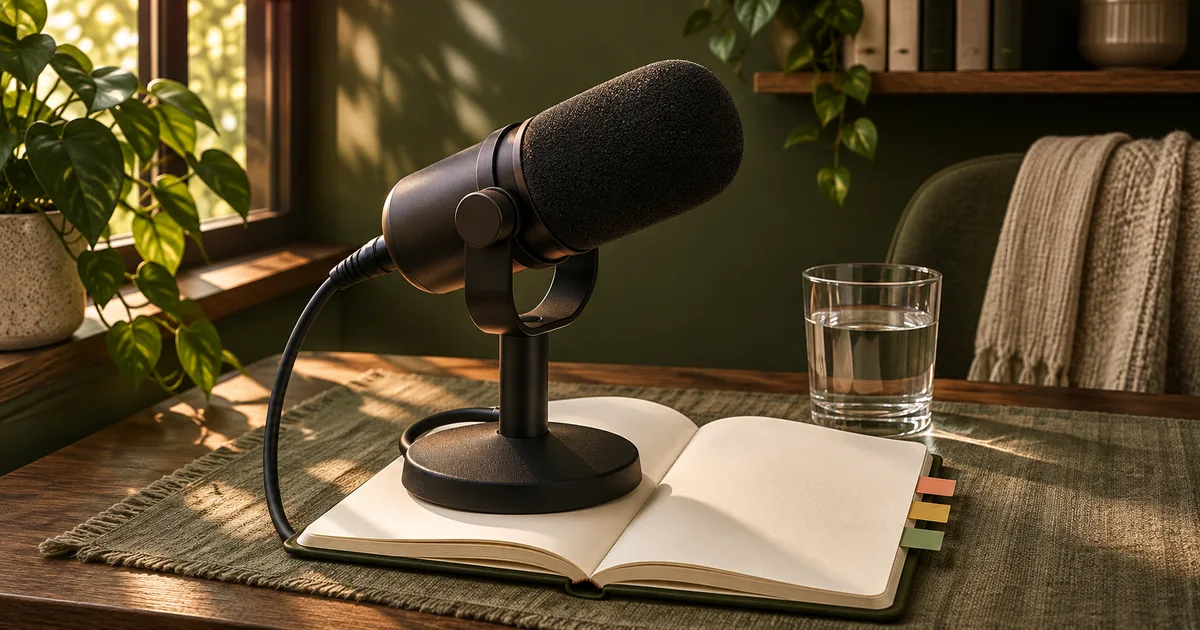

Create a podcast by choosing a repeatable promise, recording a private pilot and listening to that pilot with someone in the intended audience. Five focused minutes are enough to catch a confusing introduction, a distracting room or a format you can't keep producing. Use what you learn to decide what goes into your first public episode.
Write the promise before you write the theme music
Fill in one sentence that names the listener and what they get. For a fictional show called Borrowed Tools, the pilot promise is “First-time furniture restorers will be able to decide whether to clean, repair or leave an old drawer pull.” That gives the episode a concrete job. “We talk about furniture and creativity” leaves more room for discussion but gives the listener little reason to finish a particular installment.
Choose a format you could repeat three times. In this case, one host introduces an object, explains two observations, and gives a practical next step. Write down two plausible follow-up topics as a test. If each follow-up needs different travel, guests or research, the series may still work. Build that effort into the schedule before promising a regular release.
A five-minute episode is the exercise, not a duration rule for the show. A story podcast, interview or roundtable may need more room. The pilot is a small example of the listening experience people should expect when they press play.
Put three listening decisions on a five-minute clock
Use the first 20 seconds to identify the problem and say what the listener will know at the end. From 00:20 to 01:20, show the first decision with a real detail. From 01:20 to 03:40, explain the alternatives and choose a path. From 03:40 to 04:30, give the listener a small check they can do themselves. Use the last 30 seconds to recap and say where the next episode would go. These add up to five minutes and give you places to cut if you run long.
For Borrowed Tools, start with a loose drawer pull that looks tarnished. Explain what changing screws would fix, when a damp cloth is the useful first check, and when leaving an old finish alone is appropriate. End by describing the one observation the listener should write down. You can replace this subject with your own, keeping the purpose of each section.
Write the opening line and the practical takeaway word for word. Use notes for the middle. A script is helpful when accuracy matters. Notes can help a host sound present. Read both approaches aloud and decide which one serves the tone you want in the actual show.
Record a pass you can edit in one sitting
Find a quiet place where you can repeat roughly the same mic distance. Record 20 seconds and listen on headphones. Check the loudest part of your speaking voice, a sentence end and a pause. If fans or reflections make the words hard to understand, try a different position or room before committing to the full take.
Record the pilot in named sections so you can redo just the opening or example. Leave a few seconds of quiet room sound for editing. If you invite a guest, agree on the scope and permission to record and share the pilot, ask them to wear headphones when useful, and check whether you can access their source track. A famous guest provides little benefit if the voice cannot be understood.
Save the original recordings and the editable project. Make a separate playback copy and listen to it away from the editing timeline. Use headphones once and an ordinary speaker once. Mark problems by timestamp, then fix only the ones that interfere with the promise, the audio or the pacing. Keep a revised export under its own version name.
Test the promise with a private listener
Ask one person who matches the intended audience to listen without seeing your outline. Start with three questions. What did you think the episode would help you do? Where did you lose the thread or want to skip? What could you do after listening? Ask for timestamps where possible. Avoid showing the answers in the message you send with the file.
Imagine they remember that the hardware was old but cannot say whether to clean or replace it. Shorten the backstory and put the choice into the opening. If instead they remember the instructions but mention a faint echo, move the microphone or change the room before recording the next version. If they understand the promise and ask what the next episode will cover, your format is worth a second pilot or a fuller first episode.
Keep the test small. A single listener provides a concrete report of their experience. Several independent listeners noticing the same issue give you a stronger reason to change it. Record what you changed and which part you want a second listener to check.
Turn the pilot into a production plan
Write down how long you spent outlining, recording and editing, then note anything you needed to repeat. That is a better starting point for a sustainable schedule than the length of the finished audio. If every five-minute test takes an entire weekend, shorten the format, simplify the edit or schedule fewer releases.
Decide whether the pilot stays private, becomes a trailer after editing, or turns into an expanded episode. When you are ready to distribute a show, choose hosting, prepare the public files and read the destination's submission requirements. Apple's RSS requirements are one primary source for an RSS workflow. If Spotify is your immediate launch route, use the platform-specific guide after the episode is ready.
Practice and verification
| Listener | Promised outcome | Lost attention at | Can they name the next step? | One revision |
|---|---|---|---|---|
| First-time restorer | Decide what to do with a loose drawer pull | 01:10, while host describes tools | Partly, unsure when to stop cleaning | Put the rule earlier |
How QuestStudio helps
Audition two brief versions of an intro in Voice Lab if you want to compare pacing or pronunciation while drafting. Record the real host and guest if the show relies on their voice and personality. Put the chosen opening together with the real audio before the private listener test.
Frequently asked questions
Do I need to publish the podcast pilot?
No. Keep the first experiment private if you want to learn from it before committing to a public release.
Should I start with a trailer or an episode?
Record a short episode if you need to test whether the format delivers its promise. A trailer can introduce a show after you know what the episodes will sound like.
Do I need special equipment for the first test?
Use a reliable microphone or recording device you already have. Record a short check and listen for clear speech, background noise and clipping.
How long should the first public episode be?
Choose a length that serves the format and the story. Five minutes is the scope of this practice pilot, not a suggested limit for the public show.
Can I decide whether to launch from one listener's feedback?
One listener can expose an issue worth investigating. Test repeated observations with more listeners and use your production time and goals to make the launch decision.
Before you deliver
Make a small private episode, listen to the exported copy, and revise one or two issues that affect what the audience understands. Turn the result into a repeatable outline before making a public schedule.
Sources
Related QuestStudio guides
 Voice
Podcast Ideas: Five Formats You Can Keep Producing
Turn podcast ideas into a repeatable show with five original formats, fifteen episode starters, a feasibility scorecard, and a practical first-episode rundown.
 Voice
How to Start a Podcast on Spotify With Your First Episode
Start a podcast on Spotify, choose the right hosting route, and prepare a first episode with clear artwork, show notes, and a verified public playback link.
 Voice
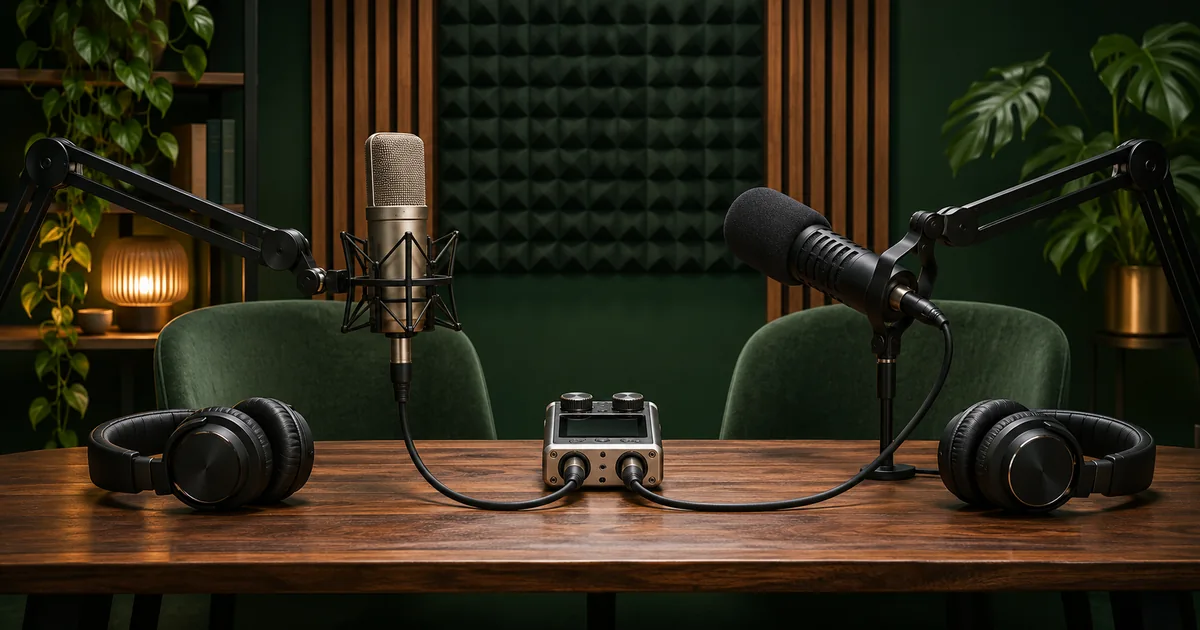
Podcast Recording Software: How to Test Every Track
Compare podcast recording software for solo, in-room and remote sessions. Run a two-minute test for separate tracks, backup audio, and a clean handoff.
Hero image created with AI. Practice materials by QuestStudio.