
The most useful podcast ideas give you a repeatable way to make the next episode. Choose a listener, a recurring question, and a format you can produce with the time and access you have. Then outline three episodes before committing to the show. If only the first episode sounds interesting, the concept may need a clearer structure.
Below are five original formats with three episode starters each, plus a feasibility worksheet and a worked pilot. The examples are fictional planning exercises. They are not claims that a particular topic will attract a measured audience or earn money.
Turn the topic into a listener promise
A broad topic such as creativity, local business, or technology gives you a shelf to stand on. It does not explain why someone should listen next week. Add the recurring task: “Each episode helps a first-time market seller finish one small part of preparing a stall.” Now the show has a reason to continue and a practical boundary.
Use this sentence: For [specific listener], each episode helps with [recurring problem] by [repeatable method]. Keep it concrete enough to reject an interesting but unrelated idea. A show improves when you can say why an episode belongs, not only why the subject is popular.
Choose the listener from a community you can understand or research responsibly. List questions people actually ask, experiences you can discuss accurately, and evidence you can obtain. Do not invent customer complaints or interviews to make the premise feel validated.
Format one: one small problem, one tested fix
Listener: a beginner trying to finish a practical creative task. Episode shape: show the problem, explain one change, compare the result, and leave the listener with a manageable next step.
- Why a home-recorded introduction sounds distant, and what changes when the microphone moves.
- How to keep a white handmade object visible against a white photo background.
- What to check when a fifteen-second music cut ends abruptly.
The strength of this format is a visible or audible decision. Record the original condition and the changed condition when you can. If you only have a demonstration rather than a real field test, label it. Do not describe a hypothetical improvement as something you measured.
For an audio-only show, explain the comparison clearly enough that it works without a screen. A supporting page can contain images or downloads, but the listener should still understand the decision while walking. The music-under-voice workflow offers an example of a narrow problem with a concrete listening check.
Format two: a decision clinic
Listener: someone choosing between plausible options. Episode shape: define the situation, compare two or three choices using the same criteria, and explain which evidence would change the recommendation.
- Should a two-person beginner podcast use one shared microphone or separate inputs?
- Does a weekly creator need a new laptop, or a better-organized editing session?
- Should a product story become a swipeable carousel or a timed video?
Start with constraints such as budget, time, recording location, and delivery requirements. Avoid declaring an overall winner when the right choice depends on the listener's situation. A useful conclusion might be “choose the simpler setup until you need independent speaker tracks,” followed by the test that reveals that need.
This format works without a guest, but it needs reliable sources. Keep a source note for product claims and distinguish current specifications from your reasoning. The three recording setups can support a practical episode about connections and monitoring rather than another ungrounded shopping list.
Format three: a short field notebook
Listener: someone curious about how a real project develops. Episode shape: begin with a specific observation, explain its context, describe what changed, and identify the next question.
- Three things a maker learned while preparing a first market display.
- What changed between the first and third rehearsal of a short workshop.
- How a creator reorganized a folder after delivering the wrong export.
Use your own experience or an authorized contributor's account. Record short notes while the details are fresh, then decide which observations belong in the episode. A sequence of small, specific moments can be more useful than a broad retrospective that claims everything was a lesson.
Separate observation from interpretation. “Two visitors asked whether the cup was dishwasher safe” is an observation if it actually happened. “Everyone cares most about convenience” is a much larger claim. Preserve the scale of the evidence and resist making the story sound more universal than it is.
Format four: the artifact interview
Listener: someone who wants to understand the work behind a finished result. Episode shape: invite a guest to explain one concrete artifact, the decisions behind it, and a revision that mattered.
- A photographer explains one contact sheet and why the final image changed.
- A teacher walks through one worksheet that became easier to use after feedback.
- A musician compares an early arrangement with a finished short intro.
Ask for an artifact the guest has permission to discuss and share. Send a short preparation note describing the audience and the decisions you want to explore. Avoid turning the interview into a general biography unless that background directly explains the work.
Build a guest-independent backup episode. A recurring format that fails whenever one person cancels is fragile. You might use your own artifact, a permitted public example with appropriate sourcing, or a listener question that fits the same decision structure. Do not fabricate a guest quotation to fill the slot.
Format five: the question ladder
Listener: someone learning a subject step by step. Episode shape: answer one question, show the decision it unlocks, and end with the next question rather than trying to teach the whole field at once.
- What is a podcast feed, and how is it different from a show page?
- What makes a recording usable before transcription begins?
- What belongs in a sponsorship package before anyone discusses a price?
Order the episodes by dependency. A listener should understand what a feed does before a detailed host-migration discussion. Use a short recap for returning listeners and a clear starting point for someone arriving in the middle. Avoid making every episode depend on hearing a long archive.
The question ladder can also support a limited series. A six-episode season with a defined outcome may be easier to finish than an indefinite weekly commitment. The number is a production choice, not a growth tactic or a promise that the topic needs exactly six installments.
Score feasibility before recording the pilot
Download the format and episode workbook
Score each candidate from zero to two on five questions: Can you reach the intended listener? Can you obtain credible material? Can you produce it with your available time? Can you outline three distinct episodes? Can the format work without an unavailable guest or asset?
A zero is a planning gap, not proof the concept is bad. Record what would resolve it. For example, an artifact interview may need permission to share the guest's example. A field notebook may need actual project experience. A decision clinic may need current technical sources before a recommendation is credible.
Use the score to choose what to test next, not as an audience-demand model. A feasible show can still need a clearer listener promise. A fascinating idea can still exceed the time you have to make it. Keep feasibility and demand as separate questions.
Build an eight-minute pilot from one question
A pilot needs one answerable question
Why does my workshop introduction sound distant?
Record the same short script in two microphone positions and compare the actual audio.
Repeat the placement test at home and choose the clearer take.
Our fictional pilot is “Why does my workshop introduction sound distant?” It uses the one-problem format. The target is a creator recording a first spoken introduction at home. The planned outcome is a usable microphone-position test, not a complete course in acoustics.
| Time | Segment | Required material |
|---|---|---|
| 0:00–0:40 | State the listener problem | A concise original introduction |
| 0:40–2:00 | Describe the initial setup | Real notes about room and microphone position |
| 2:00–4:00 | Compare one change | Two permitted recordings of the same short script |
| 4:00–6:30 | Explain what to listen for | Clarity, room sound, and breath-noise observations |
| 6:30–8:00 | Give the listener a repeatable test | A short checklist and next question |
Read the outline aloud before scripting every sentence. If the comparison needs three minutes of visual explanation that an audio listener cannot follow, adjust the demonstration or choose a video format. If you cannot obtain the required recordings, change the episode plan rather than pretending the comparison happened.
Make a rough pilot and ask a few relevant listeners what they understood, where they lost interest, and what they would do next. Treat those responses as qualitative feedback. Do not turn three favorable comments into a claim that the show has proven market demand.
How QuestStudio helps turn a format into a brief
Use Prompt Lab to organize the chosen listener, question, verified material, and run of show. Ask for structural alternatives after those inputs are clear. Review every factual assertion and keep invented examples visibly fictional.
Once the format works, the podcast trailer guide helps express its listener promise. The capacity-based content calendar helps schedule production without assigning more work than you can finish. Start with one repeatable episode and let that evidence shape the series.
Frequently asked questions
What is a good podcast idea for a beginner?
A narrow recurring question you can answer with credible material and manageable production is a useful start. Outline three episodes and make a rough pilot before committing to a schedule.
Do I need guests?
No. Problem-solving, decision, field-notebook, and question-led formats can work with one host. If you use guests, plan how the show continues when someone cancels.
How long should the first episode be?
Use the time needed to deliver one clear outcome without padding. The eight-minute example is a planning exercise, not a universal ideal or a growth guarantee.
Can AI invent listener questions for me?
It can suggest possible questions to investigate, but those suggestions are not evidence that real listeners asked them. Validate the premise and label fictional examples clearly.
When should I make a trailer?
After a pilot gives you a believable sense of the show's voice, format, and listener benefit. The trailer should represent an experience you can actually keep producing.
Develop your first episode brief
Organize the chosen audience, evidence, and run of show in Prompt Lab before drafting a full script.
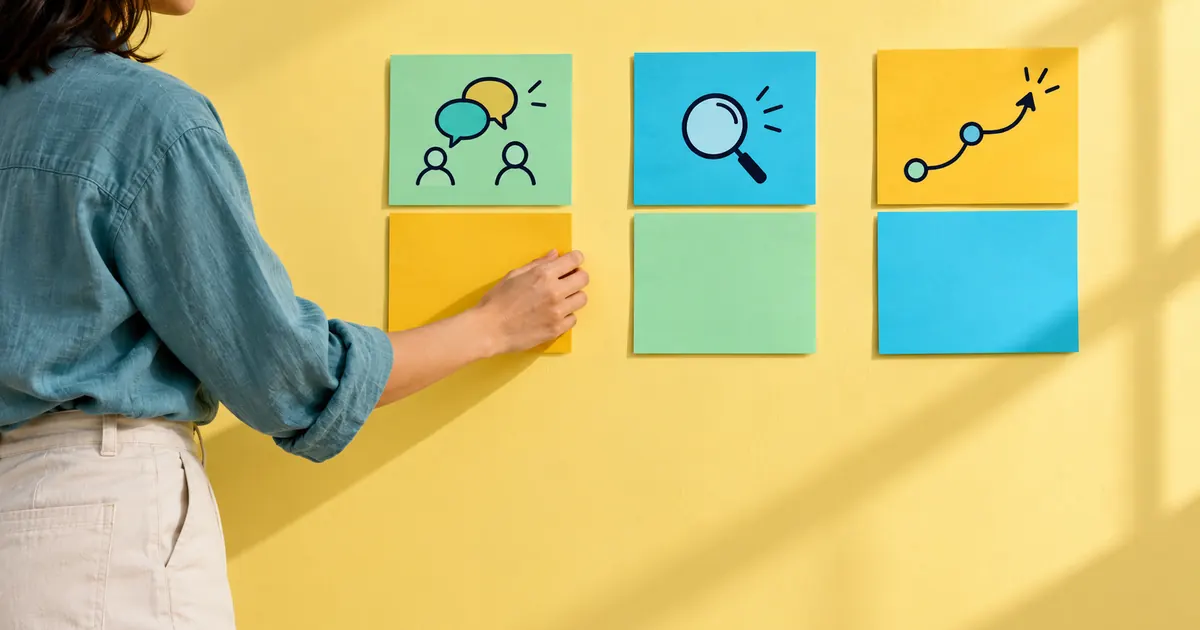
Hero: AI-generated editorial illustration. Original teaching materials and documented feature research, checked October 28, 2026. Visual guides updated October 29, 2026. Examples are labeled where synthetic or hypothetical.