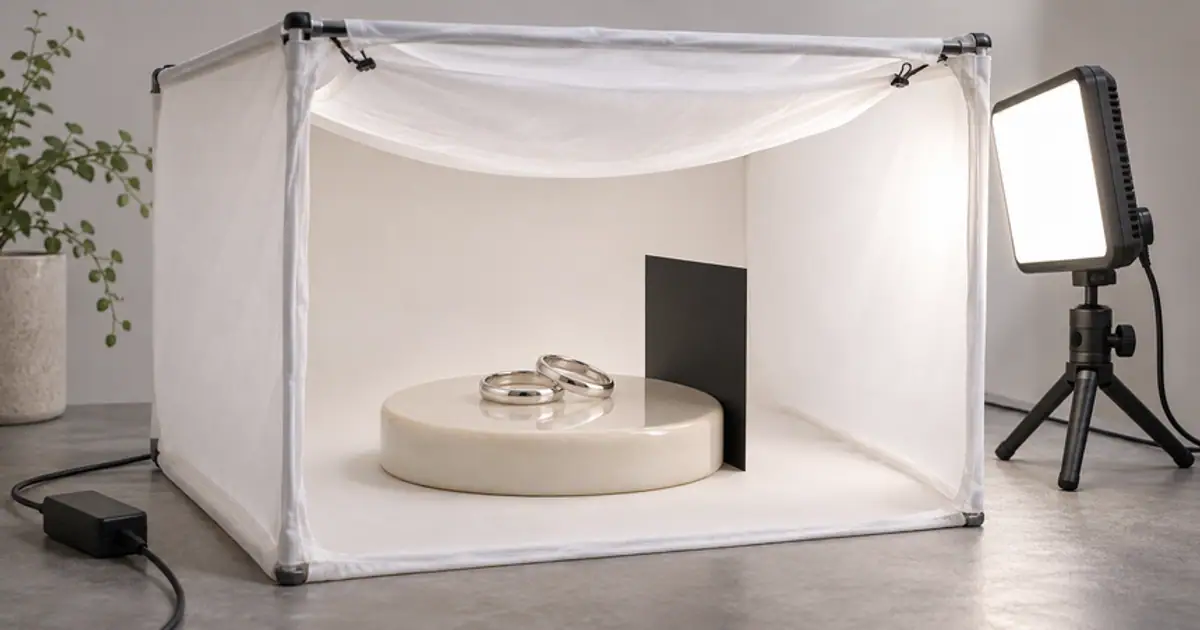

Choose a jewelry light box by the space you need around the jewelry. A ring takes very little room. A necklace on a bust needs height, a clean background behind it, and a camera angle low enough to show how the pendant hangs. I’d measure the tallest display I actually use and mock up the opening before I order a tent. A box that fits the item but leaves no space for a card or camera can slow down every listing.
My gear pick for this setup
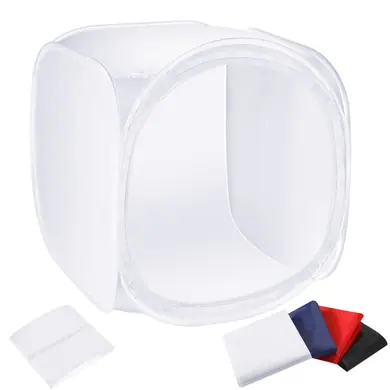
NEEWER 24-inch unlit diffusion tent
For a seller who needs room for a pendant stand, removable cards, and lights they already own.
I’d choose this unlit 24-inch NEEWER tent when I need movable lighting and room around a taller piece. For rings alone, compare the footprint with a smaller setup before you order.
Measure the shot before comparing boxes
Put your largest piece on its real stand. Place your phone or camera where it can focus on the part the buyer needs to inspect. For a necklace, that might be the jump ring and the front of the pendant. For earrings, it may be the fastener. Mark the stand and camera position on the counter with tape. Hold a piece of paper at the proposed front wall height to see if the opening cuts off the angle you want. Keep a side route for tweezers or a glove when you adjust a piece between frames.
My buying decision comes down to the workflow. An unlit tent gives you control over where the bright surfaces appear, and it needs separate lighting. A compact box with built-in LEDs can suit a seller shooting rings from the same angle every time. Check how its lights can be adjusted and how large the camera openings are. Compare the surface you can actually use inside the box, including the curve of the background, with the footprint you can leave on your table.
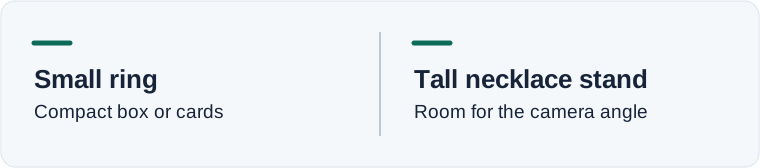
Set up one polished ring without losing its shape
Start with the ring on a clean matte surface, one light outside the side wall, and the opposite wall providing fill. Frame the ring with room around the band. Focus near the front edge of the setting. Look at a magnified preview before you adjust the lights. A bright stripe traveling around the band can describe the curve. A clipped area with no edge can swallow a prong. A narrow matte black card inside the tent can create a controlled dark stripe where the metal previously blended into the background.
Move the card a little at a time while watching the reflection. A card that is out of frame can still show up across the metal. If you see your phone or lens in the ring, try the front panel with its lens slit, or shift the ring a few degrees and recheck the stone. For a design with engraved lettering, shoot an extra angle that shows the lettering without introducing a misleading reflection. Keep the reflection adjustment and the focus adjustment separate so you know what helped.
Plan a necklace view and a detail view
Hang the necklace at its intended length for the main image. Square the stand to the camera and put a small mark beneath the base so you can repeat the position for the next finish. Leave enough distance behind the stand that the background can curve up without making a hard horizon. Then move to a tighter view of the clasp or pendant. I prefer to capture an honest second angle over using a single aggressive crop that removes the chain and makes the pendant look larger.
Look at the main frame at thumbnail size and then at full size. The buyer needs a legible silhouette in the thumbnail and real information in the close-up. If the pendant drops into shadow while the stand is bright, move the light along the outside wall to change what the pendant sees. If a gemstone looks flat in the enclosure, make a supplemental detail with one carefully placed small highlight. Keep the clean listing view and the detail view as separate deliverables.
Decide what to buy from the first contact sheet
Compare a window-and-card setup, a white surround, and a surround with a dark card. Put all three crops side by side. If the window setup is already repeatable, spend the budget on the stand or holder that saves you time. If the white surround fixes distracting room reflections but you need more placement control, the unlit tent is a reasonable next buy. A tent diffuses what reaches it. The lighting position, camera opening, and nearby surfaces still shape the image.
Keep one approved capture as the reference if you make a supporting background variation in Image Lab. Compare the result with the reference at the same crop. Check stone count, clasp shape, metal tone, and any engraving before exporting. The jewelry reflection guide walks through which regions to preserve if you do need an edit.
A four-frame buying test
Photograph a silver ring on your usual counter. Keep focus and camera height fixed. Make one window-light frame, then add white cards on both sides and repeat. For the third frame, place a narrow black card to one side and move it until you can see the band edge. For the fourth, put the biggest necklace stand on the same marked surface and check whether a 24-inch mock opening can accommodate your camera angle. Circle the first change that fixed the ring and record the largest setup that must fit. You now have a reason to buy a particular enclosure or keep your existing setup.
Download the jewelry photography worksheet (CSV)
Frequently asked questions
Do I need a light box with lights included?
Built-in lights can simplify a fixed setup. An unlit tent needs separate lighting and gives you control over where the bright reflection appears.
Is a 24-inch box too big for rings?
It can occupy more space than a ring needs. The extra room earns its place when you use necklace busts, stands, and reflection cards across multiple products.
Can I use a phone?
Yes. Check the working distance where the phone can focus, leave room for the lens opening, and review the original crop for detail before changing cameras.
Why do I see the camera in the metal?
Polished metal reflects the camera opening and nearby surfaces. Try a front diffusion panel, a slightly different angle, or a small card positioned outside the crop.
Sources and further reading
Affiliate disclosure
As an Amazon Associate I earn from qualifying purchases.
Continue with a useful next step
 Image
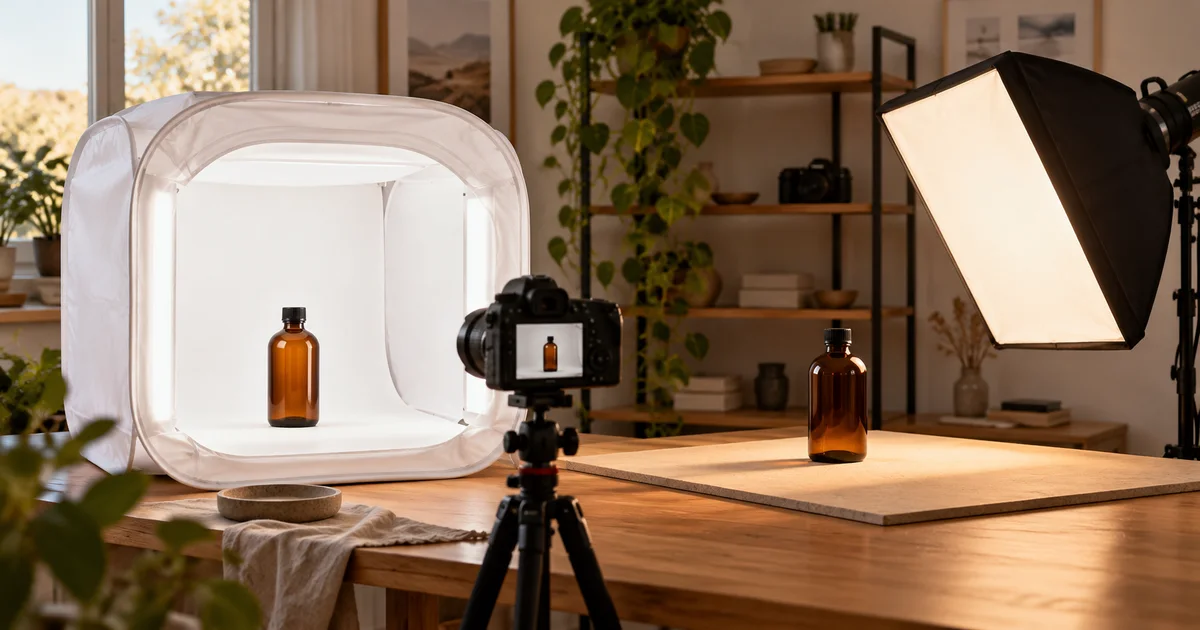
Light Box vs Softbox for Product Photography
Choose a photo light box or a softbox setup for product images. Compare space, reflections, included equipment and video use before buying lighting gear.
 Image
AI Jewelry Photography: Fix Reflections, Keep Details
Fix distracting reflections in AI jewelry photography without inventing stones, prongs, or engraving. Use a six-zone review before approving a product image.
 Image
ChatGPT Jewelry Photography Prompts: 25 Product-Safe Ideas
Copy ChatGPT jewelry photography prompts for rings, earrings, necklaces, macro shots, ecommerce, and campaigns with strict product fidelity checks.