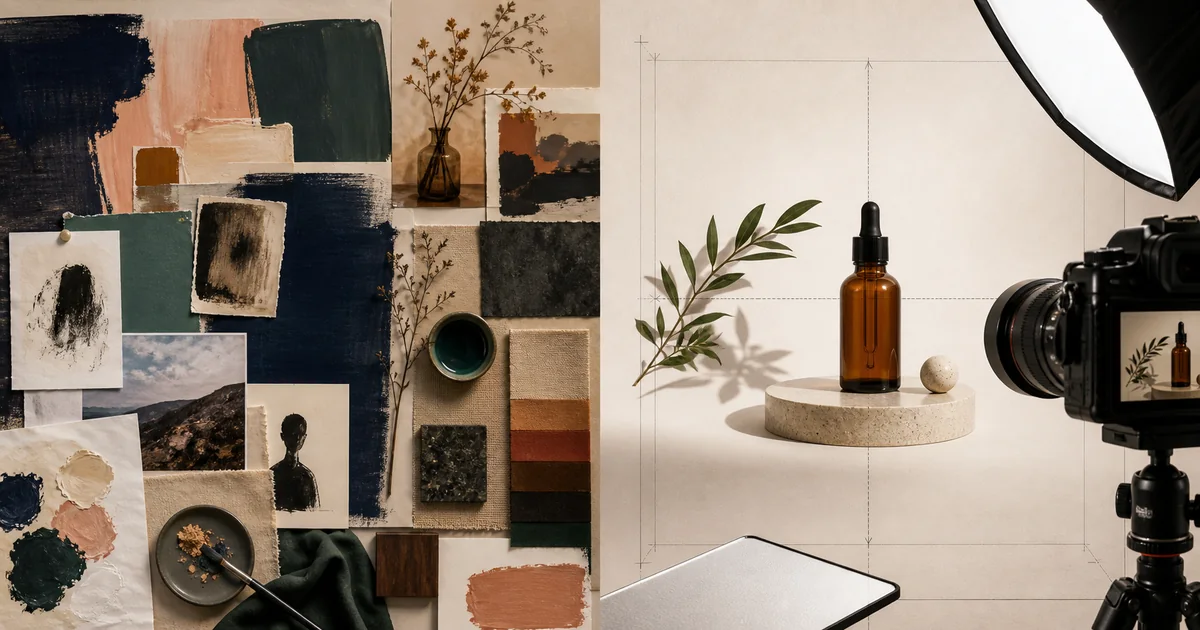

This guide turns a current search question into a repeatable production decision. It focuses on the source, controls, review, and destination checks that determine whether an output is actually useful.
The models are optimized for different questions
Krea describes Krea 2 as its first in-house foundation model, built around aesthetics, style transfer, moodboards, and creative control. Its official material frames the challenge as deciding not only what should appear, but how the image should feel. That makes it compelling for visual exploration, art direction, and projects where style is the variable.
Nano Banana 2 is useful when the image job begins with an explicit instruction, a reference, and a production outcome. Inside QuestStudio, it has a direct Image Lab route. This article does not report a private head-to-head test; it turns documented positioning and current product availability into a repeatable decision.
Krea 2 vs Nano Banana 2 at a glance
| Need | Krea 2 fit | Nano Banana 2 fit |
|---|---|---|
| Explore a visual language | Strong documented emphasis | Possible through prompting and references |
| Mix style references | Core Krea workflow | Use supported image-reference controls |
| Literal production brief | Needs a controlled test | Good current QuestStudio route |
| House-style training | Krea offers LoRA workflows on eligible plans | Use reference-led generation, not implied training |
| QuestStudio access | Not currently listed | Available in Image Lab |
| Best evidence | Approved style spread | Approved task completion |
Choose Krea 2 for style discovery
Krea 2 makes sense when the brief is not yet visually resolved. A fashion campaign may know the subject and message but still need to explore texture, palette, lens character, illustration language, or the tension between polished and raw. Moodboards and adjustable style influence make those choices visible.
The danger is confusing novelty with fit. Build a moodboard from authorized sources, label what each reference contributes, and keep subject facts separate from style facts. Select a direction because it serves the audience and destination, then convert it into an approved style guide. Do not let endless variety become the deliverable.
Choose Nano Banana 2 for a bounded production job
Nano Banana 2 is the practical choice in QuestStudio when you need to execute now: create a campaign frame, adapt an authorized reference, explore a product setup, or produce a layout candidate with a known ratio and acceptance test. Start with subject truth, composition, light, materials, and the exact change.
Availability is part of model quality. A model that fits the team’s current project, history, handoff, and review workflow can outperform a theoretically stronger option that adds exports, missing metadata, or a separate subscription. Evaluate the whole path to approved asset.
Use one comparison brief
Job: 4:5 editorial hero for a sustainable skincare launch.
Brief: “Create one amber glass serum bottle on pale limestone beside a clipped olive branch. Preserve the authorized bottle silhouette, black dropper, amber material, and label-free front. Camera is slightly above tabletop with an 85 mm product perspective. Large soft source from upper left creates a clean vertical highlight and believable contact shadow. Background is warm off-white with generous mobile-safe space above. Explore tactile, understated Mediterranean art direction while keeping product geometry and material physically credible.”
Pass: the style feels ownable, the bottle remains exact, surfaces and shadows are believable, and the 4:5 crop supports readable copy space.
Use the same source, ratio, and review criteria in both models. If the platform exposes different controls, document them instead of pretending the runs are identical.
Separate style score from truth score
Review candidates in two passes. The style pass asks whether composition, palette, texture, and visual voice support the brief. The truth pass checks product geometry, identity, anatomy, exact objects, text, color, contact, perspective, and claims. A result must pass both.
This prevents a common comparison mistake: Krea 2 wins because one image feels more art-directed while Nano Banana 2 wins because another preserves a bottle. Those are different outcomes. Weight them according to the job before seeing results.
Build an exploration-to-production handoff
- Define the audience, destination, subject truth, and visual decision still open.
- Create an authorized moodboard with labeled style, composition, material, and color roles.
- Generate a small exploration set and select one direction.
- Write the selected direction as concrete production rules.
- Run a controlled production set with the same truth pack.
- Verify exact text, marks, colors, claims, hands, reflections, and final crop.
- Save prompt, references, model, settings, edits, and approval reason.
You can explore in Krea 2 and produce in Nano Banana 2, or reverse the order if the evidence supports it. The handoff matters more than brand loyalty.
Common comparison traps
Different prompts
A model gets more detail or better references, making the comparison about the brief.
Showcase bias
Brand-selected examples are treated as representative output.
One lucky image
A single winner hides retries, failures, and time to approval.
No destination
Images are judged full-screen, not in the ad, card, or page where they must work.
Style equals accuracy
A beautiful finish distracts from altered product, anatomy, or text.
Availability ignored
Subscription, export, rights, collaboration, and project history are excluded from cost.
How QuestStudio helps
QuestStudio currently lists Nano Banana 2 in Image Lab and does not list Krea 2. The CTA therefore opens the available production route, not a disguised Krea trial. Use one approved source and brief, create a small baseline, and record what passes.
If Krea 2 access elsewhere produces a stronger style direction, bring the learning—not unlicensed output or unsupported claims—into the production brief. Verify current terms and source rights in each service.
Final model-choice checklist
- The required model is available in the current region, plan, and workflow.
- The open decision is style exploration, production execution, or both.
- Every reference is authorized and assigned one role.
- The comparison uses the same job, source truth, ratio, and weighted rubric.
- Style and factual accuracy are scored separately.
- Attempts, time, and cost are measured per approved image.
- The result works at destination size and all text, marks, colors, and claims are verified.
Use Krea's official Krea 2 introduction for its documented focus and its technical report for deeper context. Treat provider comparisons as positioning, then run your own controlled job.
To explore spatial layout through rough shapes before selecting a finished style, use the explore composition by drawing in Krea Realtime guide. It includes an original exercise and a worksheet for reviewing the result.
Frequently asked questions
Is Krea 2 better than Nano Banana 2?
There is no universal winner. Krea 2 emphasizes aesthetic exploration; choose Nano Banana 2 when its available workflow and task controls better fit the production job.
Can I use Krea 2 in QuestStudio?
Not currently. QuestStudio lists Nano Banana 2 in Image Lab.
How should I compare the models?
Use the same authorized source, brief, ratio, and weighted style and truth rubric across a representative sample.
What is Krea 2 designed for?
Krea describes it as a foundation model focused on aesthetic diversity, style references, moodboards, and creative control.
What should I measure?
Track attempts, time, total cost, style fit, factual accuracy, and usable approved images rather than raw outputs.