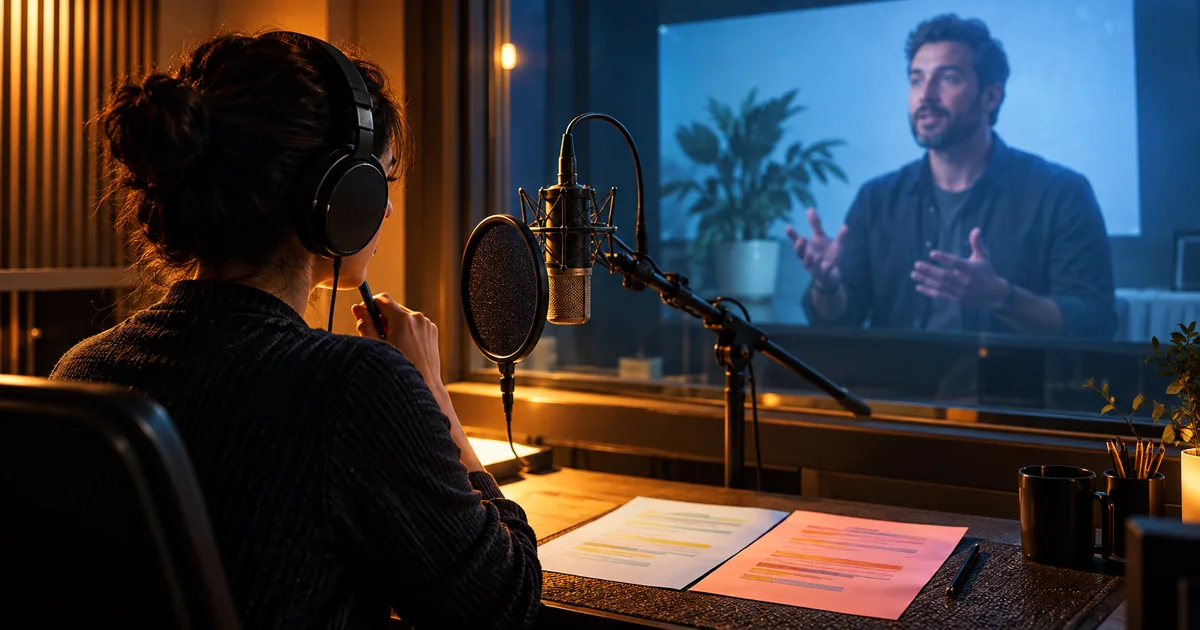

A translated voice can sound convincing while saying the wrong thing. That is why the best dubbing tool is a production decision, not a contest over the largest language count. A narrated tutorial, a close-up presenter, and a library of training videos need different controls and review steps.
Download the dubbing shortlist and review · Audition an approved narration line
The shortlist by delivery problem
| Tool | Recommended fit | Decision to verify |
|---|---|---|
| ElevenLabs | Preserving a source performance in translated speech | Controls and outputs for your selected dubbing workflow |
| HeyGen | A visible presenter who needs translated speech and lip sync | Script review before finalizing the translated video |
| Rask | Repeated localization of video or audio libraries | App or API workflow and language-specific options |
| Maestra | Detailed voice, pacing, and export decisions | How a corrected line is regenerated and delivered |
| YouTube automatic dubbing | Native translated tracks for eligible uploads | Availability, review settings, and the lack of direct dub editing |
How these picks were selected
These are editorial recommendations by use case, based on official product pages and documentation checked September 24, 2026. We prioritized the ability to review meaning, manage timing, and deliver a usable language version. Voice similarity and translation quality are not independently benchmarked here. We have not run a comparative hands-on benchmark of these products, so the list does not claim a measured quality winner. The practical trial below is a method you can run on your own material.
Check the linked provider pages for current plans, usage limits, and export access. “Free to try” does not necessarily include the deliverable you need. The hero is an original AI-generated editorial illustration, not a product screenshot or test result.
ElevenLabs: voice-focused dubbing
ElevenLabs’ dubbing page describes translation that conditions on the original performance and supports source audio, source text, and target text. It is a candidate when vocal delivery is central to the piece, such as a narrated explanation or interview.
Test a passage that includes both neutral explanation and emphasis. Ask a fluent reviewer whether the meaning and tone remain appropriate, then compare the timing against the visuals. Preserving a recognizable voice is only one part of a successful language version.
Verify the controls in the exact workflow you select. Product generations and interfaces can differ, so do not assume an older editing tutorial applies to every current model. For important wording, establish how an approved target line enters the process and how you replace an unsatisfactory result.
HeyGen: a candidate for visible presenters
HeyGen’s video translator combines translated voices with lip sync and describes an Edit & Review step for proofreading the translated script. That makes it relevant when the speaker’s face remains prominent and mismatched mouth movement would distract from the presentation.
Use a close-up section from the real video, including a head turn or a hand near the face if those occur naturally. Review mouth movement and the rest of the face, not just the sound. A smooth voice does not establish that the visual alteration is convincing.
Decide whether lip sync is necessary at all. In a screen recording or a demonstration with little visible speech, a well-timed audio track may be enough. Avoid paying for a visual transformation that contributes little to the viewer’s understanding.
Rask: repeatable localization for a content library
Rask offers audio and video dubbing through its application and an API. It belongs on the shortlist when the problem is a recurring flow of tutorials, lessons, or marketing videos rather than one isolated translation.
Before scaling, define the shared terminology. A software button, product name, or recurring instruction should be translated consistently across the series. Keep a reviewed terminology sheet outside any single project so the team has a stable reference.
Run one difficult video through the whole process, including correction, approval, and export. Then estimate the effort for the library. A large language list does not tell you whether every language has the same voice options or whether your review process can support them all.
Maestra: line-level voice and pacing decisions
Maestra’s video dubber documents speaker assignment, emotional delivery controls, pacing adjustments, and separate audio or video exports. Consider it when the localized version needs deliberate line-by-line attention before it leaves the browser workflow.
Use a sentence with a brand name and a phrase that becomes longer in translation. Correct the target text, adjust the delivery where supported, and watch the scene again. The trial should show how much control you have over a troublesome line without rebuilding the whole piece.
Confirm the exact export you need. A translated MP4 is useful for some placements; another platform or editor may need an audio track by itself. Keep the translated transcript with that export so a later reviewer can identify the accepted wording.
YouTube automatic dubbing: native convenience with a correction limit
YouTube’s automatic-dubbing documentation describes translated audio tracks for eligible content and notes that availability can differ by video and language. It also explicitly states that automatic dubs cannot be edited. That limitation should influence your choice before you depend on the feature.
Inspect the languages and review controls available for the actual video in Studio. Have someone who understands the target language listen before making a dub available when your settings allow review. If a critical phrase is wrong, the remedy is not an in-place text correction to that automatic dub.
This option is most relevant when YouTube is the destination and the available native workflow meets your needs. A separately produced, reviewed language master gives you a different level of control for distribution across several platforms. Compare those delivery needs rather than assuming one option is universally better.
Decide what should change and what must remain true
Prepare the source transcript before translation. Mark names, numbers, measurements, product claims, and instructions whose meaning must remain exact. Separate those from wording that can be adapted naturally for the target audience.
For an original example, imagine a workshop tutorial that says, “Loosen the ring by a quarter turn; do not remove it.” The translated version must preserve both the amount and the warning. A fluent-sounding sentence that drops “do not” is a failed deliverable.
Use an authorized voice and agreed distribution context. If a person’s recognizable voice will be reproduced in another language, settle that choice with them before production. A localization workflow should not make a speaker appear to approve wording they have not authorized.
A ninety-second trial that reveals useful differences
| Pass | What the reviewer checks |
|---|---|
| Meaning | Names, numbers, negations, instructions, and tone |
| Timing | Speech fits the demonstration and leaves natural pauses |
| Speaker handling | Each voice belongs to the correct person |
| Visuals | Lip sync helps without distracting changes elsewhere |
| Correction | A known problem can be fixed through the chosen workflow |
| Delivery | The required track or video exports and plays correctly |
Use the same source and target language for two candidates. Give both the same approved terminology. Include a short dialogue exchange if your videos contain multiple speakers. Do not compare one vendor’s clean promotional sample with another vendor’s output from your noisy recording.
Record reviewer corrections and regeneration effort. If one tool needs more initial review but makes repairs easy, it may still suit the project. The useful comparison is the cost and effort of an approved version, not the time until the first audio file appears.
Budget for an approved language version
Compare the cost of the complete localization job. Start with the source duration, number of target languages, expected revisions, and required exports. Then check how the selected plan meters translation, voice generation, lip sync, and regeneration. Do not assume that every action is included because the first upload succeeds.
For a ten-minute tutorial in two languages, the purchase decision includes more than twenty minutes of first-pass speech. Someone needs to verify terminology, listen to the outputs, request corrections, and approve the final files. If the source script changes afterward, both language versions may need another review. Keep those costs visible before expanding the project to more languages.
Ask a reviewer to estimate the effort from the small trial instead of promising a fixed turnaround based on a provider demo. A technical lesson with unfamiliar terms can need more attention than a simple introduction. If reviewer time is limited, begin with the language your audience most clearly needs and finish it well.
Also test what happens when a result is rejected. Can you revise a line, replace a speaker, or export the parts needed for a manual fix? A tool with a slightly slower first pass may still be more practical if corrections are clear. Record the accepted output and remaining limitations so the next video begins from evidence rather than a fresh guess.
Make a language version someone else can maintain
Save the original video, approved source text, translated text, voice choice, reviewer notes, and final export together. Use filenames that identify the language and revision. Keep music and effects separate when your workflow permits so a narration correction does not require unnecessary changes to the mix.
Review captions against the accepted dub rather than assuming the first translation still matches. Then watch the final video on the intended destination. Check the beginning, the most information-dense section, and the ending, as well as any line that required regeneration.
QuestStudio’s Voice Lab can help audition approved narration in a supported voice and language. Finish translation review, alignment, and delivery in the appropriate localization or editing workflow. QuestStudio is our platform; this guide does not claim that a Voice Lab take automatically becomes a complete lip-synced dub.
Frequently asked questions
What is the best AI video dubbing tool in 2026?
It depends on the deliverable. Consider ElevenLabs for voice-focused work, HeyGen for visible presenters, Rask for repeated localization, Maestra for line-level controls, or YouTube automatic dubbing for eligible native tracks.
Can I edit a YouTube automatic dub?
YouTube’s current help page says automatic dubs cannot be edited. Check the review and publication options available for the particular video.
Does every translated video need lip sync?
No. Screen recordings, demonstrations, and off-screen narration may work well with a reviewed audio track and suitable timing.
How should I compare translation quality?
Have a fluent reviewer compare the same source passage and target language, checking meaning, names, numbers, tone, and timing. A natural voice alone is not enough.