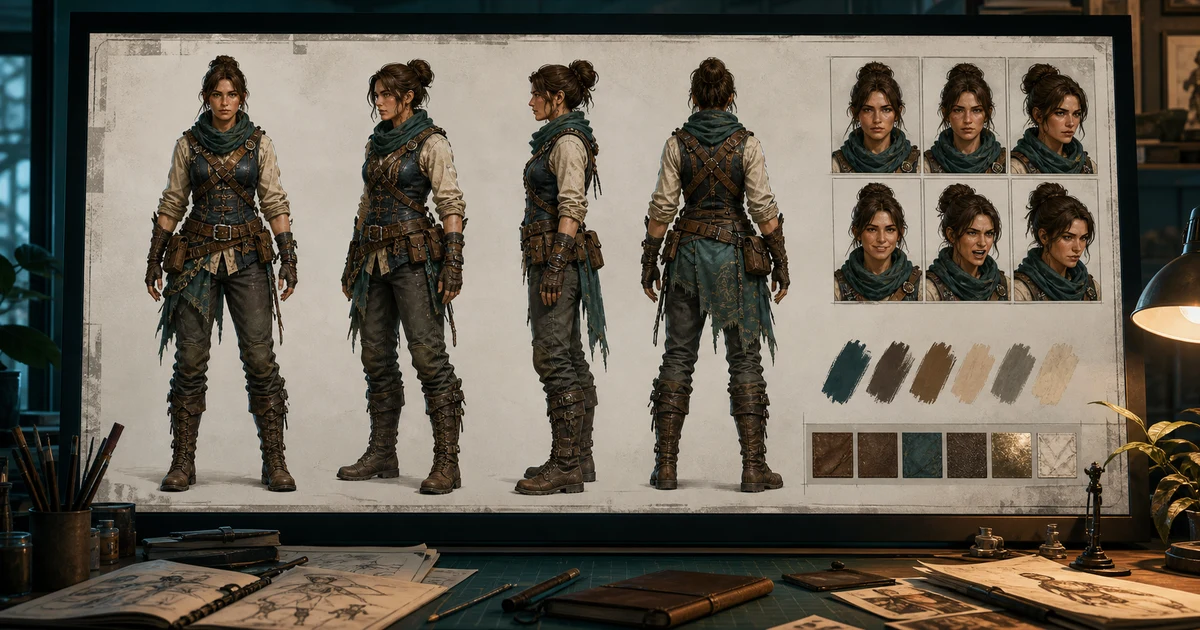

AI Character Turnaround Sheet: Lock Identity Before Animation helps you complete one real creation job with a repeatable process and a clear approval standard. It focuses on the decisions that determine whether the output is useful, accurate, and ready for its destination.
Define the character before generating views
Write a compact identity spec: apparent age range, face geometry, skin tone, hairline and texture, body proportions, posture, distinguishing marks, wardrobe construction, accessories, and color swatches. Separate immutable identity from scene-dependent styling.
Approve one neutral anchor
Use even light, a simple background, natural lens perspective, neutral expression, and a pose that reveals proportions. Avoid dramatic foreshortening, heavy color grade, hair covering the face, and wardrobe that hides the silhouette. This is the comparison source for every other view.
Build the core turnaround
| View | Purpose | Verify |
|---|---|---|
| Front | Face, symmetry, costume centerline | Eyes, nose, jaw, shoulders, fasteners |
| Three-quarter | Facial depth and silhouette | Cheek, nose projection, hair volume |
| Profile | Head shape and posture | Forehead, nose, lips, chin, ear, neck |
| Back | Hair, costume, accessories | Seams, closures, pattern continuity |
| Full body | Proportion and stance | Height ratios, hands, feet, garment length |
Generate one view at a time
A single crowded grid can make facial and costume details too small to verify. Create high-resolution views individually from the anchor, then assemble the approved images into a sheet. Lock camera height, focal perspective, light, background, expression, and pose family.
Separate expressions from identity
Build a second sheet for neutral, joy, concern, anger, surprise, and speaking shapes. Preserve face geometry and apparent age. Expressions should move muscles; they should not change eye size, jaw shape, makeup, hairline, or identity.
Separate action poses from proportions
Use a pose sheet after the neutral turnaround passes. Include walk, run, reach, sit, and one project-specific action. Check limb length, hand size, costume behavior, and accessory attachment. Do not use action shots to define the base body.
Create a palette and materials panel
Save exact swatches for skin, hair, eyes, wardrobe, and key props. Add close details for fabric weave, metal finish, pattern, jewelry, shoes, and logos you own. Critical text and marks should be composited and verified rather than regenerated.
Use the sheet in production
Select the smallest relevant references for each shot: face and three-quarter for dialogue, full body and profile for walking, back view when the camera crosses behind. Record which references produced the approved result.
Turnaround QA
- Every view matches the approved neutral anchor
- Face, age, proportions, hair, marks, and wardrobe remain stable
- Front, profile, and back geometry agree
- Expressions do not redesign identity
- Action poses preserve proportion and costume construction
- Color, material, and rights references are documented
Frequently asked questions
What views belong on a character turnaround sheet?
At minimum use front, three-quarter, profile, back, and full-body views, then add expressions and action poses separately.
Should I generate the whole sheet in one image?
Use a grid for overview only; generate and verify important views at higher resolution individually.
How do I stop the face changing in profile?
Lock facial landmarks and compare profile geometry to the neutral anchor before approving.
Do expressions need a separate sheet?
Yes. Separating expression from base identity makes changes easier to diagnose.
Which reference should I use for animation?
Use the smallest set that clearly shows the face, body, costume, and camera-facing side required by the shot.
When a reference will become a 3D asset, prepare the Tripo input and inspect the exported mesh.
When the character will become a game asset, build a sprite on a real pixel grid with stable frame anchors.