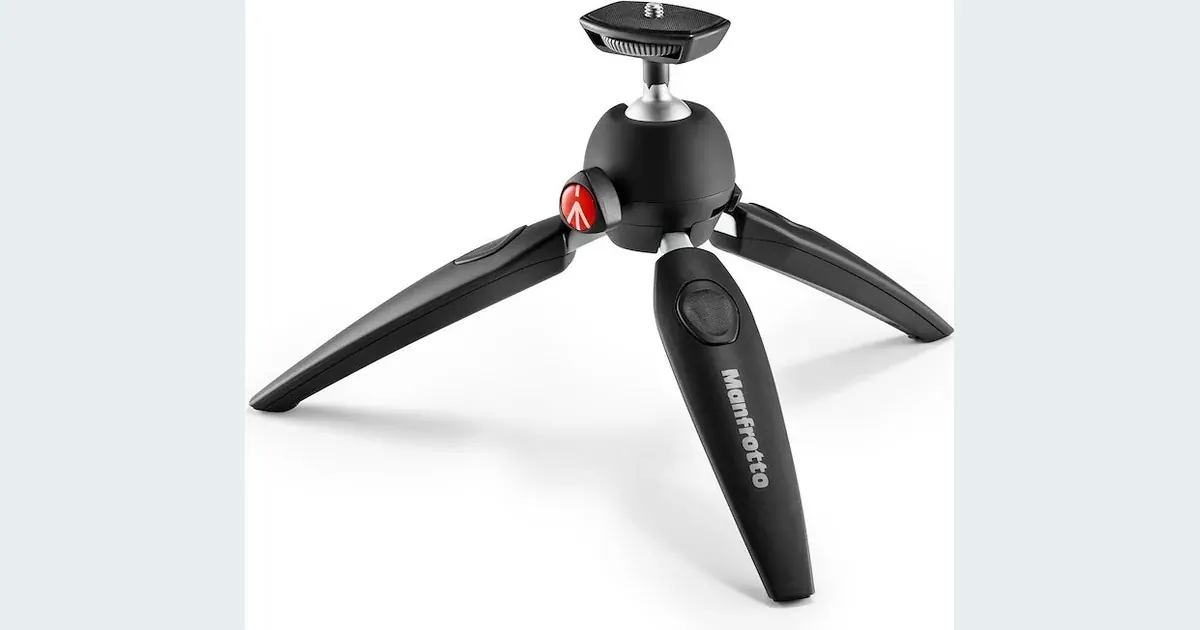

A tabletop tripod helps when you need the same camera position across several product photos. The Manfrotto PIXI EVO is an option for a low setup and a suitably balanced camera within its documented limits. It is not a substitute for an overhead support or a tripod that reaches standing height. Decide where the lens needs to be before choosing a compact stand.
A product to consider
Check the fit below, then select Buy on Amazon for the current offer and buying options. We may earn a commission from this paid link.
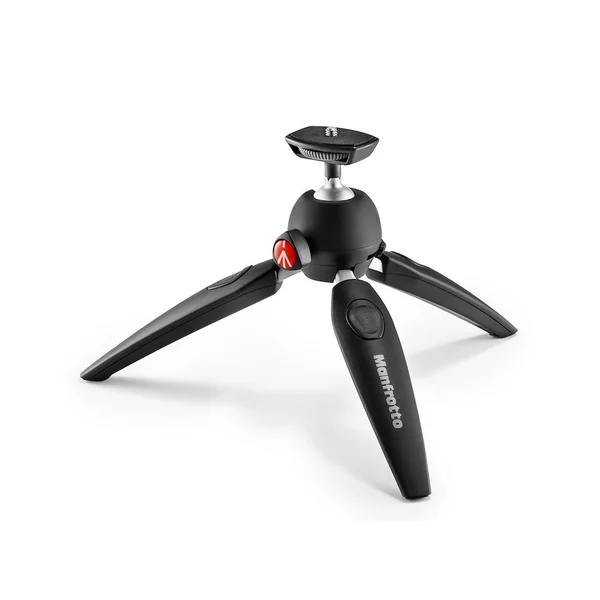
Manfrotto PIXI EVO, black
For low tabletop reference photos with a suitably balanced compact camera
Choose model MTPIXIEVO-BK for its adjustable legs and portrait tilt. It is not an overhead arm or a standing-height tripod. A phone holder and camera are separate unless your selected offer explicitly includes them.
Download the practical worksheet
Original blank CSV worksheet. Record your own setup and observations.
Choose the lens position before the tripod
Set the product on the intended surface and look through the camera at the angle you want. A front label shot may need the lens close to the product's middle. A three-quarter view needs a different position. A top-down flat lay needs support above the scene, which a small tabletop tripod does not provide by itself.
Do not balance the camera on an improvised stack to force a mini tripod into a taller role. Choose support designed for the required height and mounting arrangement. Compact gear is useful only when its actual working position matches the task.
For product references, consistency is often more important than dramatic camera movement. A fixed position helps you compare lighting changes, packaging variations or generated edits without wondering whether a different angle created the apparent improvement.
What distinguishes PIXI EVO from the original PIXI
The EVO has two-section legs, two selectable leg angles and a ball head that can tilt for portrait framing. Manfrotto lists a 2.5 kg safety payload and a maximum height of 20 cm for the current black MTPIXIEVO-BK product. Those figures do not establish stability with every long lens, tilt or uneven surface.
Callum McInerney-Riley's Amateur Photographer review describes the adjustable legs as helpful on uneven surfaces and explains changes from the original model. We use the current manufacturer page for specifications where an older review differs. We have not tested the tripod with a QuestStudio camera setup.
The purchase link is for the black EVO, not the original fixed-leg PIXI or a complete phone filming bundle. If you intend to use a phone, include a compatible holder and its weight in the plan. Do not infer that a camera or holder in a lifestyle photograph comes with the tripod.
Check weight, balance and the surface together
| Check | What to record | Why it matters |
|---|---|---|
| Complete load | Camera, lens, holder and attached accessories | The tripod supports the whole assembly |
| Balance | Where the load sits after tilt or lens extension | A supported weight can still be poorly balanced |
| Surface | Flatness, firmness and available footprint | A small base needs dependable contact |
| Height | Required lens position above the product surface | A mini tripod cannot cover every angle |
Start with the manufacturer's assembly and loading instructions. Keep cables from pulling on the camera, and leave enough table space for the full leg footprint. A wide stance may help a supported arrangement, but it also occupies more of the shooting surface.
Check the camera's mounting socket and any adapter before attaching it. Secure the connection as directed, then support the camera while adjusting the head. Do not leave equipment in an arrangement that visibly tips or strains a connection simply because its total mass is below the listed limit.
If a long lens moves the center of mass forward, reconsider the support arrangement. The safest and most useful choice may be a different tripod rather than stretching a compact accessory beyond the job it was designed to do.
Create a repeatable product-photo station
Mark the camera and product positions with removable markers suitable for the surface. Record the lens, focal length, camera height and orientation. If your camera supports manual exposure and white balance, choose settings appropriate to the scene and keep them consistent across the reference set.
Keep the lighting arrangement documented separately. The light box and softbox comparison helps choose the source, while our portable LED guide covers a compact accent or close-shot option. A stable camera does not fix a reflection that hides the label.
Use the camera's supported timer or remote method when touching the shutter moves the setup. Inspect the saved image at full size for missed focus and movement. Do not judge sharpness only from a small camera preview, particularly when fine packaging text matters.
Make a three-view reference set
Use a product you own or are authorized to photograph. Clean it appropriately, remove distractions from the scene and keep its real markings visible. The aim is a useful reference set, not a claim that the tripod has passed a laboratory stability test.
- Front view: capture the main label and overall proportions with the lens at an appropriate height.
- Three-quarter view: move the product or use a documented new camera position to show depth and side details.
- Detail view: capture one important feature without relying on an extreme crop of the first image.
For each image, record camera height, distance, orientation, focus point and light position in the worksheet. Save an untouched original. If you alter the setup between views, describe the change rather than labeling the series as an identical camera position.
Review the files together. Check whether the product changes apparent shape because of perspective, whether text remains readable and whether a highlight removes a key feature. Reshoot missing evidence before trying to reconstruct it with editing.
Use the tripod as a capture tool, not an AI accuracy guarantee
A sharper and more consistent reference gives you a better starting point for image editing. It does not force a generative model to preserve every label, connector or seam. Keep the source visible during review and inspect the exact areas that matter to a buyer.
Open QuestStudio Image Lab for a supported reference-based experiment. Change one thing, such as the background, and save the output separately. The product fidelity benchmark provides a structured way to inspect whether the product remains recognizable and accurate.
If a generated result changes a logo, invents a port or removes a safety marking, do not treat an attractive background as compensation. Return to the source and revise the workflow. The tripod helps produce evidence about the real object; it does not certify the generated result.
When to choose a different support
Choose a full-height tripod when the lens must sit well above the table or you need a standing presenter shot. Choose a purpose-designed overhead arrangement for flat lays. Choose a compatible phone support if the current camera setup is your phone and you lack the correct holder.
For a small camera at a low tabletop position, PIXI EVO is a reasonable candidate when the complete load, balance and footprint work. Before ordering, check the black EVO model and the selected offer's included parts. Keep your measurement sheet nearby when the product arrives so your first session tests the actual job you bought it for.
Check the current offer
If this product fits the setup described above, review the selected model, condition and included contents on Amazon. We may earn a commission from this paid link.
Frequently asked questions
Can PIXI EVO take overhead flat-lay photos?
It is a low tabletop tripod, not an overhead arm. Use support designed for the required overhead position rather than an improvised extension or stack.
Is EVO the same as the original PIXI?
No. EVO has adjustable two-section legs and a different head arrangement. Match reviews and specifications to the exact model.
Does the 2.5 kg limit guarantee every camera setup is stable?
No. Balance, lens extension, tilt, surface and cable pull also matter. Follow the manufacturer’s supported loading and setup guidance.
Is a phone holder included?
Do not assume it. The linked item is the black tripod; a holder is separate unless the selected offer explicitly includes one.
Can AI fix a blurry product reference?
Some tools can alter apparent sharpness, but they may invent detail. Capture the important labels and features clearly before using a reference-based editing workflow.
Sources and further reading
Research checked October 27, 2026. Check the current Amazon offer for seller, price, availability and included contents. Images: credited manufacturer product imagery, not QuestStudio test photographs. Original decision framework and worksheet: QuestStudio.
Affiliate disclosure and research approach
As an Amazon Associate I earn from qualifying purchases. If you buy through paid links, QuestStudio may earn a commission at no extra cost to you. See our editorial and affiliate policy.
This is a research-based guide using linked manufacturer documentation and clearly attributed published reviews where available. We have not tested this equipment hands-on. The worksheets are original exercises for your observations, not published test results.