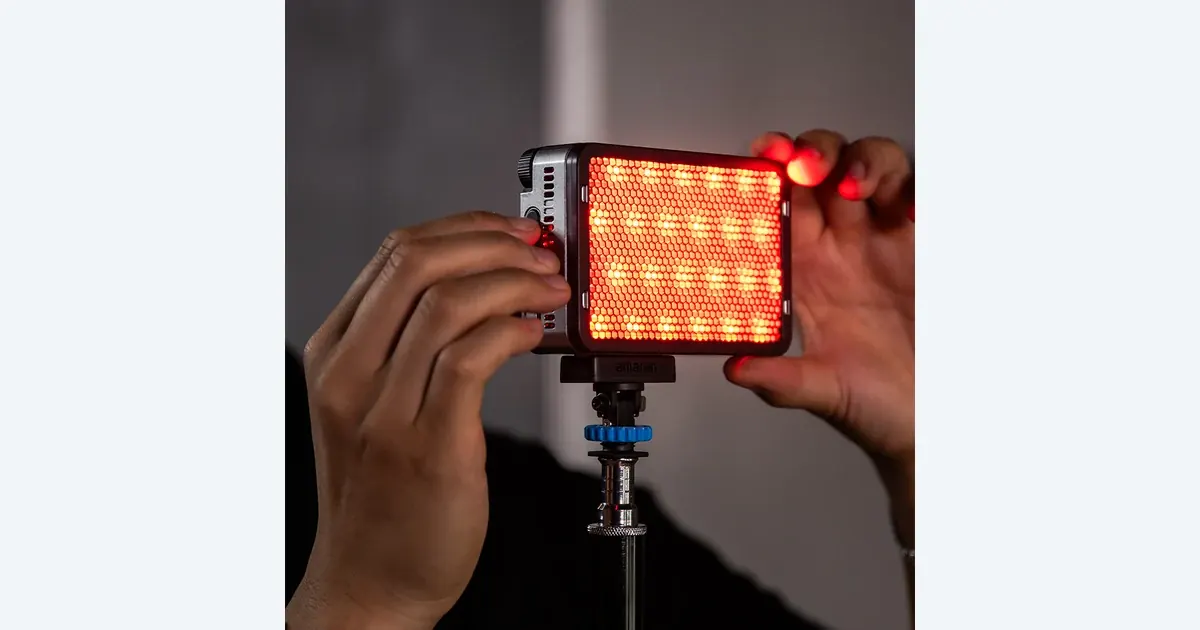

A pocket LED is useful for lighting a small product, adding an accent or carrying a compact filming kit. The amaran Ace 25c is a candidate when adjustable color and battery operation matter. It is less suited to replacing a large soft source for full-body filming or a wide tabletop scene. Choose the size and placement of the light around the shot, then consider its power.
A product to consider
Check the fit below, then select Buy on Amazon for the current offer and buying options. We may earn a commission from this paid link.
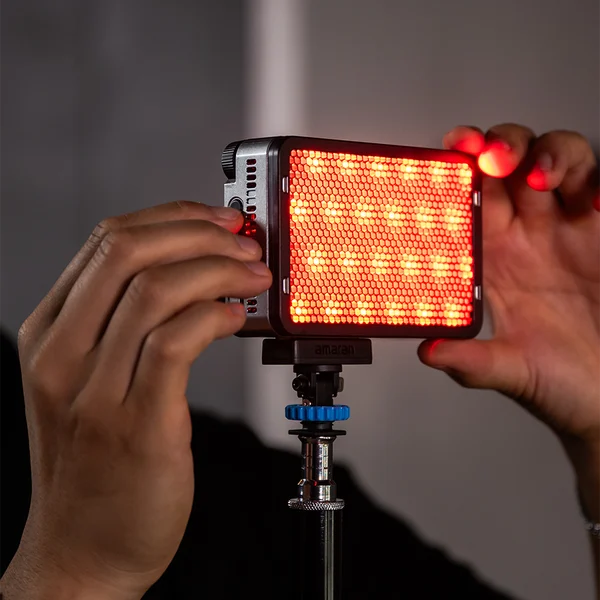
amaran Ace 25c, charcoal
For close product shots, small accents and a portable filming kit
Consider this pocket light when portability matters more than lighting a large area. The selected listing is the charcoal light, not the expanded kit. Confirm included mounting pieces, diffuser and charging requirements.
Download the practical worksheet
Original blank CSV worksheet. Record your own setup and observations.
Start with the reflection you want to control
Put the product where you plan to film and look at its surface through the camera. A matte package, polished bottle and glossy screen react very differently to the same light. Move an existing light or use a window as a baseline. Watch which label areas become readable and which turn into bright reflections.
For product content, the goal is often accurate shape, material and label detail rather than a dramatic color effect. A small source can create a crisp highlight that helps define an edge, but it can also produce an obvious bright spot. Increasing power does not make that spot larger or softer.
Our light box versus softbox guide covers larger-source and enclosure decisions. This guide focuses on a portable light that can join a setup or handle a small close shot, not replace every lighting tool.
What the Ace 25c provides
The Ace 25c is an RGBWW light with a manufacturer-listed color-temperature range of 2300–10000 K. Its documented power modes trade output, runtime and cooling behavior. The selected purchase is the charcoal light. Check the exact offer for included mounting pieces and diffuser; the expanded kit is a different package.
Stephen Knight's self-purchased kit review highlights the light's output for its size and discusses practical construction limits. He tested a kit, so do not assume the accessories in his photographs are all included with the single-light listing. His observations are not QuestStudio test results.
Consider it for a close product detail, a colored background accent or a portable creator bag. Skip it as your only planned light if the job requires a broad, soft source over a large area. We have not measured its color accuracy, flicker or sound in a recording room.
Compare modes without mixing their claims
| Mode | Listed output | Listed battery runtime |
|---|---|---|
| Boost | 32 W | 50 minutes |
| Standard | 25 W | 1 hour 10 minutes |
| Silent | 6.5 W | 4 hours 40 minutes |
These are amaran's published figures under its conditions, not our measurements or a promise for every brightness, temperature and battery state. The longest runtime does not occur at maximum output. Plan a margin for setup time and retakes instead of using a headline runtime as your entire recording schedule.
The light uses active cooling. If a microphone is close, record a quiet passage with the selected mode before committing to a take. Silent mode changes the output budget, so compare the resulting exposure as well as the sound. A brighter mode that contaminates a quiet narration track may not be the best overall choice.
Use the documented charging equipment and supported operating conditions. Keep vents clear and route charging cables so they cannot pull a mounted light over. A magnetic mounting feature does not make every nearby surface a safe place to suspend equipment.
Make a small light behave deliberately
Begin with neutral white light for a product reference and set the camera's white balance deliberately. Mixing window light, a warm room bulb and a saturated accent can make colors difficult to judge. Turn off unnecessary sources while establishing the baseline, then add them back one at a time.
Move the light around the product before increasing brightness. A small angle change can move a distracting reflection away from a label. Watch the camera view rather than judging only by eye. For a shiny object, the reflection itself is part of the composition.
A diffuser can change the character of the light, but a small dome does not automatically become a large softbox. Distance and the apparent size of the illuminated area still matter. Use a suitable larger modifier or another supported lighting arrangement when broad softness is the actual requirement.
Keep the product still while exploring light positions. A repeatable tabletop camera position makes it easier to attribute a difference to lighting instead of a changed camera angle.
Try a three-shot product-lighting exercise
Choose a product you can photograph and a background you can reuse. Fix the camera position, focus and exposure where your camera allows. Include a neutral reference in an initial setup image if that is part of your established color workflow, then remove it for the final composition.
- Baseline: record the product with your existing light. Note the label readability and unwanted reflections.
- Portable light: add or substitute the small light at a measured position. Keep other settings stable where practical.
- Refinement: change one variable, such as the light angle or a supported diffuser, and record again.
For each take, log the light mode, distance, color setting, camera settings and any audible fan noise. Review the actual clip for flicker, clipped highlights and shifting color. A still photograph of a setup cannot prove that the video is free of those problems.
Judge the results at the intended viewing size as well as close up. The winning take is the one that communicates the product accurately. Do not choose a colorful shot if it hides the shape or implies a material finish the product does not have.
Preserve product truth when adding AI visuals
Save a clean original before experimenting with generated backgrounds or promotional variations. Keep a separate record of the lighting setup so you can reshoot matching angles. Real product geometry, printed text and important colors should remain the reference for review.
In QuestStudio Image Lab, use a supported reference-based workflow to explore a controlled change, such as a different background. Specify what must remain recognizable and compare the output against the original. The light has no direct integration with Image Lab; it improves the source capture stage.
Use the product fidelity benchmark to structure that comparison. Inspect labels, proportions, edges and material cues rather than approving an image only because it looks polished. A generated scene is not evidence of how the physical product performed.
Choose the smallest setup that covers the shot
Before buying, list the light, support, charging equipment and any modifier required for your actual scene. Check whether the selected package supplies each item. Manufacturer photos may show a camera, stand or accessory that is not part of the offer.
Ace 25c is a practical candidate for a compact, close-range role when those tradeoffs fit. A larger source is a better starting point when softness and coverage dominate. If the window or existing light already produces the result you need, first improve repeatability and shot planning. Portability is useful when it solves a real production constraint.
Check the current offer
If this product fits the setup described above, review the selected model, condition and included contents on Amazon. We may earn a commission from this paid link.
Frequently asked questions
Is the longest runtime available at full power?
No. amaran lists different runtimes for Boost, Standard and Silent modes. The 4-hour-40-minute figure belongs to the 6.5 W Silent mode.
Does a pocket LED replace a softbox?
Not automatically. Source size and distance affect softness. A small diffuser does not provide the same broad illuminated area as a large softbox.
Is this the Ace 25c kit?
The linked product is the charcoal light listing. Check its included contents; the expanded kit and its extra accessories are separate purchase choices.
Can I use colored light on a product reference?
You can make a creative shot, but keep a neutral, accurate reference separately when color and material fidelity matter.
Will Image Lab correct inaccurate product lighting automatically?
Do not assume that. Begin with a clear source and compare generated changes against the real product, especially labels, color and geometry.
Sources and further reading
Research checked October 27, 2026. Check the current Amazon offer for seller, price, availability and included contents. Images: credited manufacturer product imagery, not QuestStudio test photographs. Original decision framework and worksheet: QuestStudio.
Affiliate disclosure and research approach
As an Amazon Associate I earn from qualifying purchases. If you buy through paid links, QuestStudio may earn a commission at no extra cost to you. See our editorial and affiliate policy.
This is a research-based guide using linked manufacturer documentation and clearly attributed published reviews where available. We have not tested this equipment hands-on. The worksheets are original exercises for your observations, not published test results.